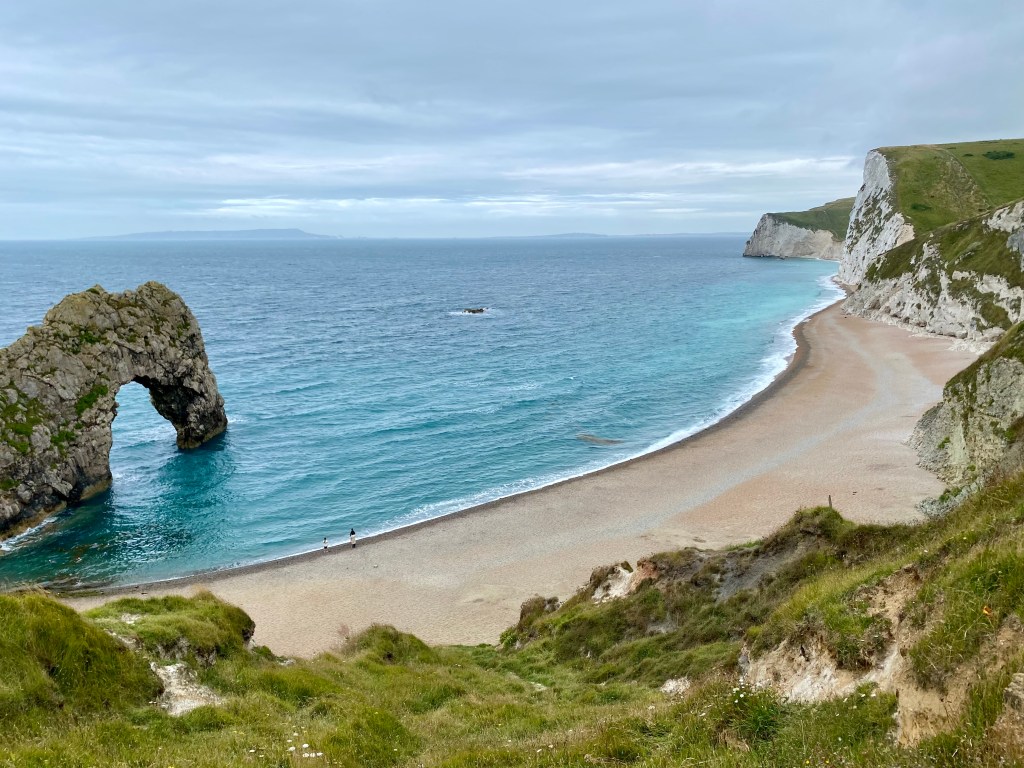
With a few days off in the middle of summer, I hired a car and headed for the south east of Dorset, an area that I had yet to explore and was high on my list. With beautiful beaches, incredible geology and plenty of trails to walk, Dorset is perfect for a summer holiday. Located on the south coast of England between Hampshire and Devon, Dorset marks the end (or beginning) of the South West Coast Path, a fifty-something day hike around the south west of the England, and the Jurassic Coast, a spectacular stretch of coastline between East Devon and Dorset famed for its geology. With so much to see and do, here is what I got up to.
Itinerary
Day 1
With Swanage as my end goal as that was where I would be basing myself out of for the next two nights, Kingston Lacy provided a good first stop to stretch my legs, enjoy some cake and visit another beautiful National Trust property.
Kingston Lacy
Key Details:
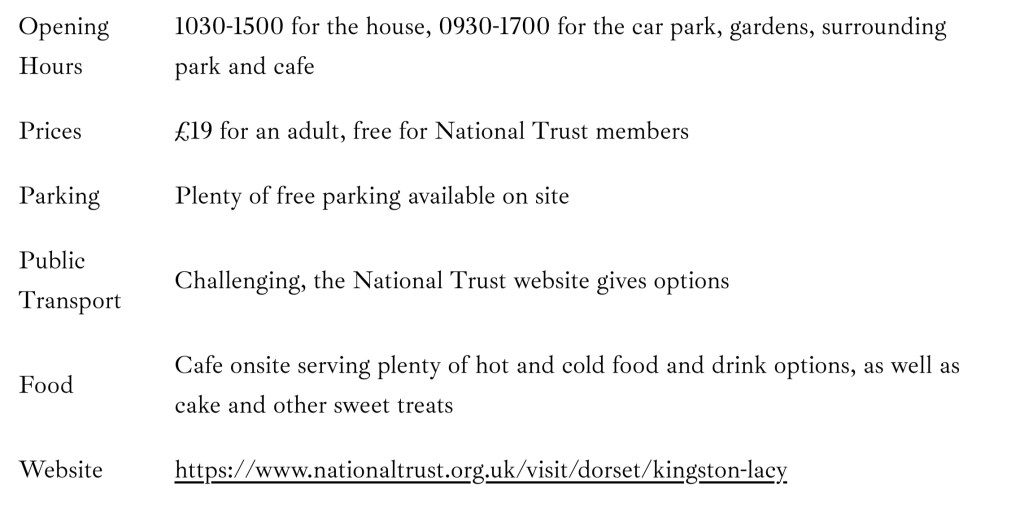
Starting with tea and cake after a long drive (coffee and walnut is always an excellent choice), I was ready to explore the house when it opened to visitors at 1030. Inspired by a Venetian Palace, this 19th century home of the Bankes family is filled with their incredible possessions, artwork and even Egyptian artefacts.
Built between 1663 and 1665 for Sir Ralph Bankes, Kingston Lacy was the replacement for Corfe Castle, the Bankes family’s main seat, after it was destroyed during the English Civil War (see Corfe Castle for more). Before the major rebuild that turned the house into what we see today, the house had been rebuilt several times over the centuries. This was funded with money from a number of sources, such as through marriages, profits from their many estates, and inherited wealth from plantations in the Caribbean profiting from the Slave Trade.
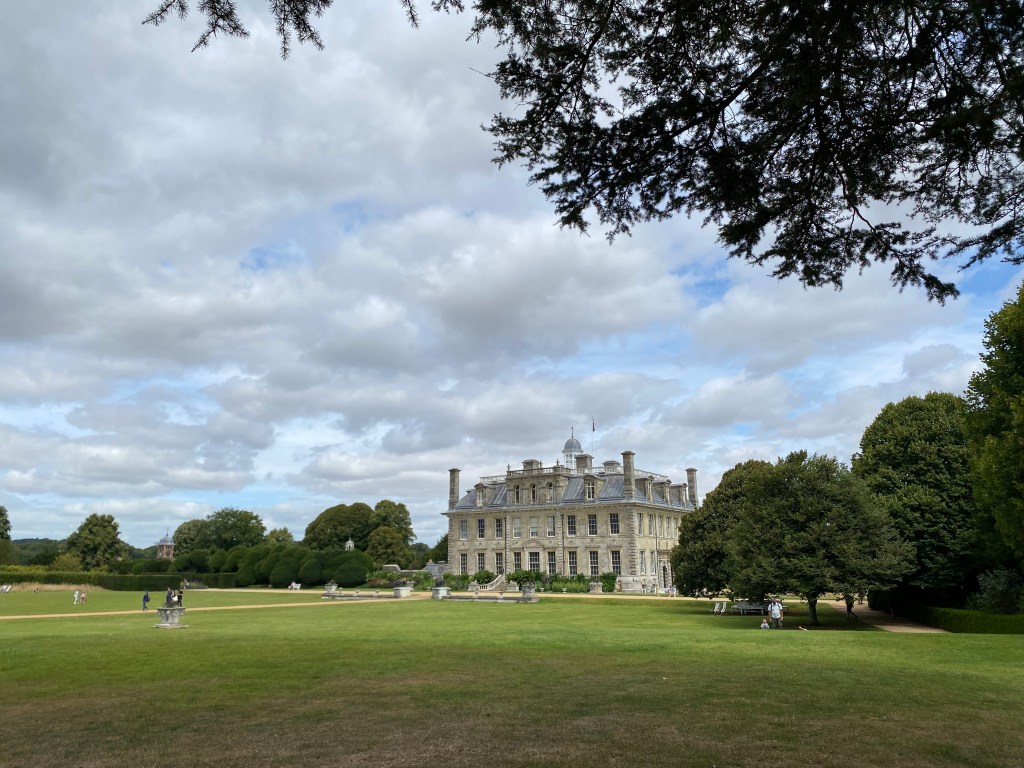
Originally constructed out of red brick and decorated with various other stones, the entire building was encased in the local Chilmark stone between 1835 and 1840 by Sir Charles Barry, better known for the Houses of Parliament in London. This occurred at the request of William John Bankes, along with opulent redecoration of the interiors to house his growing collections. William John Bankes added the most to his family’s collection after inheriting Kingston Lacy, acquiring many famous pieces of artwork and a large collection of Ancient Egyptian artefacts collected during his travels around the world. Little was known about Ancient Egypt at this time, so his fascination and collections helped to make some of the early discoveries. Most notably, the Philae Obelisk that stands proudly in the garden helped to make sense of hieroglyphics through Bankes’ discovery that it contains Ancient Greek and hieroglyphic inscriptions.
William John Bankes never experienced Kingston Lacy as he had designed it, moving to Venice in self-imposed exile following charges of homosexuality, a crime punishable by death at the time. During this time he dramatically increased his collection, sending his purchases back to his siblings in Dorset with detailed instructions on where they should be placed.
Kingston Lacy was gifted to the National Trust by the family in 1981 as part of the entire 16,000 acre Bankes Estate which also included Corfe Castle, making it is largest gift to the National Trust in history.
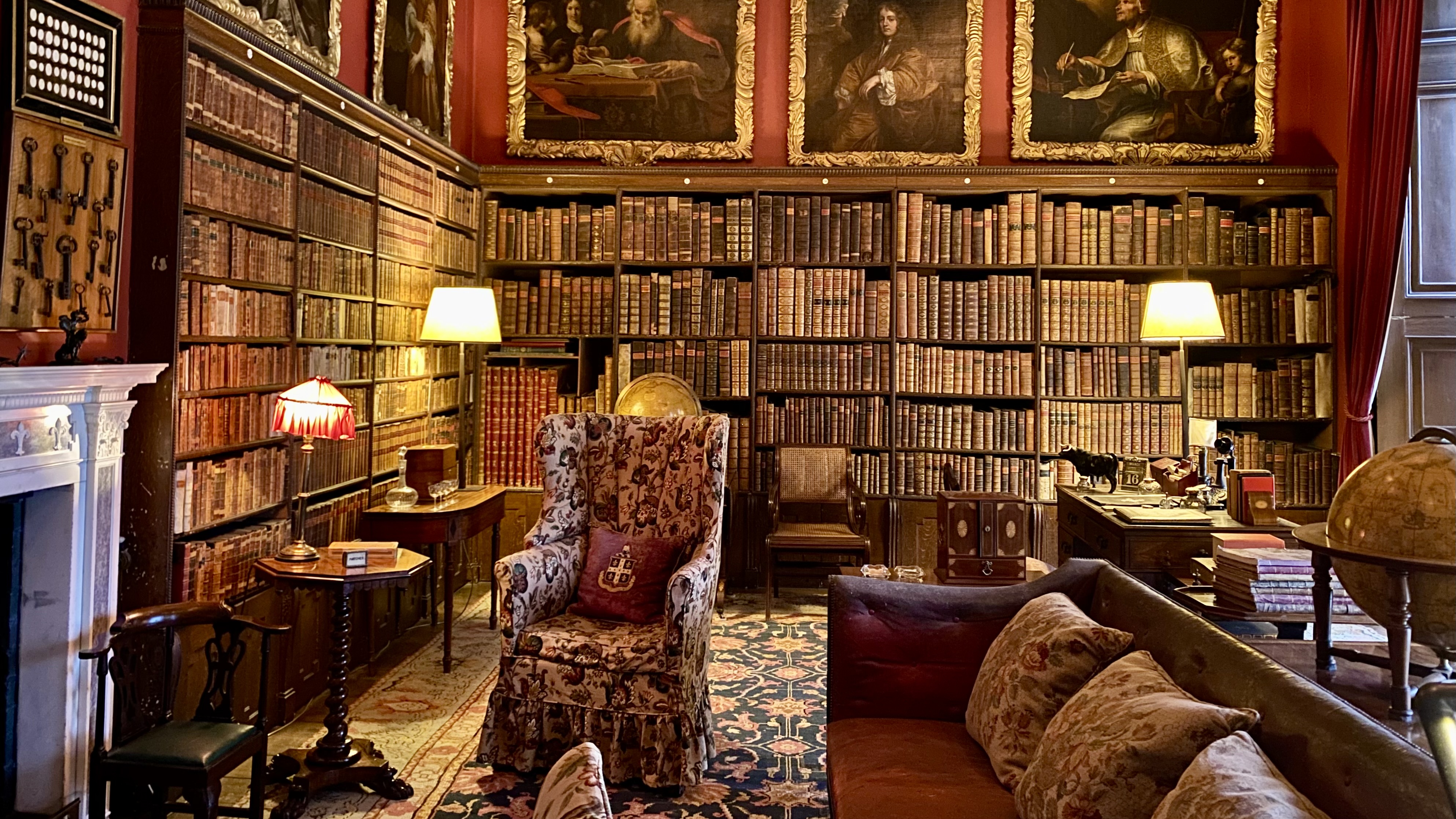
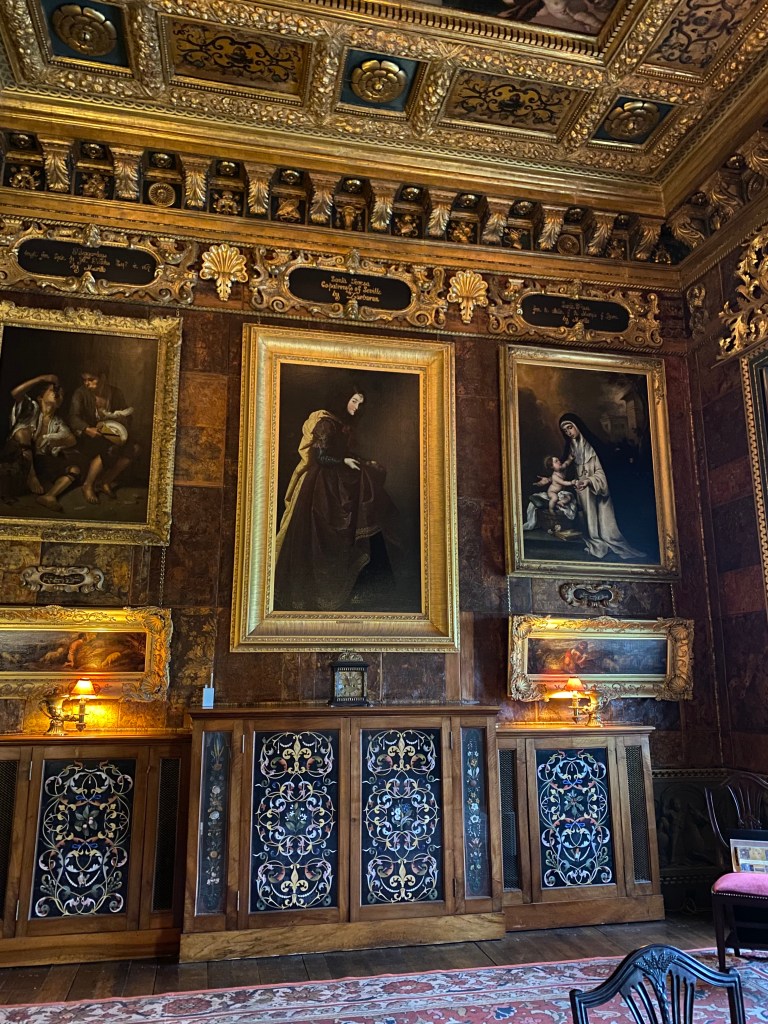
The rooms are absolutely incredible, so opulent and full of interesting pieces as well as the more famous artworks. My favourite rooms included the library (usually a firm favourite) with a large collection of books and a ceiling taken from a 400-year-old property in Bologna, feeling simultaneously cosy and decadent, as well as the show-stopping Spanish Room. This was William John Bankes’ proudest contribution to the house, made more impressive by the fact he was in Venice during its creation. Somehow just managing not to feel oppressive and toeing the line of overwhelming, the golden ceilings were taken from Venetian Palaces and resized to fit, the walls covered in gilded leather wall-hangings and the doors were designed by William John Bankes himself, one for each month of the year. The fireplace is particularly beautiful, especially as the stone carvings of leaves and different coloured flowers and fruits are made of a single piece of stone!
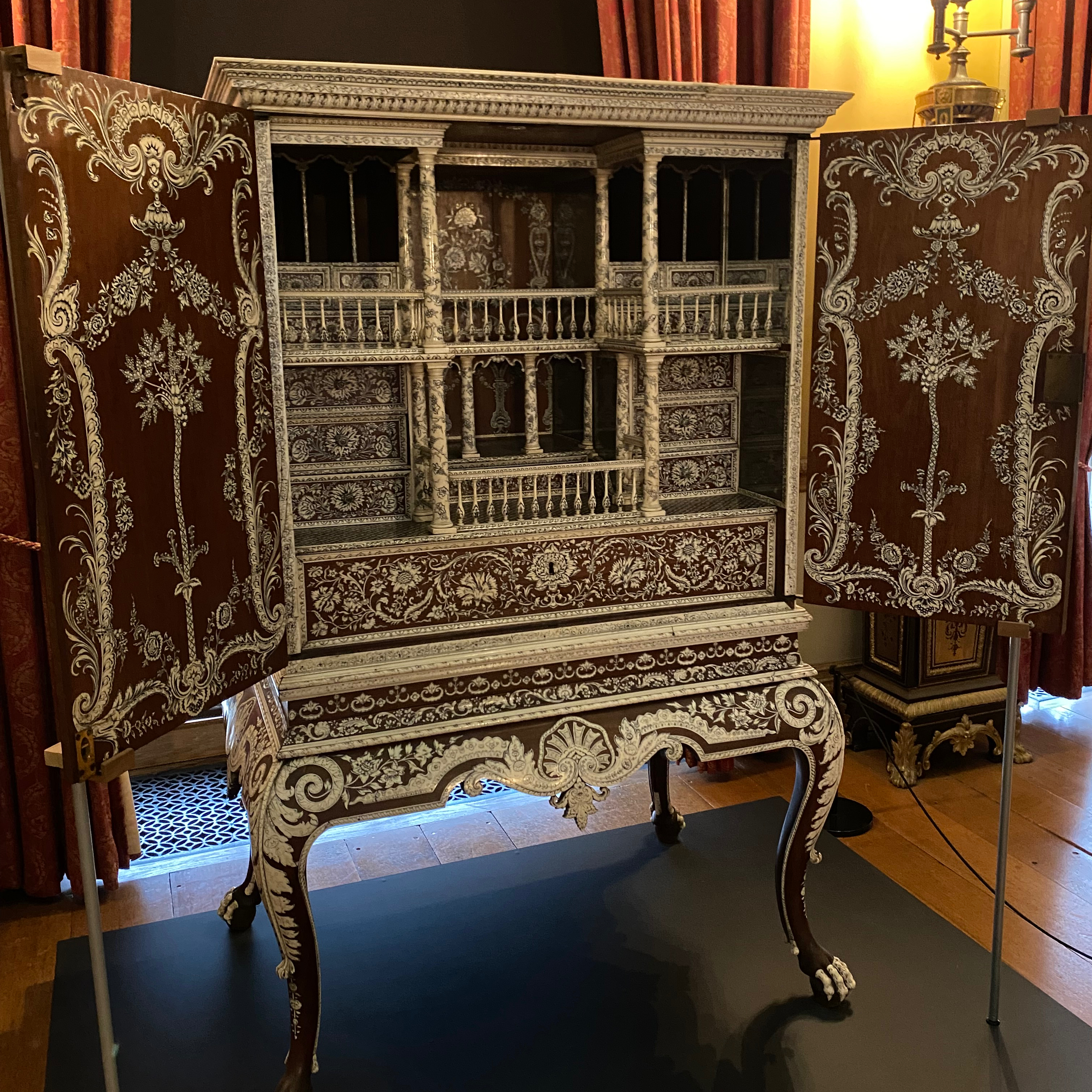
I also loved a cabinet on display when I visited called the Vizakhapatnam cabinet, a unique blend of Dutch, English and Indian design. Crafted using ivory (horrible, but as it was the fashion of the time, you can only marvel at the craftsmanship and beauty today) inlaid in rosewood and solid, engraved ivory, its decoration is so intricate it deserves a few minutes to take it all in. It was made around 1790 in the town of Vizakhapatnam, an east Indian port town known for its textile and furniture manufacture and is one of the finest examples of their works in an English collection.
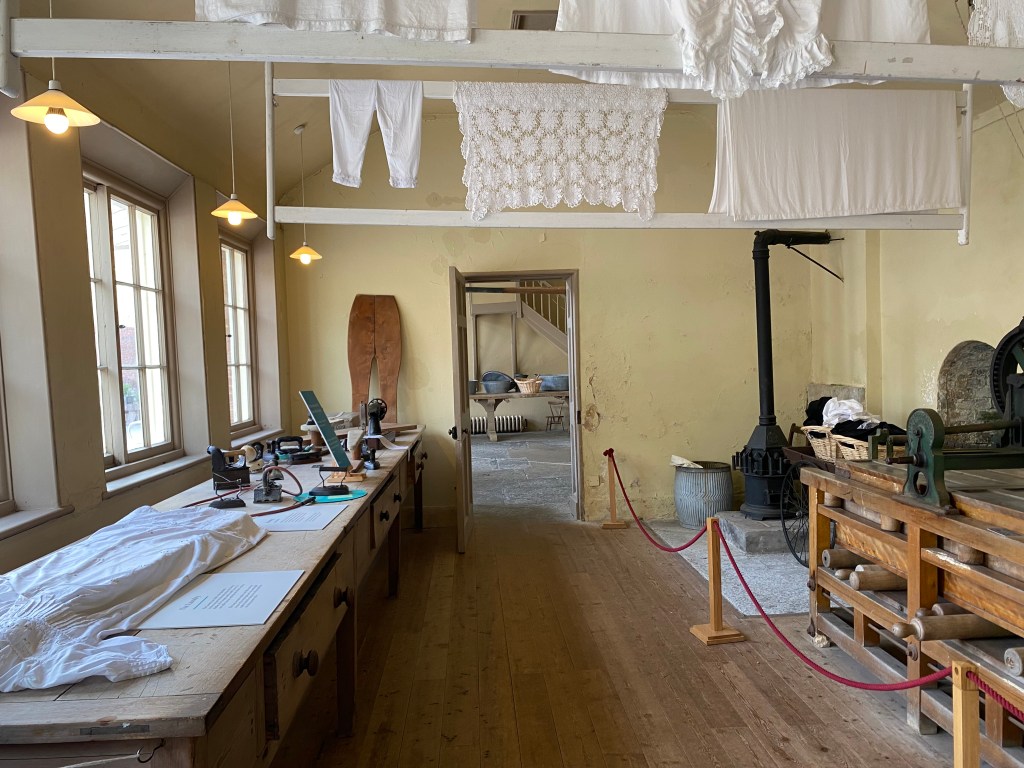
Heading back outside, I visited the gift shop and the old Laundry, which was far more interesting than it sounds. Large and airy, it is filled with what would have been state-of-the-art technology for washing, drying and pressing clothing and linen. With a large garden surrounding the house and beautiful weather, I headed to the other side of the hedges (nothing like a little bit of drama!), emerging to find uncharted territory. There are a range of interesting areas to explore in the gardens, including a large Japanese garden with a traditional Tea Garden at its centre, an enormous Kitchen Garden with heaps of gorgeous summer blooms while I was there, a Fernery, which provides a very interesting contrast to the rest of the gardens, and a large lawned area behind the house. Plenty of excellent places for a picnic!
There is also a 5km Woodland Trail on the maps given out on arrival which is suitable for bikes and walking, taking you on a big loop through the parkland. I instead meandered from the house into the Fernery, through Cedar Avenue to Nursery Wood, which was a beautiful, shady section, through the Kitchen Gardens, Japanese Gardens and back through the Formal Gardens to the house. Any route you choose will provide plenty of interest as there is so much to see.


Having satisfactorily stretched my legs and fuelled up, I was ready to clamber back into the car and make for my next stop, the RSPB Arne Nature Reserve.
RSPB Arne
Key Details:
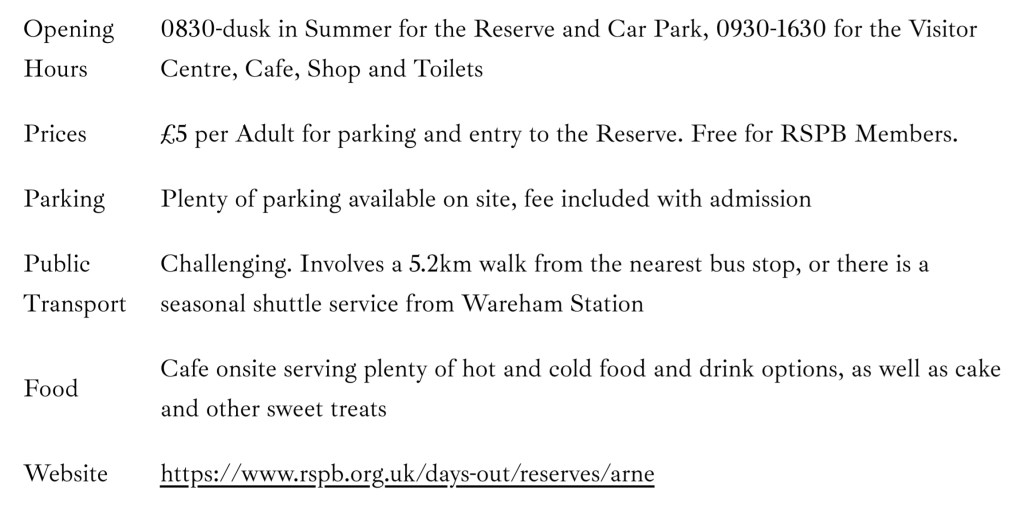
Located within the Dorset Area of Natural Beauty on Poole Harbour, the RSPB Reserve at Arne far exceeded any expectations I had. An incredibly varied and beautiful landscape with a number of trails to choose from, this place is fantastic for bird-watchers as well as those (like me) who love a good walk in nature and are satisfied whether they happen to stumble across a find or not.
There are a number of trails throughout Arne, all conveniently starting from the same location. Less conveniently, they are all really varied and beautiful in their own right, so choosing which way to go is a challenge! Because of this I decided to do two of the loops; Coombe Heath trail (2 miles / 3.2km) and the Shipstal trail (2.5 miles / 4km).
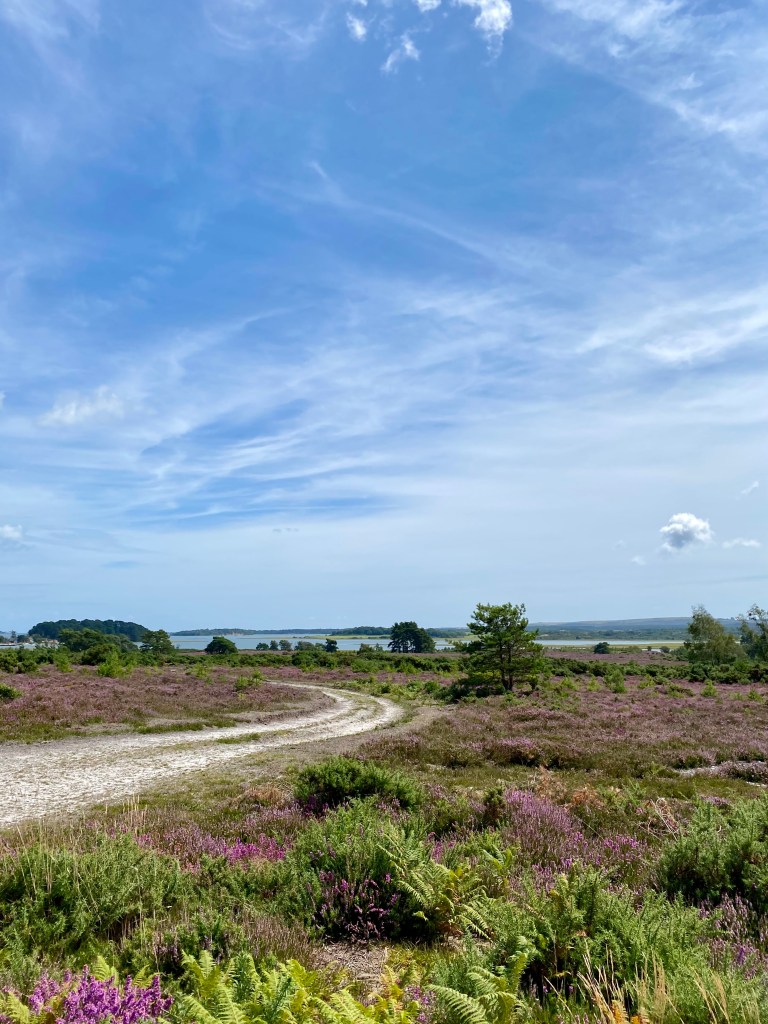
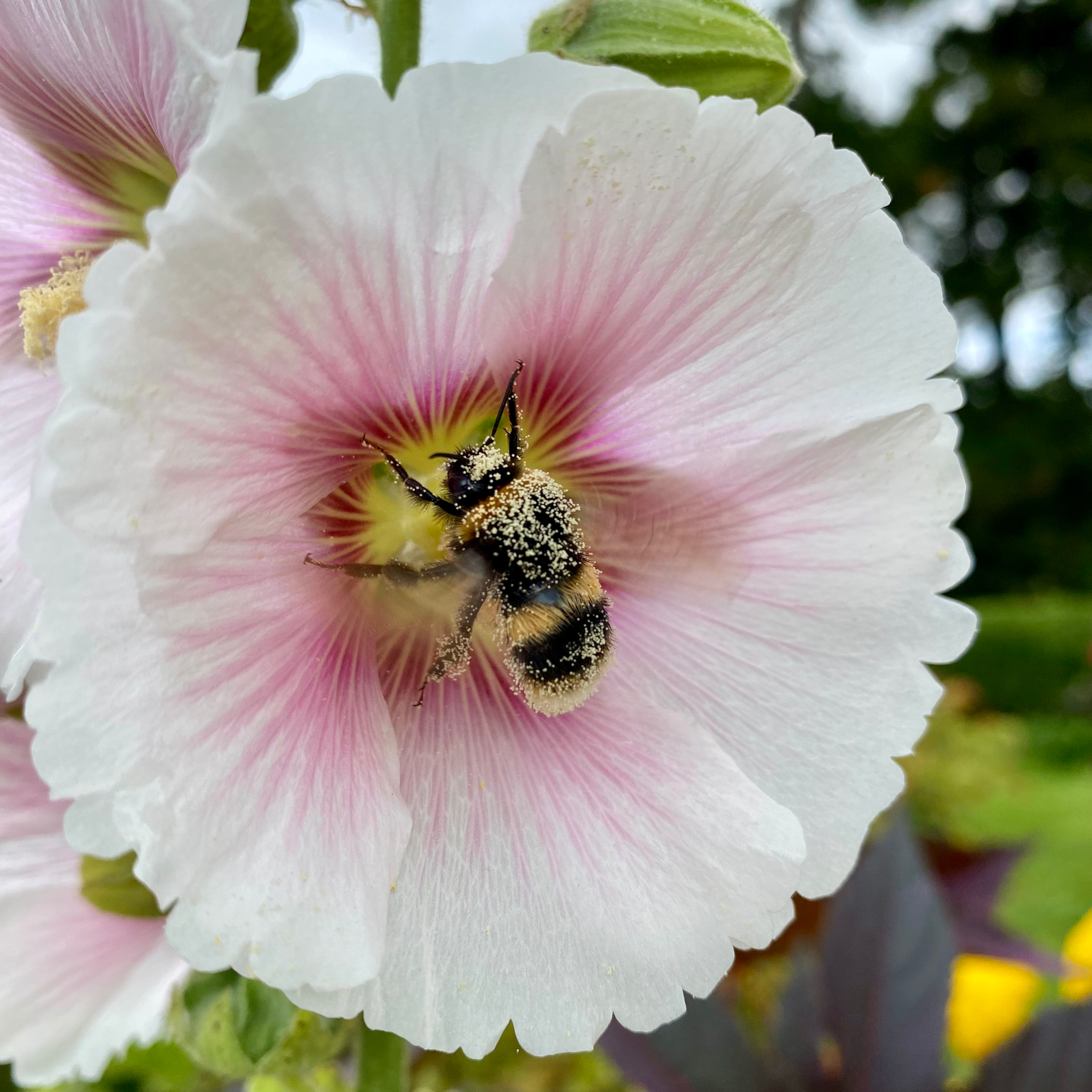
Starting with the Coombe Heath trail, this was definitely the quieter of the two trails and while less varied, I probably enjoyed this trail far more. Immediately feeling as though I was miles away from the large number of people clearly visiting Arne that day, the first thing I was struck by was the range of sounds the wind blowing through the trees can make. A copse of birch, in particular, was magical. Besides the trees, the next most overwhelming sound was that of insects. Bees, dragonflies and butterflies were out in force in the sunny weather, and while I did not spot any of the birds or reptiles of interest on this trail, there was a multitude of insects to make up for it.
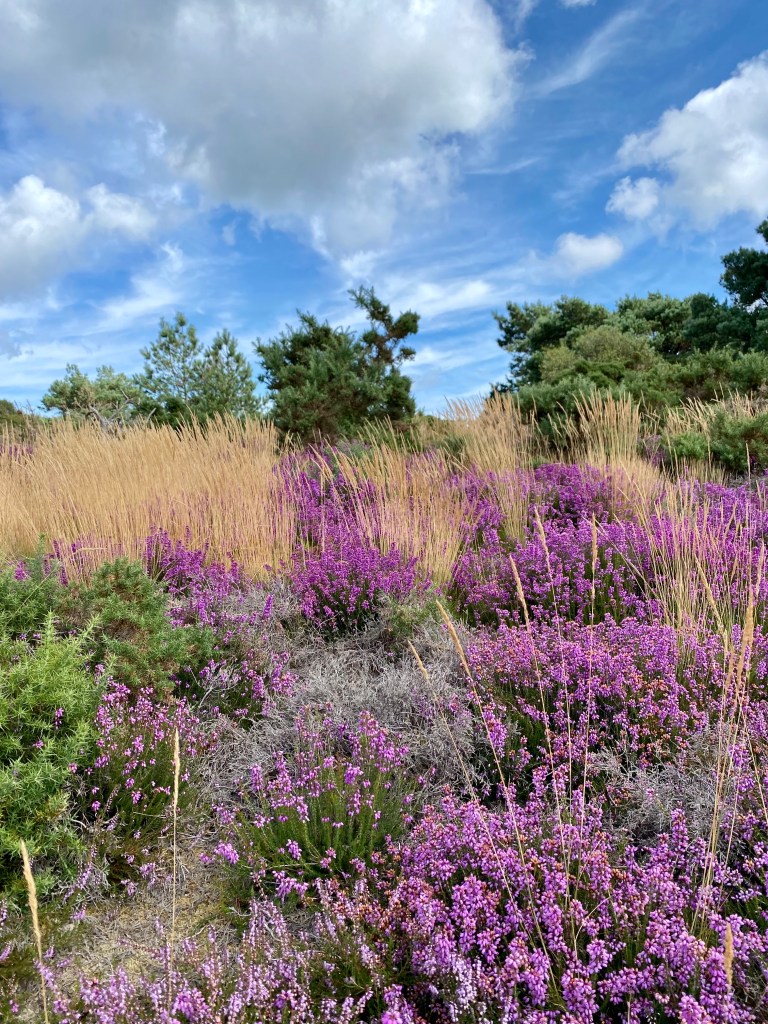
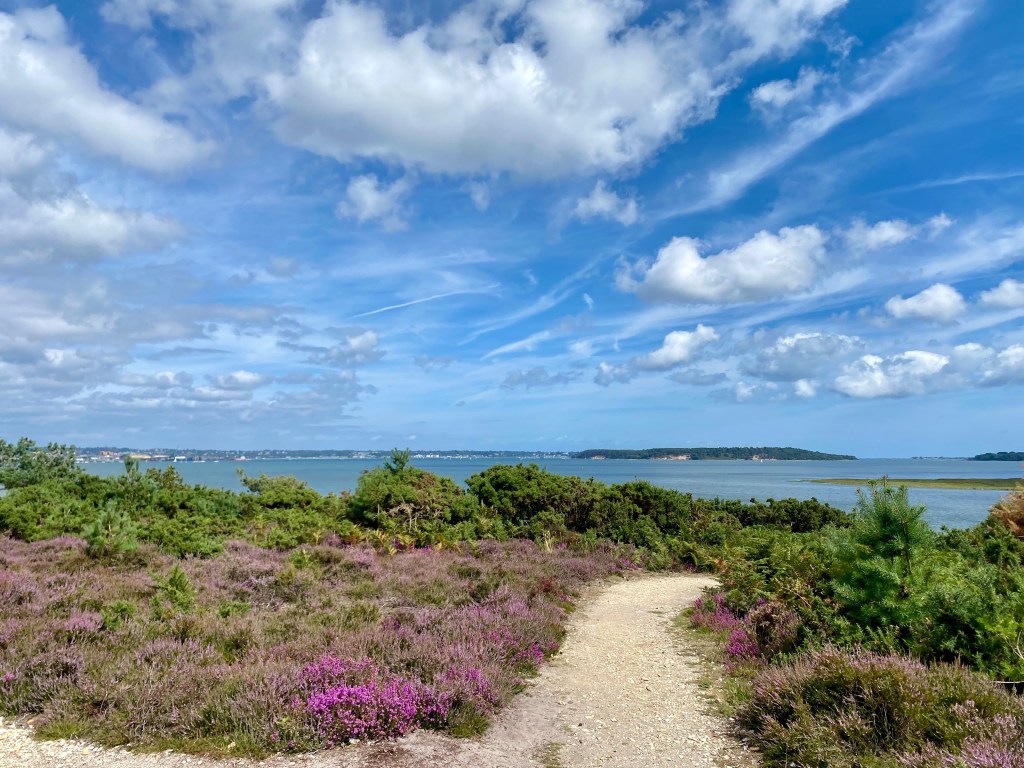
Passing ponds and lookouts for bird watching, it was the heather that stole the show. A vibrant carpet of purple swathed the landscape, juxtaposed elegantly against the sky-blue water of the Poole Harbour and its snaking channels, the copper browns of grasses and the silvery-greens of bracken. My first time visiting a heath landscape in summer, I couldn’t stop taking photographs as I was truly struck by its beauty. Particularly in that this is not a natural landscape; the continual impact of humans over thousands of years has made heathlands into the ecosystems that we find today, and must continue to maintain in order to allow for the survival of so many species that have adapted to make these places their home. Centuries of land clearing and grazing converted woodlands into heaths, where well-draining, but nutrient-poor soil support trees sparsely dotted amongst heather, bracken and gorse, grazed by ancient breeds of ponies, cattle and sheep (see Ashdown Forest – a Beary Exciting Pilgrimage for more on heathlands).
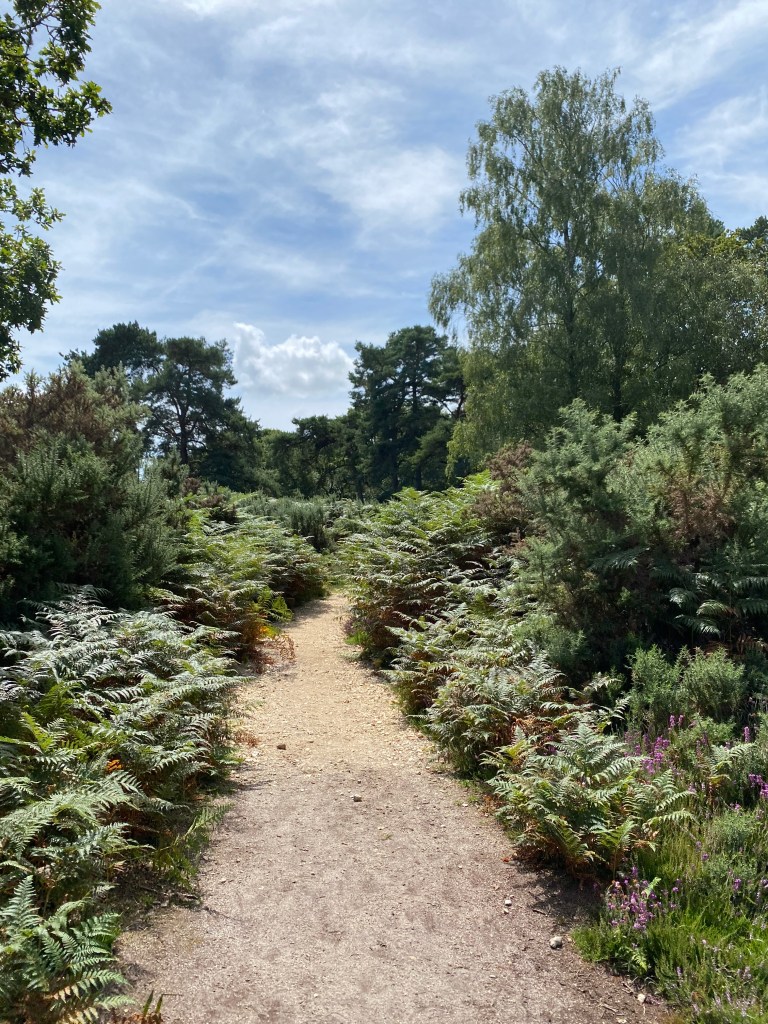
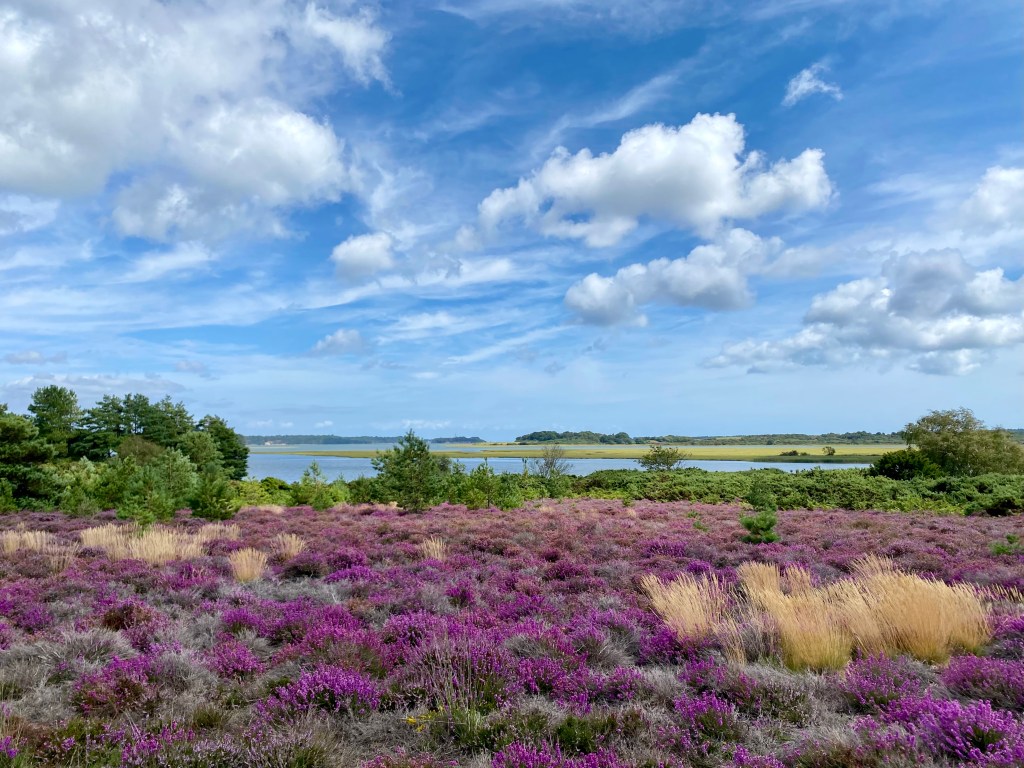
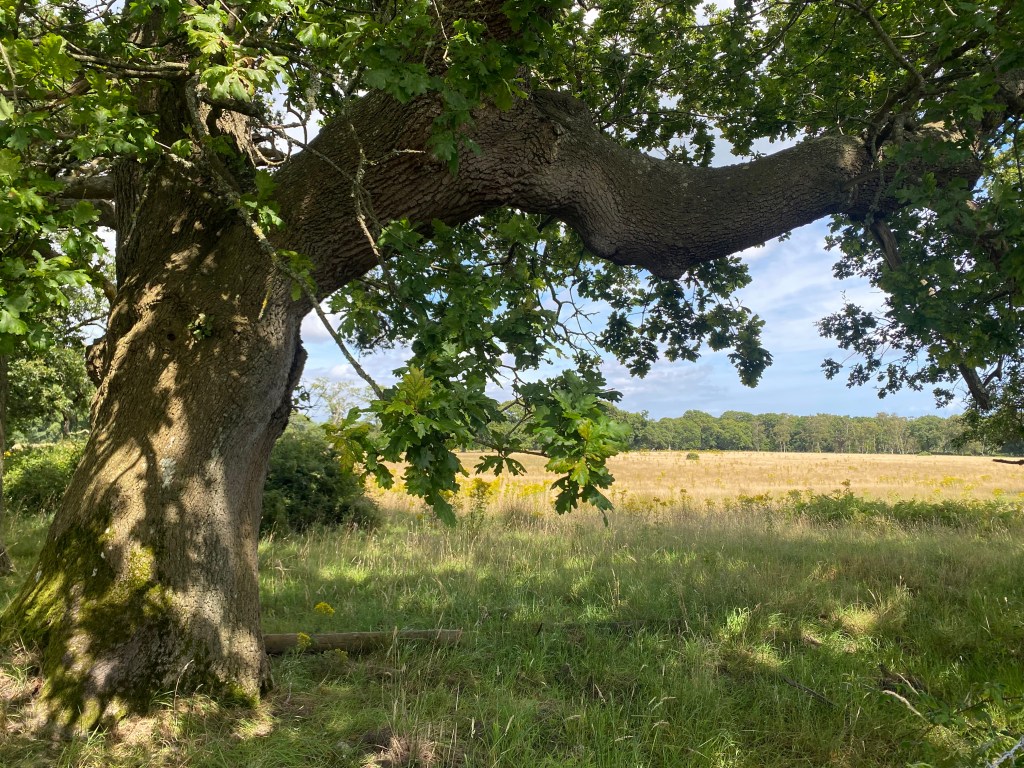
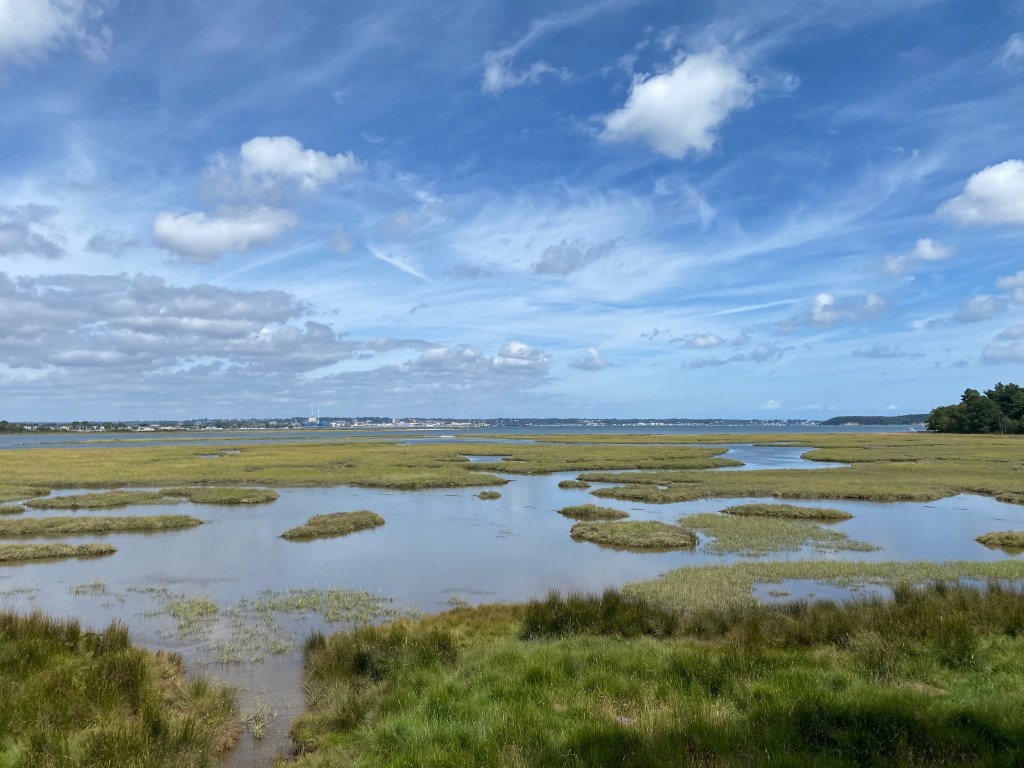
Completely this loop, I set off in the opposite direction along the Shipstal Trail. The most popular choice at Arne, this route takes in a striking variety of landscapes with more heathland, as well as woodland paths shaded by huge oaks, views of the mudflats and saltmarshes, a sandy beach to walk along, grasslands buzzing with insects among the myriad wildflowers and a multi-storied hide, perfect for birdwatching. With a handy sign depicting all the local residents, I even managed to spot a curlew despite its excellent camouflaging in the saltmarsh.
After an obligatory ice cream stop at the well-provisioned cafe, I drove the 15 minutes to my next stop, the ancient, crumbling Corfe Castle.
Corfe Castle
Key Details:

Built shortly after the Norman Conquest of 1066, Corfe Castle has witnessed nearly 1,000 years of English history from its lofty heights in a gap between the Purbeck Hills. A strategic location for its dominant position on a hill blocking the only natural route through the Purbeck Hills from the coast to the rest of Dorset. Appropriately, “Corfe” comes from an old English word meaning “gap.”
Marking out its importance, at a time when most castles were built of wood on top of an artificial mound called a motte, known as a motte-and-bailey, Corfe Castle had stone walls constructed as a better defence. At this time, a stone bailey was built on the western side. The impressive addition of a Purbeck limestone tower standing 21 metres high atop a 55 metre high hill was constructed for King Henry I in the 12th century, the son of William the Conqueror.
Remaining Royal property until the 16th century, Corfe Castle was first owned privately by the Hutton family, court favourites of Queen Elizabeth I, and then the Bankes family. The Bankes were supporters of King Charles I, so when Civil War struck, Corfe Castle found itself as a centre of conflict between the Royalists and the Parliamentarians. Lady Mary Bankes led the defence of the Castle while her husband was away, withstanding the attacks of the much larger Parliamentarian force during two sieges until she was betrayed by one of her own soldiers. Given the keys to Corfe Castle by the Parliamentarians as a tribute to her courage, Lady Mary Bankes lived to see King Charles II crowned and her family’s estates returned to them. This included Kingston Lacy, where you can see these keys on display.
Prior to this happy ending for the Bankes family, after centuries standing proudly in the Purbeck Hills, the Parliamentarians brought Corfe Castle crashing down. Planting gunpowder in deep holes beneath the castle foundations, the remnants of their destruction are what we see today, minus a few stones that were taken by the villagers to build their homes.
It is immediately clear why Corfe Castle is one of the most visited sites in Dorset and has inspired many over the centuries, including Enid Blyton. Prominent and immediately visible from any direction, the best vantage points are from up on the Purbeck Hills. After exploring the ruins and the gorgeous village of Corfe, I took a detour on my way back to the car park up to West Hill. With a set of steep steps, any rest stop on the way up provides fantastic views of the Castle and the little town in its shadow. Beautiful in the afternoon sunshine, this would be a stunning place for sunrise.
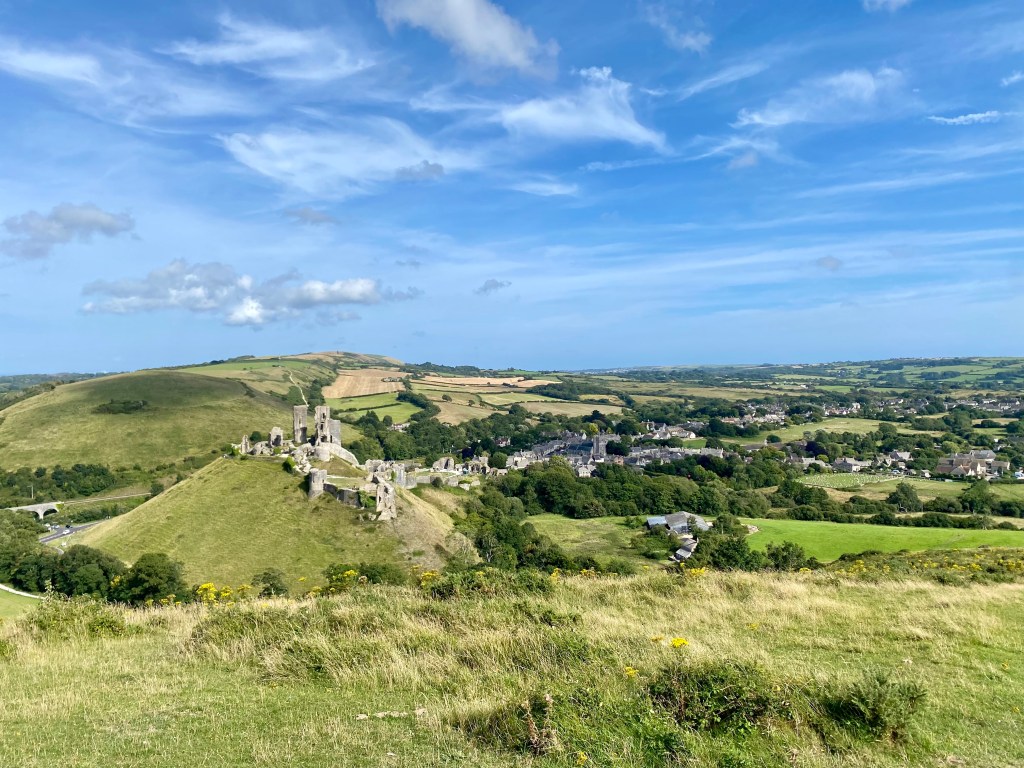
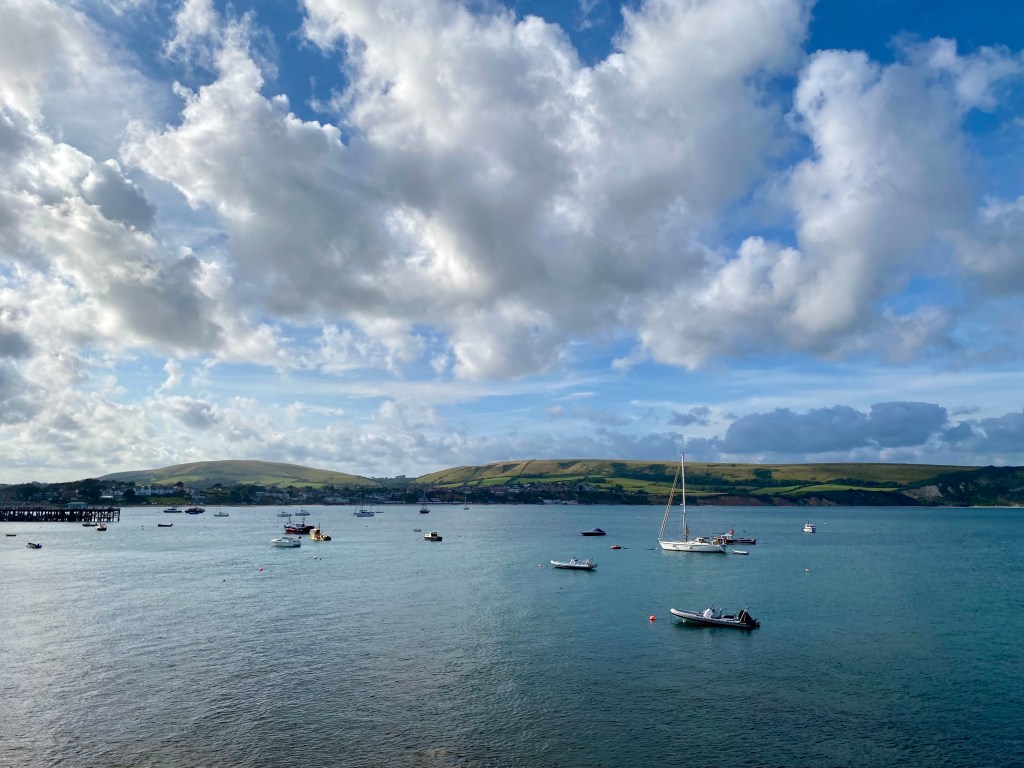
By now late afternoon, I left Corfe behind and made my way still further south to Swanage. This town makes for a beautiful place to stay in Dorset with plenty to see and do nearby, lots of great walking in either direction and a great spot for watching the sunset. A small fishing port until the early 19th century, the construction of the railway turned Swanage into a Victorian resort town.
After settling into YHA Swanage and eating dinner, I went for a post-dinner walk along the waterfront to Peveril Point, a great vantage point for views of Swanage itself, Old Harry Rocks and, weather-permitting, a great spot for sunset.

Day 2
Waking early, I set off for Lulworth Cove straight after breakfast in the hopes of beating the crowds that flock to see one of the most iconic landmarks along the Jurassic Coast, Durdle Door.
Lulworth Cove & Durdle Door
Key Details:

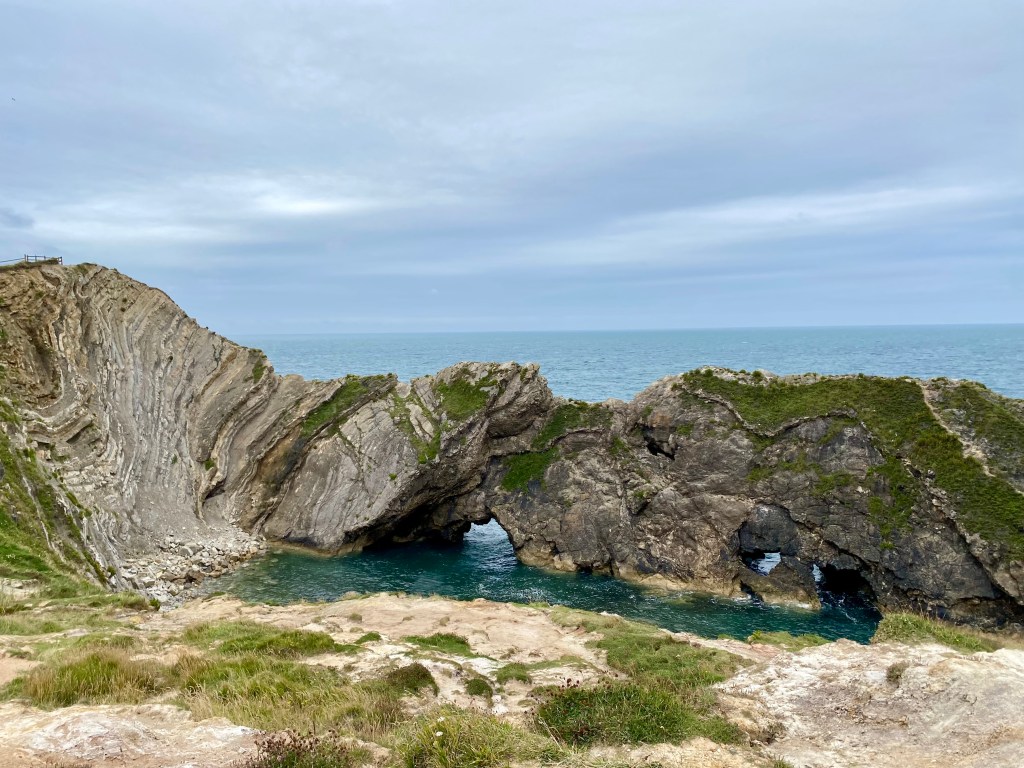
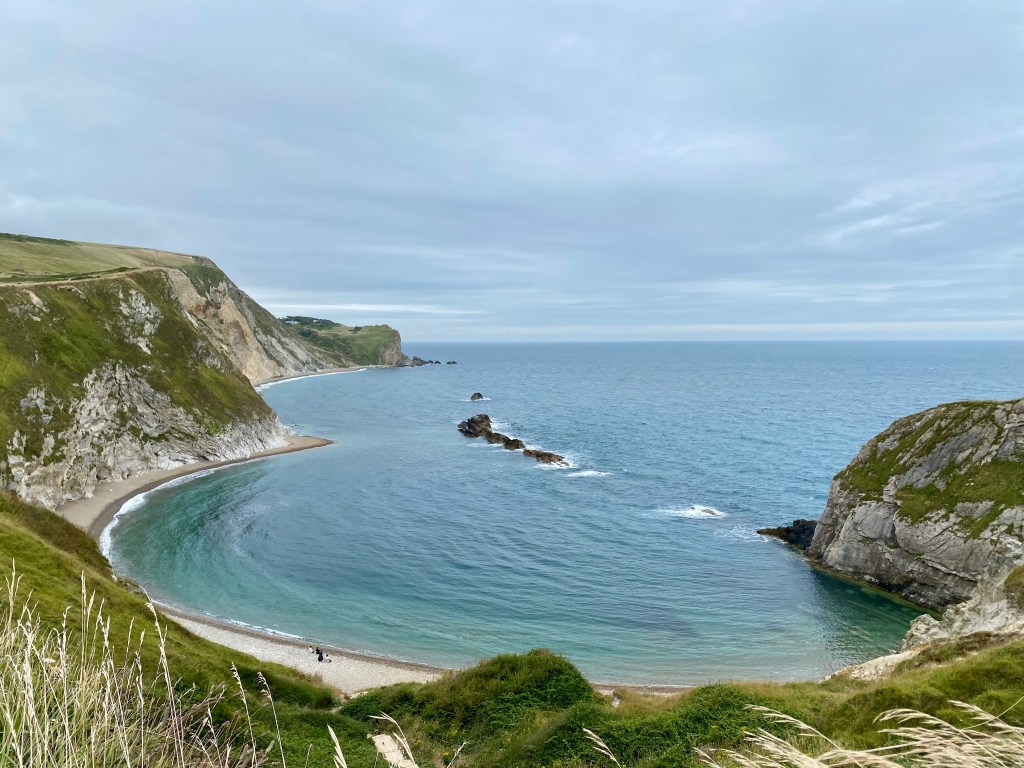
Reaching the car park at Lulworth Cove by 0730, I had no trouble securing a spot. Setting off from the car park, my first stop was the viewpoint overlooking Lulworth Cove. With the viewpoint to myself, I had the brisk wind in my hair as I marvelled at the myriad of greens and blues in the perfect crescent of the cove below. Even more incredible is the geology of this stretch of coastline, a stunning display of which is on show for all to admire at the viewpoint. So much so, this site is a natural UNESCO World Heritage Site alongside the likes of the Great Barrier Reef and the Grand Canyon.
The fascinating geology of the Jurassic coastline is well-demonstrated at Lulworth Cove, in particular at Stair Hole. This stretch of coastline is known as a “concordant coastline,” meaning it is made up of different types of rock that are parallel to the shoreline rather than layered one on top of the next as is usually the case for sedimentary rock. The result of Alpine Orogeny, the strata have folded to near vertical. This is the same process that resulted in the formation of many of the major mountain ranges throughout Eurasia, including the Alps. Still occurring today, this process commenced during the early Cretaceous, but was most prevalent during the Palaeocene to Eocene whereby the African, Arabic and Indian tectonic plates to the south converge with the Eurasian plates to the north.
There are a number of rock types found here, each of which erodes differently based on its composition. The main rocks along this coast are:
- Portland Stone – a type of limestone and the most resistant to erosion along the Jurassic coast. Composed of calcium carbonate (CaCO3) as with chalk, some marbles and travertine, it is the process of formation that has made Portland Stone so resistant to erosion and the perfect choice of building material by Christopher Wren when reconstructing London following the Great Fire of London. Formed during the Jurassic period when this area was underneath a warm, shallow sea, tiny pieces of broken shell made of CaCO3 would have fallen to sea floor and with further layers of calcium carbonate added as the grain of shell swirled around in the water, an ooid would have gradually formed. This is a tiny egg-shaped concretion of CaCO3 and piles of these would have formed during this period, covered with later sediments and placed under immense pressure for millenia. The ooids would have recrystallised at their points of impact and formed what is now known as Portland Stone.
- Purbeck Beds – formed during the Jurassic and Cretaceous periods, the next layer formed after Portland Stone. While still a limestone, the difference in geology of the Purbeck Beds marks the significant change in environmental factors. Formed in marine, freshwater and marginal marine water (eg. brackish shallow lagoons, coastal swamps), Purbeck Beds are a mixture of limestone, shale and marl, with the fossilised remains of coniferous tree stumps, primitive cycads, oysters, turtles and fish found instead of the solely marine creatures found in Portland Stone.
- Weald Clay – made up of sands, sandstone, grit and clay laid down by a large river running from the south-west into Dorset. This clay provides critical information about terrestrial life during the early Cretaceous, as this area was above the sea level during this time.
- Lower Greensand/Gault Clay/Upper Greensand – all formed during the Cretaceous period in succession, these layers are made up of sandstone, sand and silty clay. These layers were formed during massive flooding of the area which peaked during the late Cretaceous with the formation of the chalk layer on top.
- Chalk – the most recently formed rock type along this coast (late Cretaceous) and is more resistant to erosion, but less so than Portland Limestone. See A Very Full Day Trip to Dover for a full explanation of the geology of chalk, but put simply, it requires the build up of CaCO3 deposits on the sea floor from micro-plankton called coccolithophores.
The cove has a narrow entrance made up of a gap between the Portland Stone layer. This would have formed through the battering of waves over millenia gradually weakening a small fracture in the stone, widening over time to form the entrance that exists today. Waves that met this entrance head on would pass through the gap in a fan-like pattern. The force of the waves has been dispersed in a semi-circular motion to form the perfect crescent of Lulworth Cove that has eroded out of the softer Weald Clay that sits behind the near-impenetrable wall of Portland Stone. The chalk behind this has stopped this process from progressing any further, being much more resistant to erosion than the clay, though less so than Portland Stone.

Enough geology (for now)! Returning to the car park, I then took the Coastal path to Durdle Door. This requires climbing a whole lot of stairs, but once you’ve reached the top, it’s an easy walk along the top of the cliff to the car park at Durdle Door. From here, you descend some steps and a fairly gradual slope to where you have a choice of two sets of stairs; the one to the left leads to Man O’War Cove, while the other to the Durdle Door beach. After taking in the incredible views from above, I opted for Durdle Door first as I figured it was best to get that one out of the way while it was quiet.
Sharing the beach with maybe six other people, I struggled through the pebbles to admire the famous arch from every angle, and fully take in being on the beach visited by the children in Nanny McPhee, a beloved film of my childhood. The famous arch of Durdle Door is made of limestone (Portland Stone and Purbeck Beds), most of which has been eroded away to leave behind a small headland and natural arch. “Durdle” comes from the Old English “thirl,” meaning “bore” or “drill,” which is appropriate as the waves continue to bore away at the limestone. Only time will tell how much longer this arch will continue to delight tourists and locals alike.


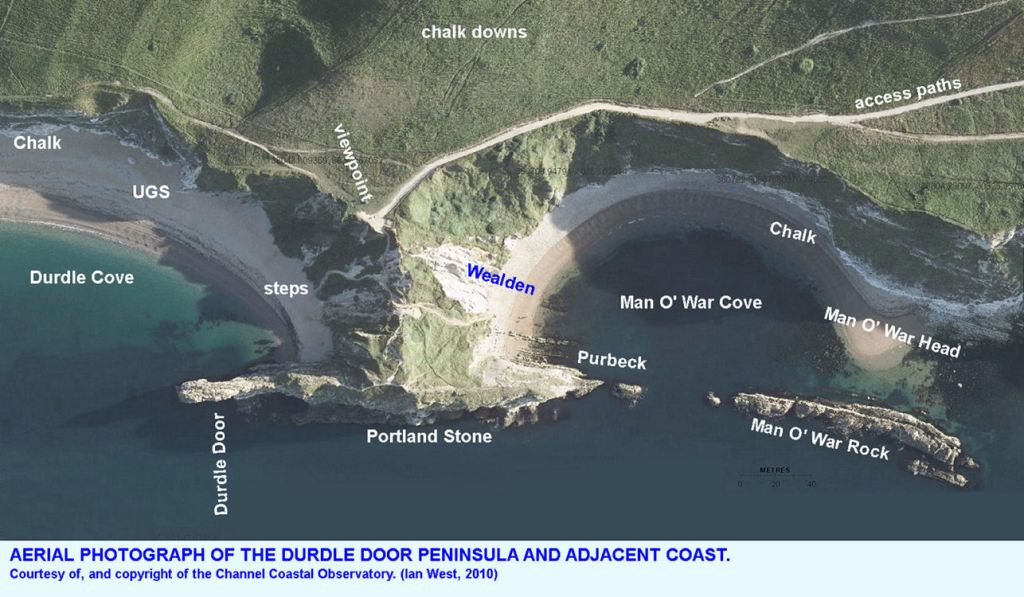
Retracing my steps back up to the coastal path, I then descended to Man O’War Cove, finding it had emptied of the few brave souls who had been swimming when I first arrived. An odd name (at least in my opinion), it is thought be a corruption of the Old English “Men-an-Vawr,” meaning “The Great Rock.” While not as brave as those swimmers, I decided it would be a waste not to at least get my feet wet, so I enjoyed an icy foot bath in preparation for the return hike.
Back at the car park with more time to spare than I had planned for, I enjoyed a hot chocolate sitting by the beach at Lulworth Cove and had a look through the Visitor Centre once it opened at 1000. This had some great information on the geology of the area, including samples of the rocks, fossils found locally and documentaries playing on repeat. Then it was onto my next stop at Studland Beach.
Sea Kayaking to Old Harry Rocks – Fore Adventure
Key Details:

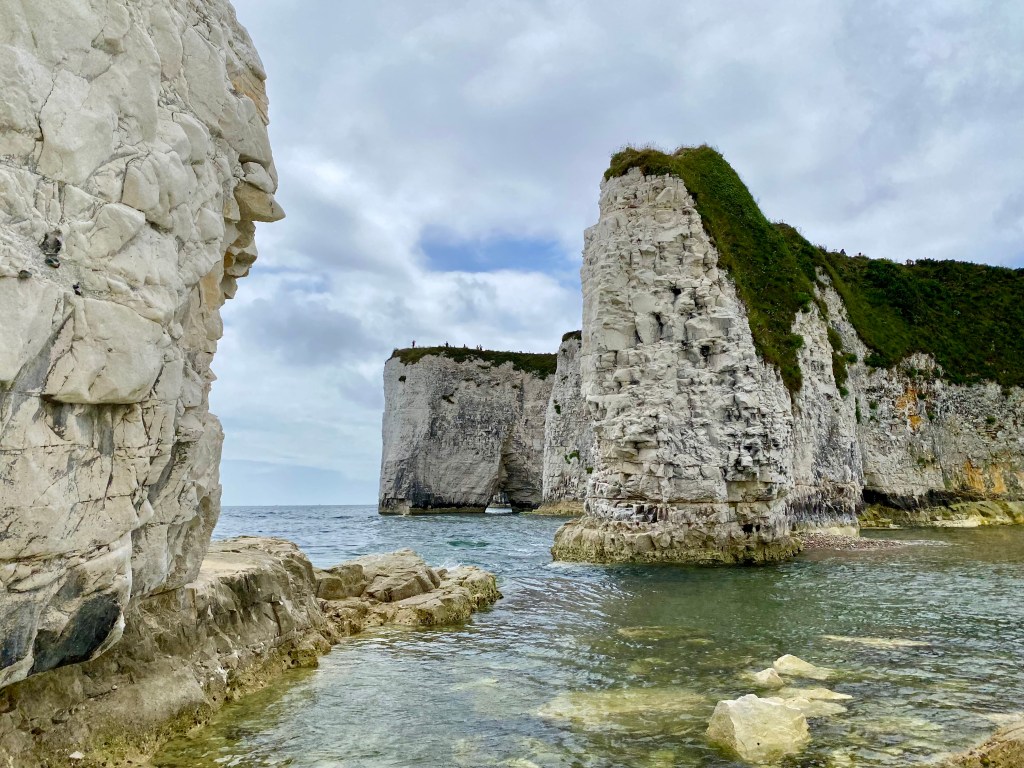
Always keen for a paddle to see the world from a different angle (and stay relatively dry!), I had no hesitations in booking a guided sea-kayaking tour from Studland out to Old Harry Rocks, a set of beautiful white limestone rocks off a headland visible from Swanage. Kitted up in a wetsuit, spray deck, helmet, life jacket and optional waterproof jacket, I was expertly guided through the gentle waters of Studland Bay to the Rocks, learning how to handle a sea kayak more skilfully and about the key points of interest in the bay such as the remnants of WWII defences. Once beneath the rocks, I was taken out into the “real” ocean. No longer protected in the bay, my newfound skills were tested as I followed my guide weaving around the rocks, fully appreciating their majesty from every angle. We even got to land at the base of the rocks for a walk around and photo stop, which really tested my skills in landing on the rocks!
Old Harry and his Wife are a sea stack and stump respectively, made up of the remains of a chalk seam that runs between Purbeck and the Isle of Wight. This was gradually eroded away following the increased sea levels after the last Ice Age to leave behind Old Harry Rocks at Purbeck and the Needles on the Isle of Wight. These would still have been connected as a chalk ridge, pushed up out of the sea floor by the Alpine Orogeny, until about 10,000 years ago.
A sea stack such as Old Harry is formed following a small weakness being made in a headland, gradually widened by the incessant battering of the ocean to form a natural arch. This continues to be battered and increases in size until the roof of the arch collapses, leaving behind a substantially shorter headland and a solitary sea stack. This is inevitably what is occurring at Durdle Door as well.
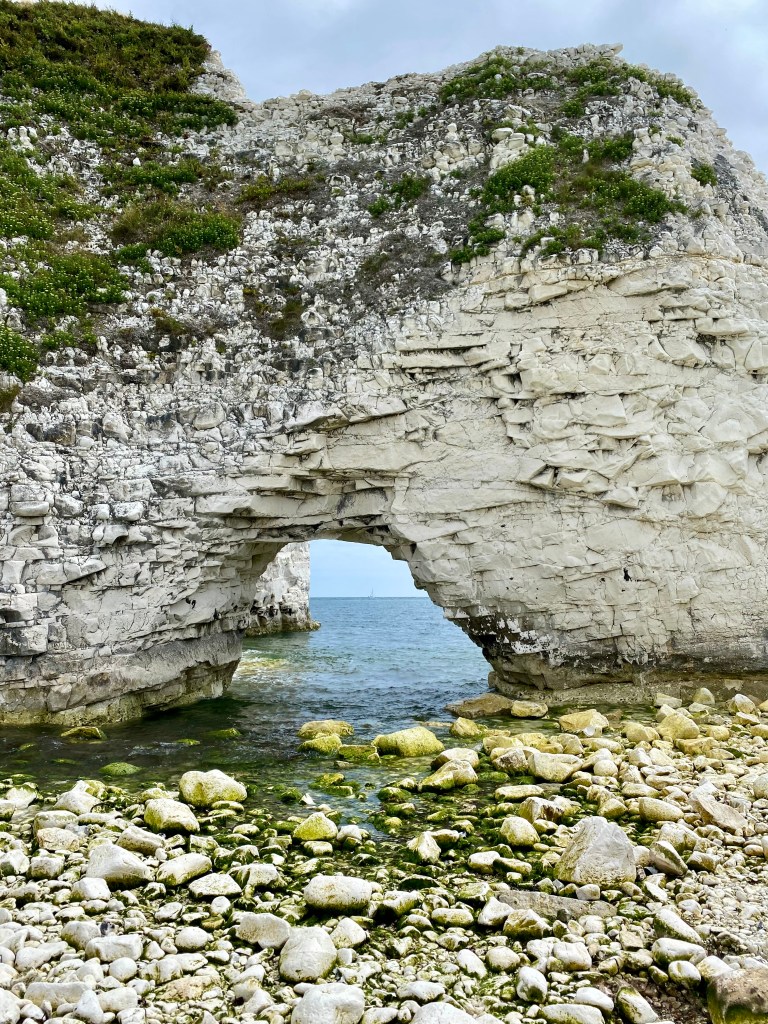
The unusual name for the rocks is said to have come from an old name for the devil, “Old Harry.” An alternate suggestion is that it is named after the infamous 15th century Poole pirate, Harry Paye, who is said to intercept arriving ships from this headland and hid his loot in the sea caves. What he did do was loot many French ships for gold and exotic goods which he brought back to the people of Poole and conducted raids on French and Spanish towns.
Dry and invigorated, I returned to Swanage where I laced my hiking boots and set off back to Old Harry Rocks, this time to see them from above.
Hike from Swanage to Old Harry Rocks
Key Details:

Back on the SWCP, the first section from Swanage town centre along the beach to the eastern end where you start to ascend up the cliff side was far from enjoyable. Crowded on a warm July afternoon, I felt I was doing battle as I dodged the sun-kissed, salt-burned locals and tourists. Sighing with relief as I climbed the cliff side (said no one ever), I was able to fully enjoy the views back down to Swanage on my way upwards.
Once at the maximum elevation, it was an easy and joyful walk along the grassy cliff top towards Old Harry Rocks. Once the end of the headland and the Rocks came into view for the first time, I was taken aback by the beauty of a white sailing boat in the distance matching the abundant wildflowers along the cliff top and starkly white limestone in the early evening light.
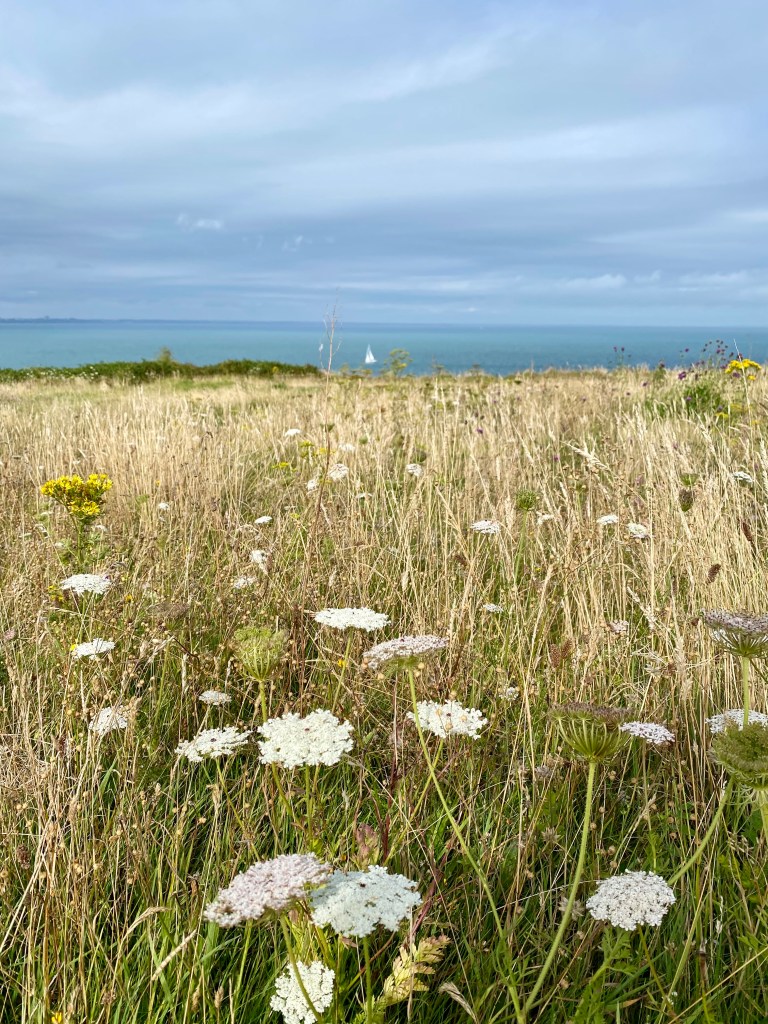
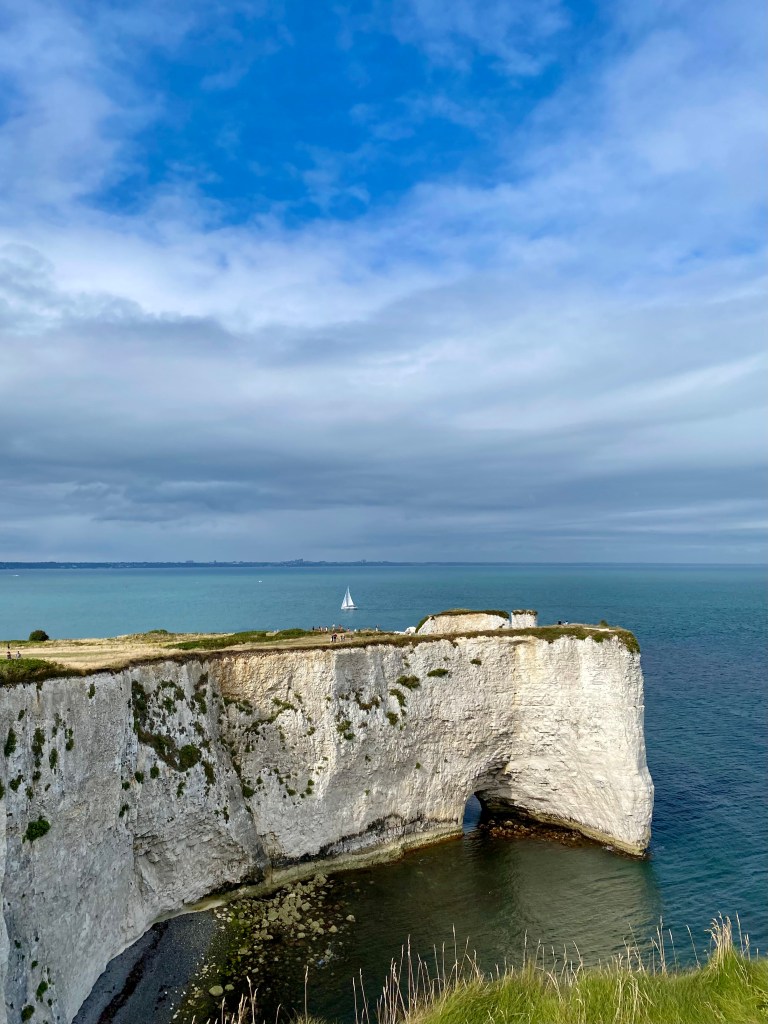

An easy walk back down to Swanage, I filled up on dinner and was ready for a gentle post-dinner walk back out to Peveril Point for my last night along the Dorset coast. With no real sunset to hang around for, I headed uphill through Durlston Country Park. Allowed to return to a wildflower meadow either side of the grassy paths, this was a beautiful spot in the fading light.

Sources
https://www.nationaltrustcollections.org.uk/place/kingston-lacy
https://www.nationaltrust.org.uk/visit/dorset/kingston-lacy/the-history-of-kingston-lacy
https://www.nationaltrust.org.uk/visit/dorset/kingston-lacy/the-garden-at-kingston-lacy
https://www.nationaltrust.org.uk/visit/dorset/kingston-lacy/things-to-see-inside-the-house-at-kingston-lacy
https://www.nationaltrust.org.uk/visit/dorset/kingston-lacy/the-treasures-at-kingston-lacy
https://www.rspb.org.uk/days-out/reserves/arne
https://base-prod.rspb-prod.magnolia-platform.com/dam/jcr:fe7250cb-2091-4178-93f2-b11379a8e602/downloads/reserves/reserve-maps/general-trail-maps/arne-map.pdf
https://www.nationaltrust.org.uk/visit/dorset/corfe-castle/the-history-of-corfe-castle
https://corfecastle.co.uk/the-castle/
https://www.visit-dorset.com/explore/areas-to-visit/swanage/
https://en.wikipedia.org/wiki/Alpine_orogeny
https://www.stonespecialist.com/news/stones-quarries/great-british-stone-portland-limestone
https://www.geolsoc.org.uk/Policy-and-Media/Outreach/Plate-Tectonic-Stories/Lulworth-Cove#:~:text=Lulworth%20Cove%20owes%20its%20form,Jurassic%20limestones)%20steeply%20inclined%20inland.
https://www.geolsoc.org.uk/GeositesLulworth
https://www.visit-dorset.com/listing/durdle-door/126276301/
https://www.britannica.com/place/Purbeck-Beds
https://johnblanchard.net/index.php/unesco-world-heritage-site-geology/437-geology-trial-12#:~:text=The%20Upper%20Greensand%20Formation%20within,reach%20their%20maximum%20thickness%20(c.
https://www.dorsets.co.uk/beaches/durdle_door.htm
https://wessexcoastgeology.soton.ac.uk/durdle.htm
http://www.dorsetlife.co.uk/2012/09/geology-of-dorset-the-cretaceous-rocks/
https://en.wikipedia.org/wiki/Man_o%27_War_Cove
https://www.rgs.org/schools/resources-for-schools/jurassic-coast-of-dorset-and-east-devon/old-harry-rocks
https://geographical.co.uk/culture/discovering-britain-old-harry-rocks



 Xanthe Explores
Leave a reply to jameskeneally Cancel reply