With a week spare before starting a new job, I jumped online to find some last minute flights and with those to Oslo being ridiculously cheap and even at great times, I did not hesitate as Scandinavia had not yet been touched on my bucket list. Envisaging dramatic fjords, deep green pine trees, delicious pastries, colourful houses and long hours of sunshine, I was not disappointed for a city escape. Not many cities, particularly capital cities, I’ve visited feel so connected to nature and for someone who loves hiking and the outdoors as well as a good few hours poring over a museum, Oslo was a joy to visit!
- History
- Itinerary
- Outdoor activities:
- Oslo city activities:
- Practical Bits
- Sources
See also: Hikes to Squeeze into Your Long Weekend in Oslo
Brief History of Oslo, Norway
Situated at the head of the Oslofjord, Oslo is every bit the successful, modern capital city. The oldest archaeological evidence points to settlements dating back to the Stone and Bronze Ages, drawn to the rich agricultural land surrounding Oslofjord.
The city’s founding in 1049 is first described in the Norse Sagas when King Harold Hardrada (died in 1066 trying to claim the English throne) designated it a trading place, and then a bishopric with construction of a cathedral by his son, Olav Kyrre. Becoming an important cultural center for East Norway, much of the city was owned by the church, with Christianity providing a strong influence. Oslo at this time was located around where the Barcode is today in Ekeberg.
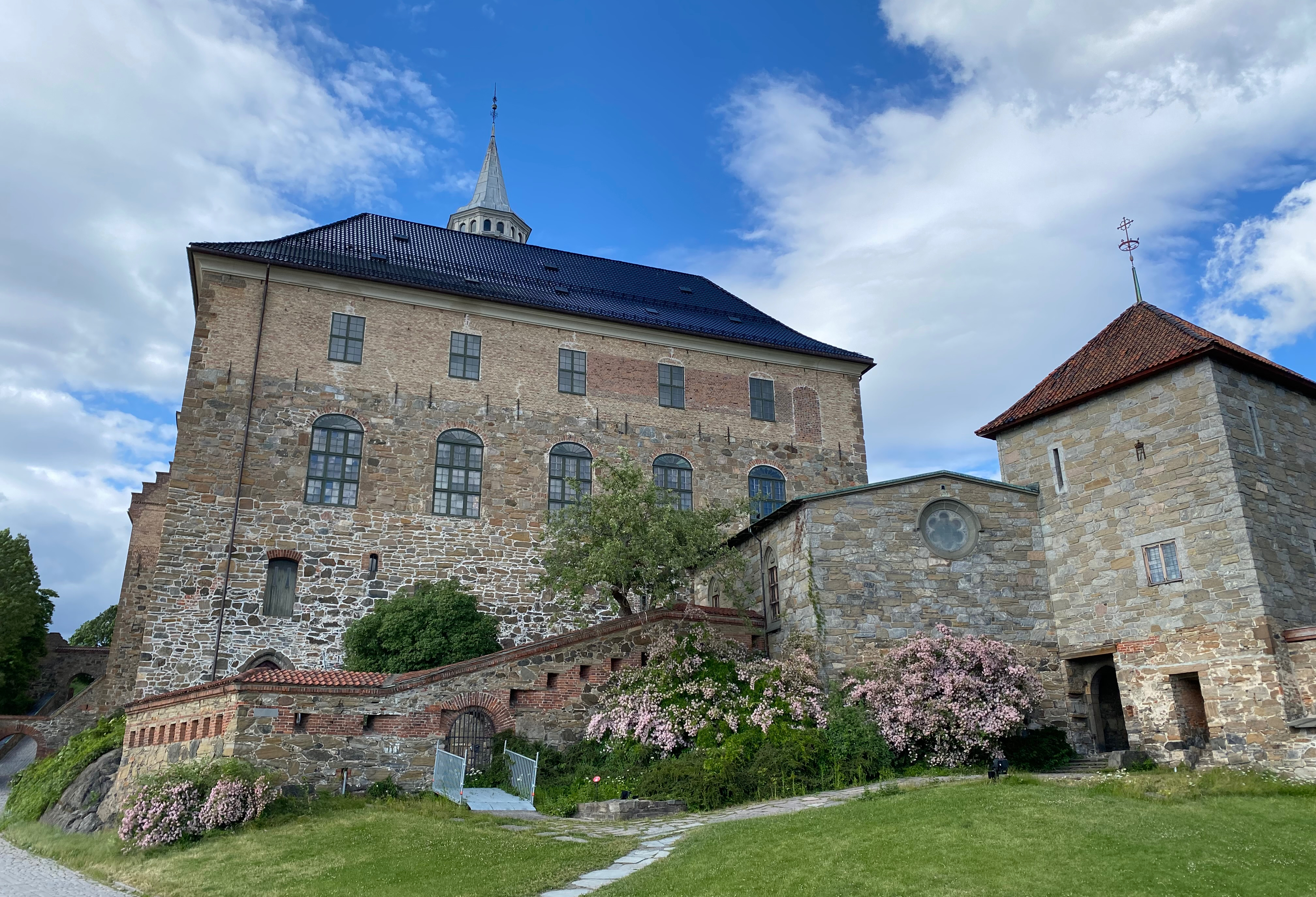
During this time, Trondheim was the capital of Norway, moving to Bergen in 1219. When King Haakon V came to power in 1299, he chose to reside in Oslo, leading to a sudden increase in construction and Oslo succeeding as the capital city. Akershus Fortress was constructed in the west of the city to protect the capital against invasion from Sweden.
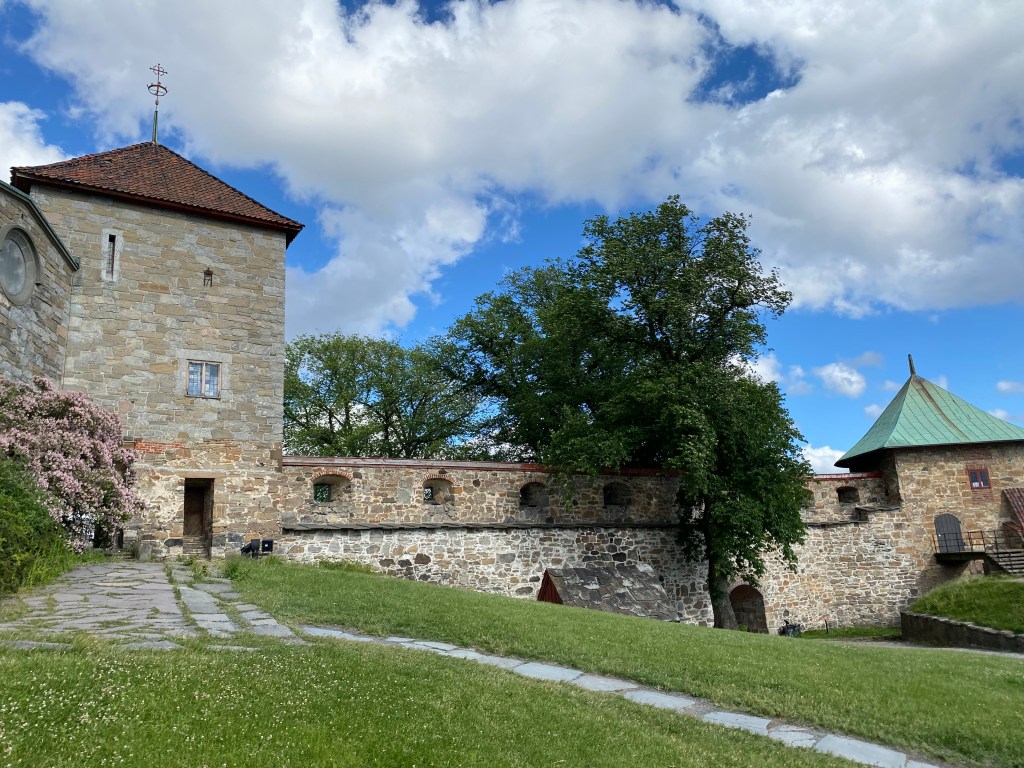
The Black Death killed over half the city’s 3,000 residents from 1349, and with a loss of income, the church declined and most of the churches fell into ruins. Hanseatic merchants took over most of the trade, a medieval trade league started in northern German towns that dominated northern European trade throughout the 13th to 15th centuries. Oslo lost its status as a capital as it was forced into a union with Denmark and Sweden in 1397, the Kalmar Union, and Copenhagen was designated the capital of the three nations. This union eventually collapsed in 1523, so Oslo was a capital for a short time once more until 1536, following which Denmark and Norway began a union with Copenhagen as its capital. The reformation saw the conversion of Norway from Catholic to Lutheran, so what churches were left were destroyed by the Danish to make way for Lutheran churches.
Being constructed predominantly of wood like many cities of the time, Oslo was subjected to frequent fires. A particularly devastating one in 1624 burnt the entire city to the ground, raging for three days. King Christian IV of Denmark decided that instead of rebuilding the old city, a new city should built across the fjord, closer to Akershus Fortress. This was strongly opposed by the people and as it was outside the limits of Oslo, King Christian decided it should be named Christiania after himself and it was constructed from brick and stone to prevent a repeat. Following contemporary city planning, it was laid out in a grid with Renaissance style architecture. This architecture can still be seen in the area surrounding Akershus Fortress. The result was marked inequalities between the rich and poor, as those with money lived in modern brick houses, while the poor remained in wooden houses outside the new city limits.
The Great Northern War in the early 18th century was fought between Sweden and an alliance of Russia, Denmark-Norway and Saxony-Poland-Lithuania for supremacy in Northern Europe and control of the Baltic Sea. The result was the defeat of Sweden, while Russia gained control of the Baltic for the first time. Shipbuilding and trade took off in Christiania as a result, booming through trade agreements with Great Britain and the Netherlands who had long-established, vast trade networks across the world. Tobacco and coffee reached Norway for the first time as a result.
Christiania regained capital city status as the capital of the independent Kingdom of Norway in 1814 following the Treaty of Kiel. This saw Denmark ceding control of Norway to Sweden and Norway was allowed to keep their own laws and customs, so the Bank of Norway, the Royal Palace and the Storting (the Norwegian Parliament) were all constructed during this time. The city limits were also greatly expanded, including the old site of Oslo within the capital once more. The population also grew massively, finally overtaking Bergen, along with construction of many new apartment buildings. A spelling reform changed the capital’s name during this time to Kristiania as “ch” was replaced with “k.” Various industries boomed, particularly timber and fabrics along the Aker River due to the number of waterfalls providing power.
The union with Sweden was dissolved in 1905, resulting in an independent Norway. Kristiania had been named after a Danish King, so it was felt that the name should be changed to better reflect the history of Norway, officially changing to Oslo on January 1, 1925.
During WWII, Oslo was occupied by German forces, who made their way up the Oslofjord in April 1940, making it one of the first cities in Norway to be occupied. Victoria Terrasse, a beautiful building near the Royal Palace, was used as the main German headquarters and became synonymous with torture and abuse as this was were the interrogations occurred. Two Allied bombing attempts were made on this building, but both times they missed and killed civilians instead. The Norwegian Government and Royal Family fled to London throughout the war after refusing the demands of the Germans for as long as possible. Radio broadcasts from King Haakon throughout the war served as a source of inspiration for those remaining under Nazi occupation and was the main symbol for Norwegian freedom and resistance.
Several boats left the Oslofjord for mainland Europe carrying Jews throughout the war; however, any Norwegian Resistance members who were caught were executed at Akershus Fortress where the Norwegian Resistance Museum is now situated.
Despite the growth following WWII, mainly due to the absorption of surrounding municipalities, it was not until the discovery of the Ekofisk oil field on Norway’s Continental shelf in the North Sea that the Norwegian economy really took off. Oslo subsequently became one of the world’s wealthiest and most liveable cities.
The leading Norwegian cultural institutions are all located in Oslo, making it the ideal place to get your first taste of Norway. This includes the National Theatre, the Oslo Concert Hall and Norwegian Opera House, as well as many museums such as the National Museum of Art, Architecture and Design, the Historical Museum in the University of Oslo, the Munch Museum, the Fram Museum, the Norwegian Folk Museum and the Viking Ship Museum, sadly under reconstruction while I visited. It is also well located for winter sports, such as cross-country skiing and annual competitions at the Holmenkollen ski-jump. The Nobel Peace Prize Ceremony is held here every year, and you can visit the museum about the prize’s creation and its previous winners.

The Norwegian Monarchy continues to this day. Following the many unions throughout Norway’s past, it was ruled by the Danish Royal Family from the 14th century and then the Swedish Royal Family from the 19th century. It was not until the independence of Norway in 1905 that they chose their own monarch, King Haakon VII, following a referendum to decide whether to remain a monarchy or become a republic. King Haakon was the second son of the Danish Royal Family, growing up in Copenhagen. Together with his wife, Princess Maud, the daughter of King Edward VII and Queen Alexandra of the United Kingdom, they were elected the King and Queen of Norway. The connection to the UK, along with the fact they already had a son who could ensure the succession, were major reasons for the choice.
Itinerary
| Day 1 | Walk around Oslo city centre |
| Day 2 | Nasjonalmuseet (National Museum) |
| Historisk Museum (Historical Museum) | |
| Hovedøya Island Hike | |
| Nobel Peace Centre | |
| Day 3 | Oslofjord Kayaking Tour |
| The Fram Museum | |
| Performance at the Oslo Opera House | |
| Day 4 | Nordmarka Forest Hike |
| MUNCH |
Day 1
Arriving in the late afternoon, after dropping my bag at the hostel I set off for a wander through Oslo, getting my bearings for the next few days and enjoying the gloriously bright evening sunshine. I headed first for Akershus Fortress to catch my first glimpse of the Oslofjord that so dominates the landscape of this city. A brilliant blue, it provides a stunning backdrop.
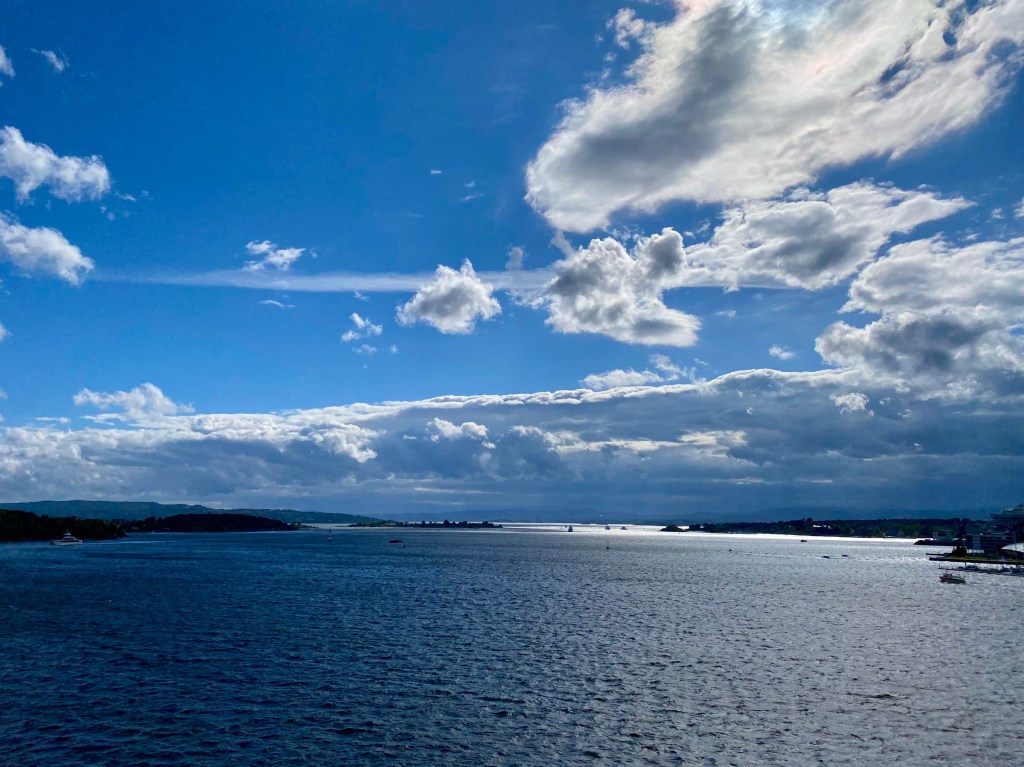
Situated in a strategic location on the edge of the fjord, this fortress was built in the 13th Century under King Haakon V to protect the city against invasion from the Swedes, withstanding a number of sieges. It has been expanded over the centuries, most notably turned into a Renaissance Castle in the 16th Century by King Christian IV. Guided tours of the fortress run during the Summer, which I was a little too early for, as well as the Norwegian Resistance Museum, which sadly I did not have time for. This documents the history of Norway throughout WWII on the site of the torture and death of many members of the Norwegian Resistance. It is open every day between May and October from 1000-1700.
Next I headed along Langkaia where your eye is drawn to the Oslo Opera House, the home of the Norwegian Opera and Ballet Companies and a wonderful piece of modern architecture. It reminded me of a mixture of an iceberg and a glacier, with the evening sunlight bouncing off the endless glass and the sleek, interesting angles of the roof and walls. Most excitingly, for someone who loves a good viewpoint, you can walk up onto the rooftop for beautiful views of the fjord and city below. The architects intended this to provide a new public space as well as to draw together the outside, natural world and the city, which I feel they have certainly achieved. The stone has a gorgeous texture and the colour glows in the sunlight, made of white marble from Carrara, Italy. Oak is used extensively inside and adds to the warmth provided by the sunlight streaming in through the glass. I was reminded a little of the Sydney Opera House, both being dominant, interesting, light-coloured (and filled) buildings that have completely changed the architectural landscape of their respective cities.
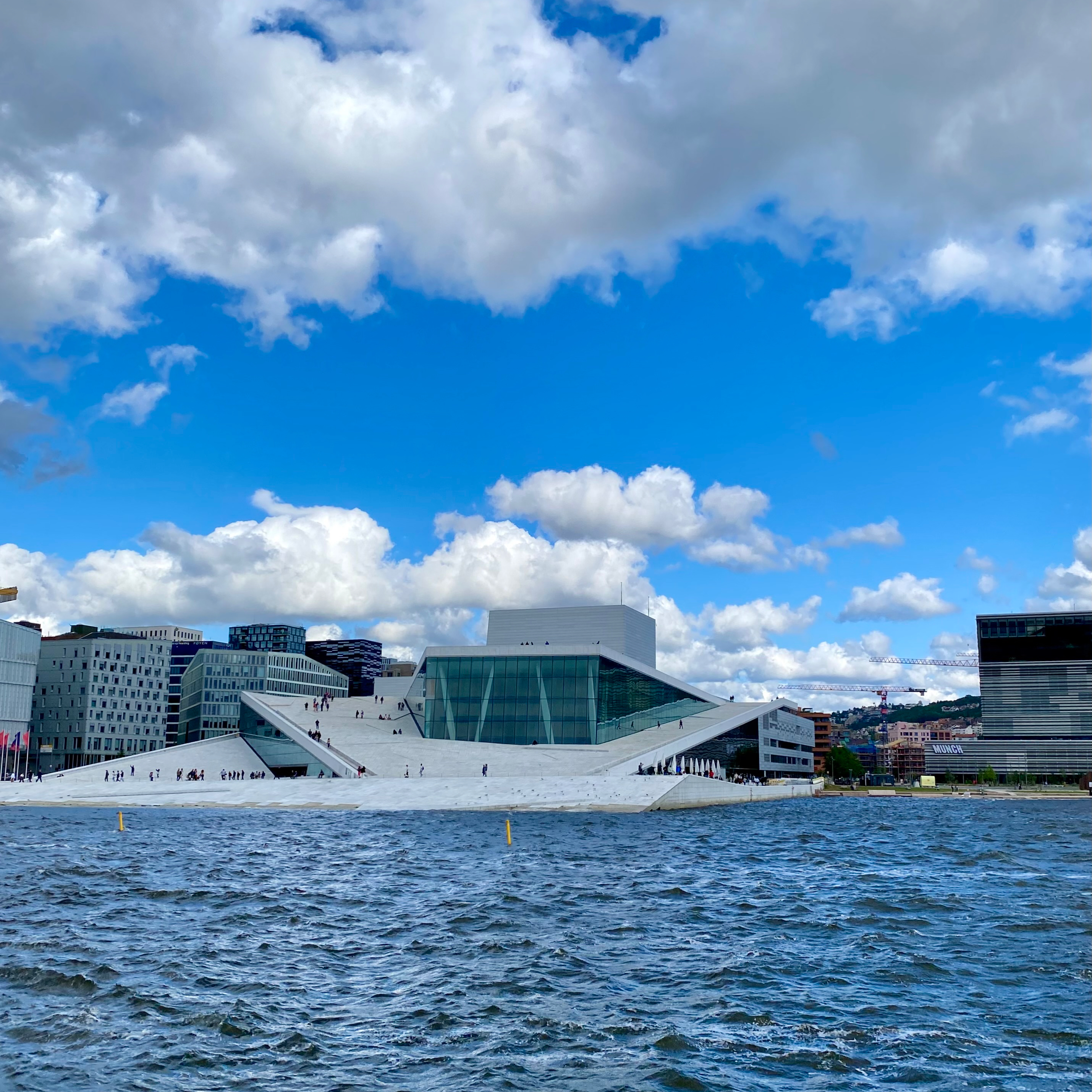
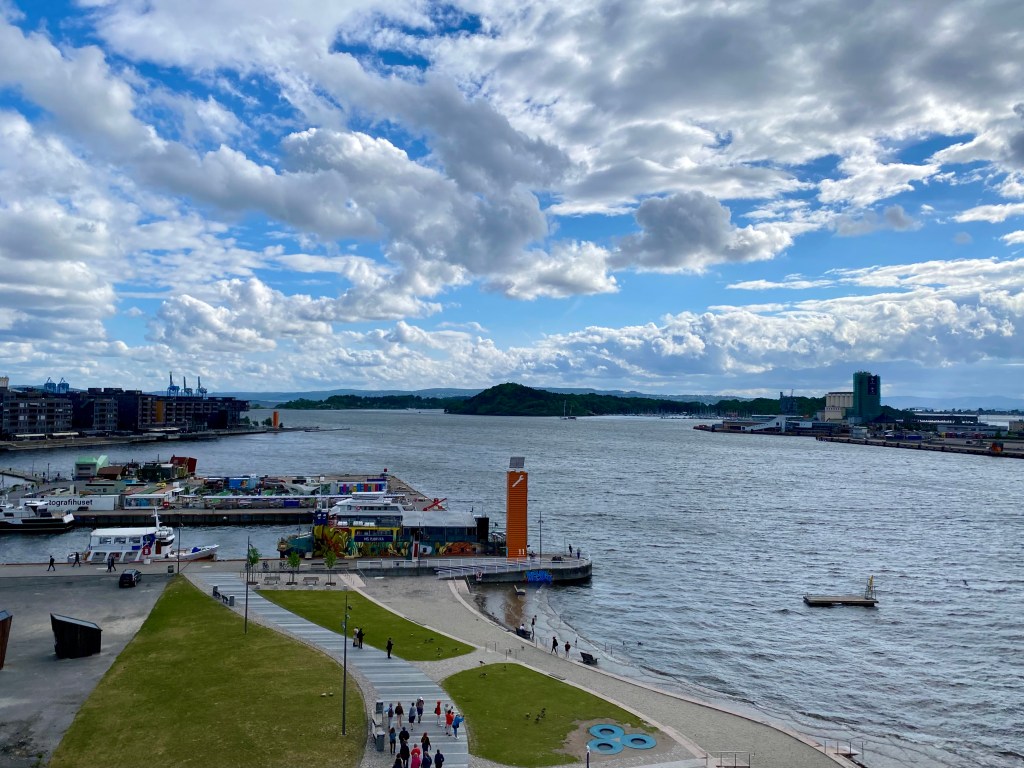
Walking along the southern side of the Opera House, I enjoyed a nosy through the windows to the costume department, then crossed the bridge to MUNCH, the gallery dedicated to the life and works of Edvard Munch. Another incredibly interesting, modern building, it is a leaning tower like none I have seen before. The sound of the wind rushing through the recycled aluminium panels sounded like screaming, which seemed very fitting as it is the home of several versions of Munch’s most famous piece, The Scream.
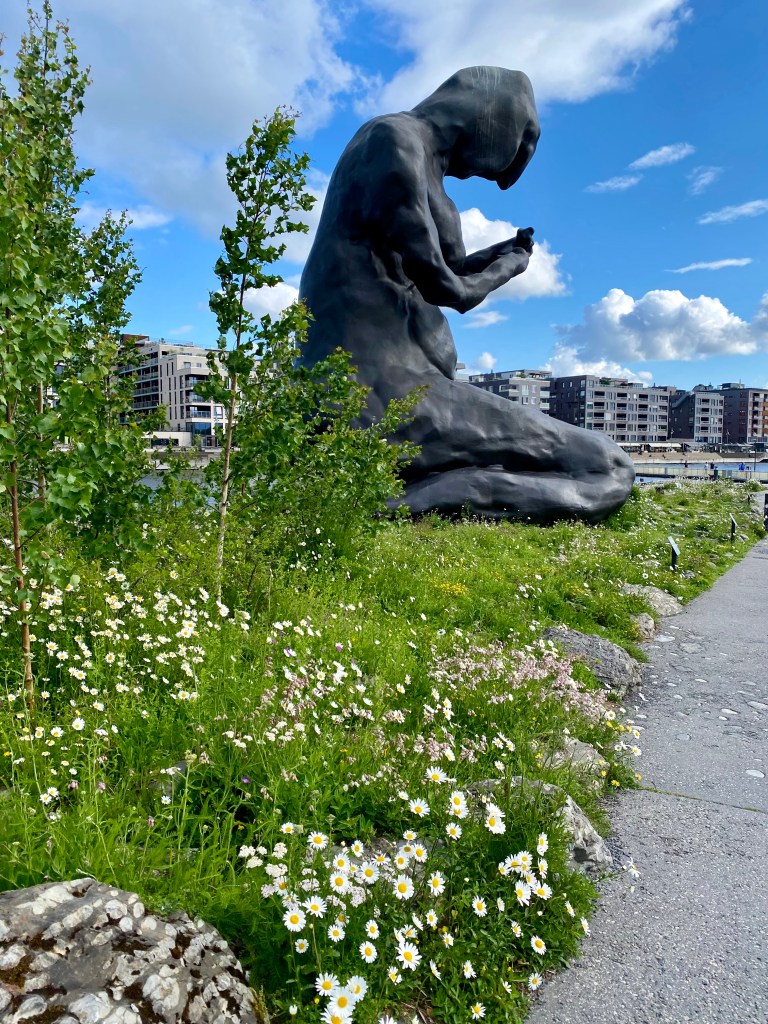
With plans to return to the gallery, I moved on to Moren (The Mother), an enormous (nine meters tall to be more precise) bronze sculpture by the British artist, Tracy Emin. It is of a woman kneeling in a flower meadow, grown from seeds from around the Oslofjord, softening the angular, striking MUNCH and other surrounding modern architecture.
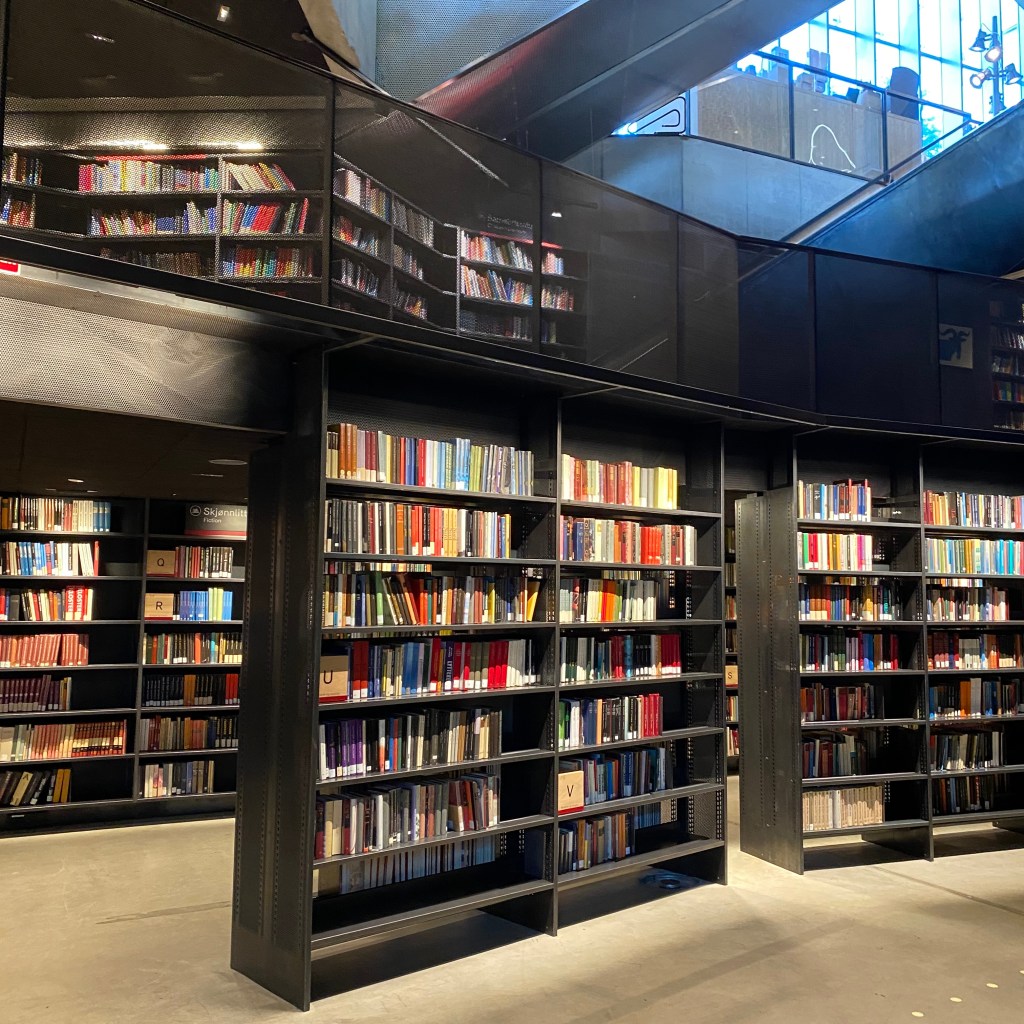
The Oslo Public Library, Deichman Bjorvika, is yet another striking building, and worth a quick visit for any lover of books or architecture. Downstairs felt warm and cosy with dark timber panelling, with many light-filled spaces in the levels above, and of course, views of the city and fjord.
Passing the station, I wandered up Karl Johans Gate, the main thoroughfare and shopping street in Oslo. Wide and tree-lined, I didn’t feel the claustrophobic chaos that is often felt on the equivalent streets in other capital cities. This busy street was once made up of a series of streets and is named after King Charles III John, who was also King of Sweden as Charles XIV John. Passing many shops, the cathedral, parliament building, green spaces and the university, I reached the Royal Palace and surrounding parks, which was a lovely place to explore before dinner, filled with people walking their dogs and small children, making the most of the evening light.
Located on a rise above the rest of the city, Bellevue, the palace has been in this location since 1849 and significantly improved to make way for the arrival of the new Norwegian Royal Family in 1905. The gardens surrounding it included a number of interesting sculptures, ponds and lovely summer flowers.


I then made my way back to the hostel, ready to explore this city more thoroughly in the days to come.
Day 2
With the weather prediction proving correct, I had allocated the day for museums and galleries to keep me out of the wind and rain that stuck around until much later than originally predicted. Luckily for me, I will happily spend many hours in a museum!
National Museum (Nasjonalmuseet)
Key Details:

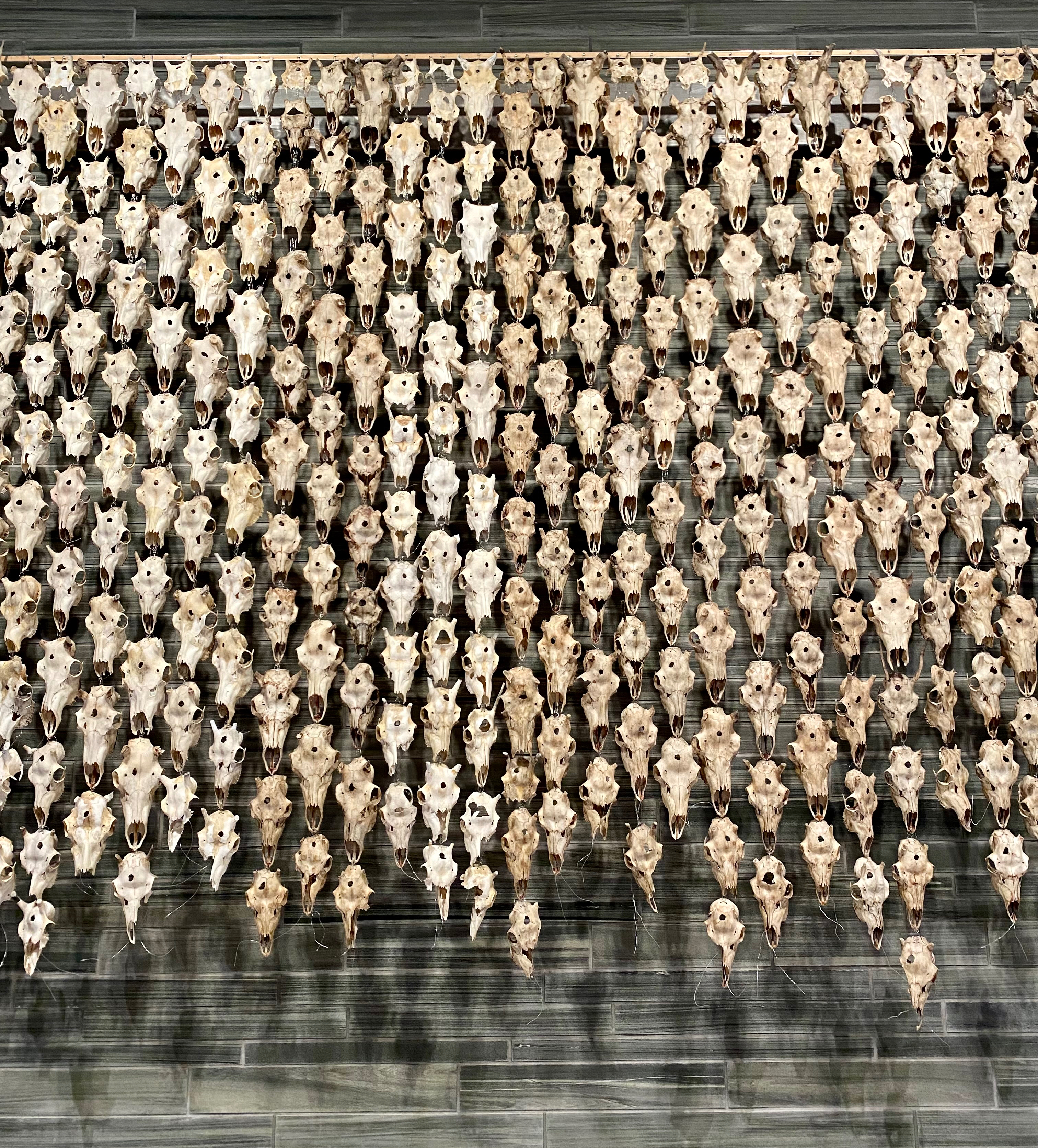
Arriving at the National Museum, I purchased my ticket and was instructed to use the free lockers and hangers downstairs. Used to many other galleries and museum where you carry your backpack on your front, it was liberating to wander around the museum with nothing. Back in the entrance hall, I downloaded the museum’s app which provides you with audio guides focussing on a range of interests and selected the highlights tour to learn a little more about key pieces scattered throughout. The first stop was a highlight, being the Pile O’Sapmi, a large piece in the main entrance made up of 400 reindeer skulls, bleached to varying degrees and arranged to match the pattern on the Sami flag. Every reindeer skull has a bullet hole in the forehead. This piece makes reference to the Reindeer Husbandry Act of 2007, which imposed limits on the number of reindeer allowed in each grazing area. This forced the artist’s brother into bankruptcy, reducing his herd to 75.
The main collection exhibition showcases a significant portion of Norway’s largest collection of art, architecture and design, spanning ancient history to modern day arranged in chronological order. Following the galleries from oldest to most recent, I was able to get a sense of Norway’s place in history amongst other nations and their distinctive style and influences throughout the centuries. The first floor covered design and crafts while the second floor contained artwork.
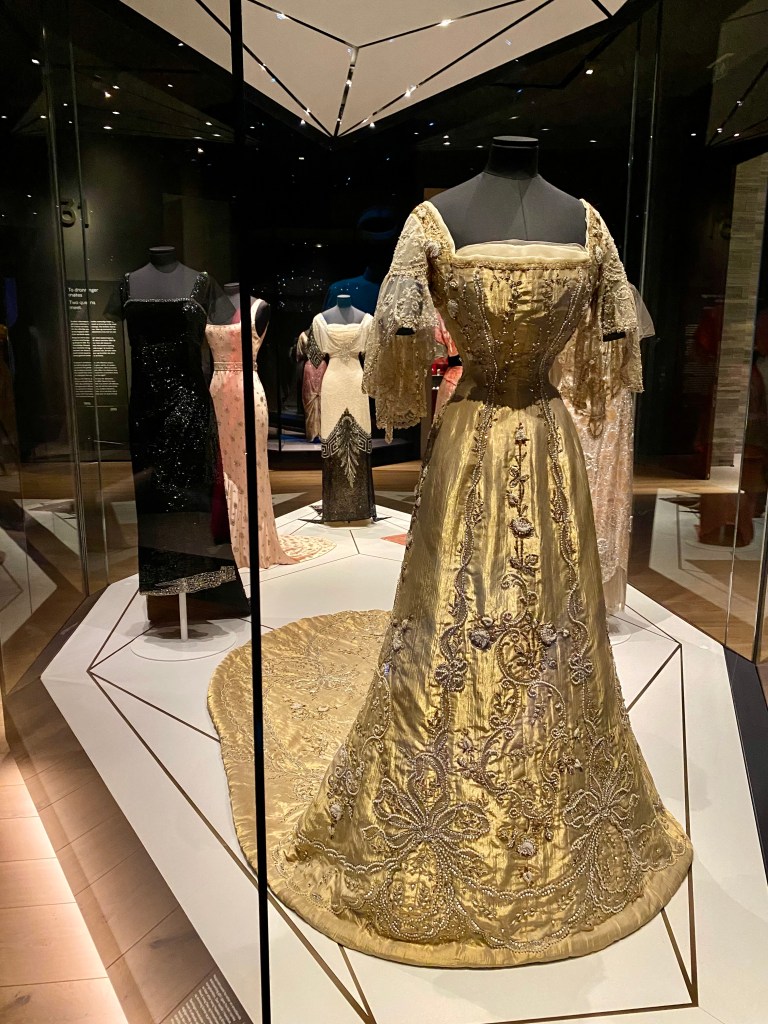
A highlight on the first floor was the collection of Queen Maud’s dresses, in particular her stunning coronation gown. Queen Maud was known for her exquisite wardrobe and greatly influenced the fashion of the day during her reign. She was regarded as a reserved person by the public, often referred to as “Her Royal Shyness” and never delivered a public speech throughout her life. Those who knew her instead described her as warm and generous, giving what she could to local charities as discretely as possible, and preparing Christmas gifts for her family and friends well in advance, having already prepared those for the following year when she died. She was also interested in interior design, with pink as her favourite colour, and loved participating in outdoor sports. Her wardrobe was moved to the National Museum early in WWII as the invasion drew nearer by two chamber maids, carrying garments and corresponding written descriptions. Further donations from the Royal Family have been made over the years, amassing around 600 pieces.
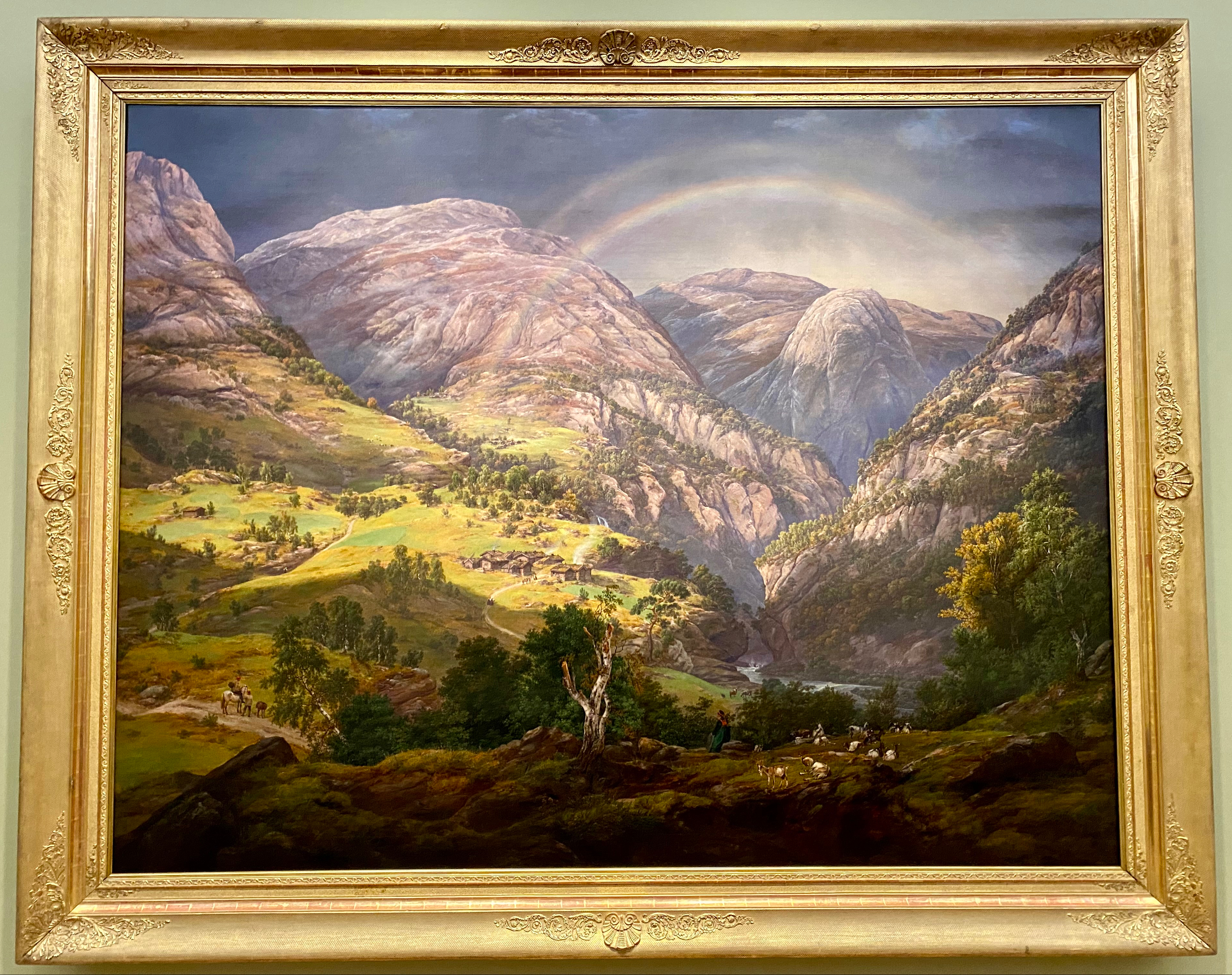
I particularly enjoyed some of works of famous Norwegian artists on the second floor, including the incredibly atmospheric landscapes of Johan Christian Dahl, showcasing the grandeur of the Norwegian scenery. The room dedicated to Edvard Munch was probably the busiest in the entire museum, displaying one of the two painted versions of his most famous piece, The Scream.

The third floor houses regularly changing exhibitions. I thoroughly enjoyed one focussing on the works of Britta Marakatt-Labba whose collection, made up of textiles, prints and sculpture, is greatly influenced by her Sami background and showcases their culture, history and mythology.
Too much to absorb in one morning, I enjoyed a delicious roll with Norwegian smoked salmon in the cafe on the second floor, before taking a break from the National Museum. I had booked a boat tour of the fjord, but with the weather deteriorating, this was cancelled. I made my way to the Historical Museum next.
Historical Museum
Key Details:

Located within the University of Oslo, the Historical Museum houses a collection of historical and ethnographic objects spanning from prehistoric times to modern day. Upstairs houses a number of permanent exhibitions, including one on Vikings that displayed a range of objects. Grabbing one of the free exhibition guide books located in each room, each of the objects provided a story on life as a Viking. Another interesting permanent exhibition covered Medieval Norwegian life, giving a glimpse into what Oslo would have looked like during this period.
While I love museums and can usually spend several happy hours within one, glancing out the window to shimmering blue skies and water, I had no choice but to head back to the pier and catch the next ferry out to explore one of the islands of the Oslofjord on my own.
Hovedøya Island Hike
Key Details:
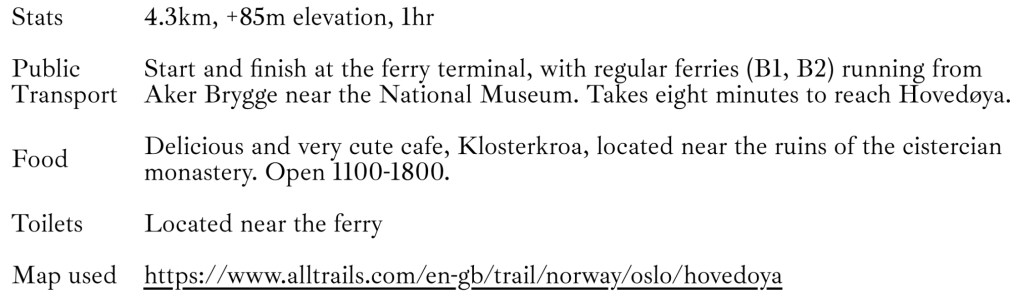
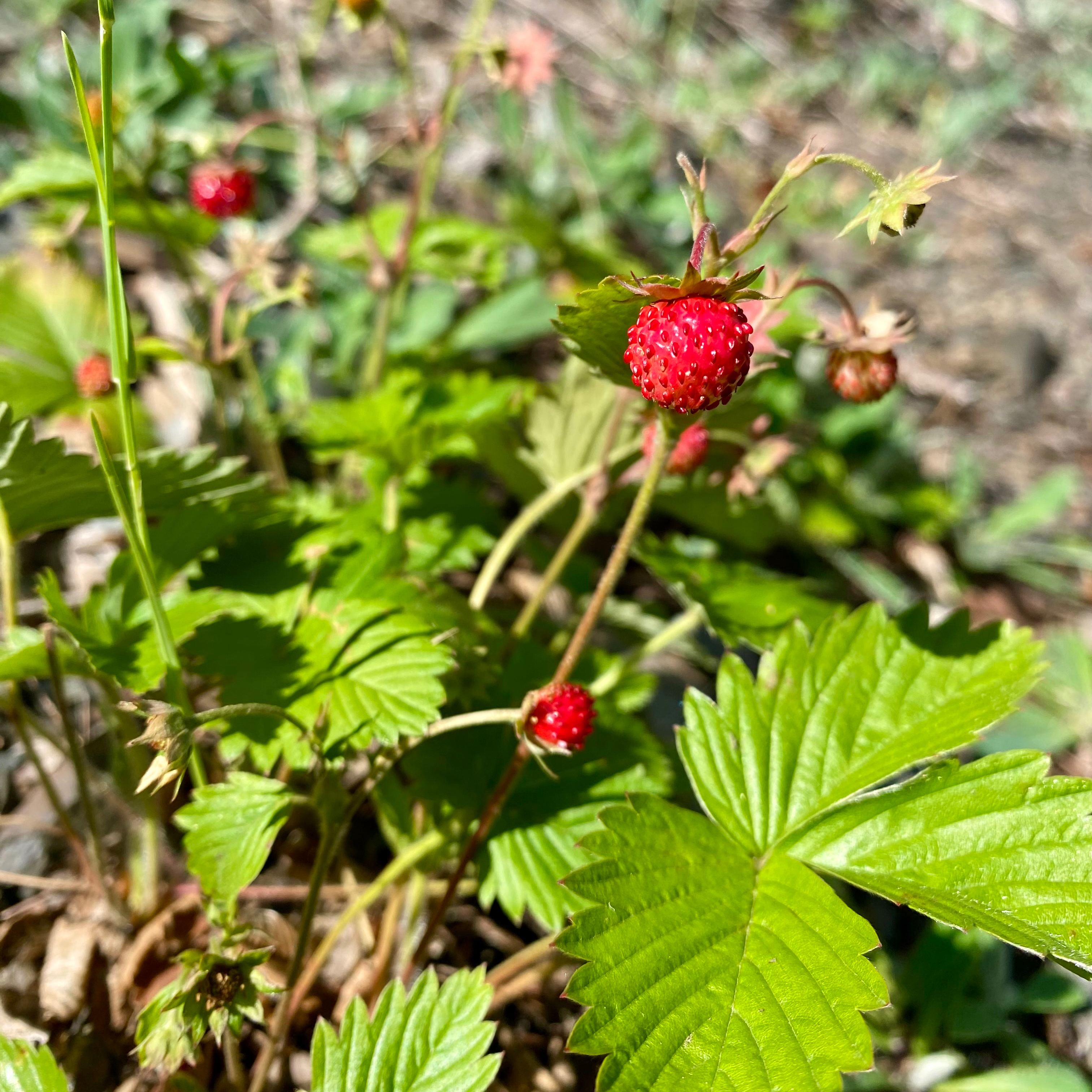
Enjoying every second on the deck of the ferry for the eight minute journey to Hovedøya, I arrived invigorated and ready to explore this little island. With the water shimmering in the post-storm sunshine, I set off on an anti-clockwise loop around the island. The trail consists of a mixture of wide, well-made trails, as well as some smaller, steeper ones on the eastern side of the island. With a pair of good shoes, this trail has plenty to explore and is very doable.
For an easy hike that takes no time to reach from the centre of the city with the bonus of delicious food, Hovedøya is a great place to visit. For more details, I describe all you need to know in this post.

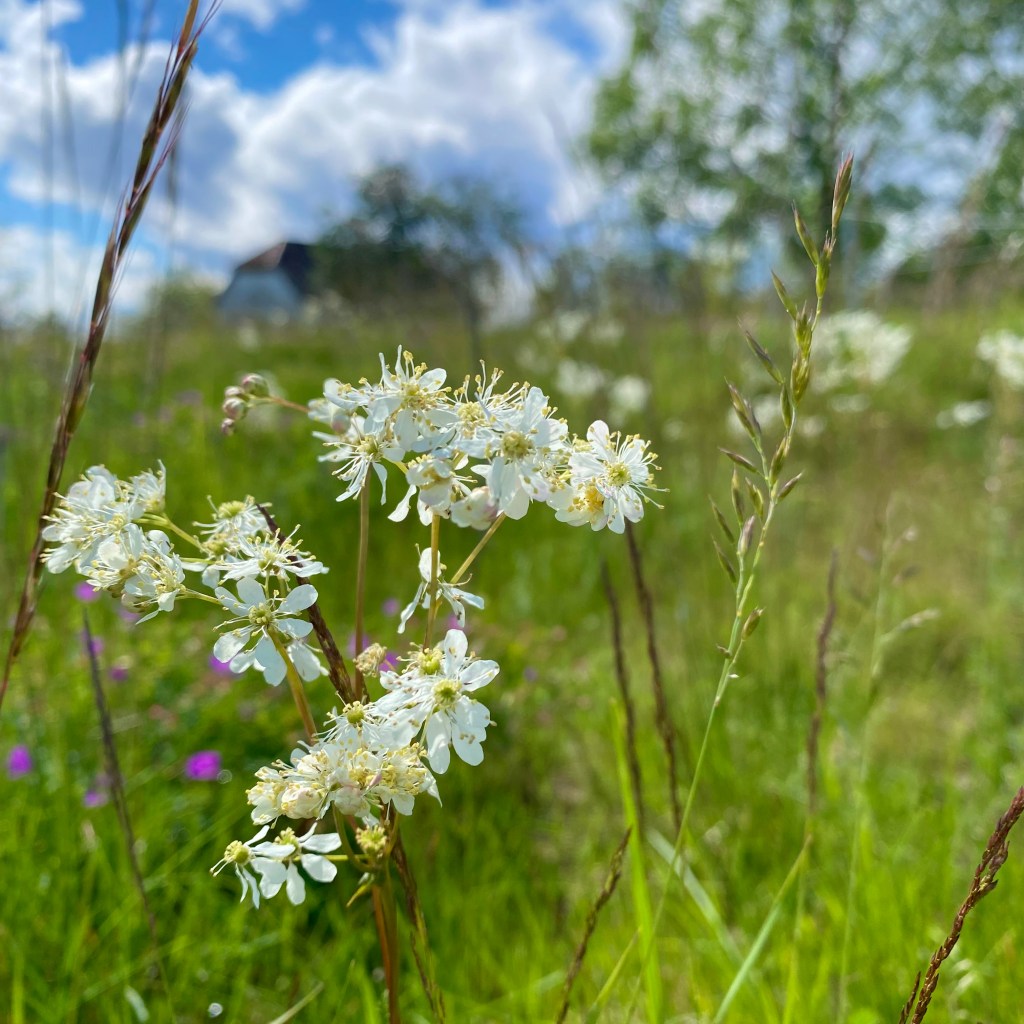

Back on the ferry in the later afternoon, I returned to the National Museum to finish off the rooms on the second floor I hadn’t had time for earlier and still not quite ready for dinner, I crossed the street to the Nobel Peace Centre.
Nobel Peace Centre
Key Details:
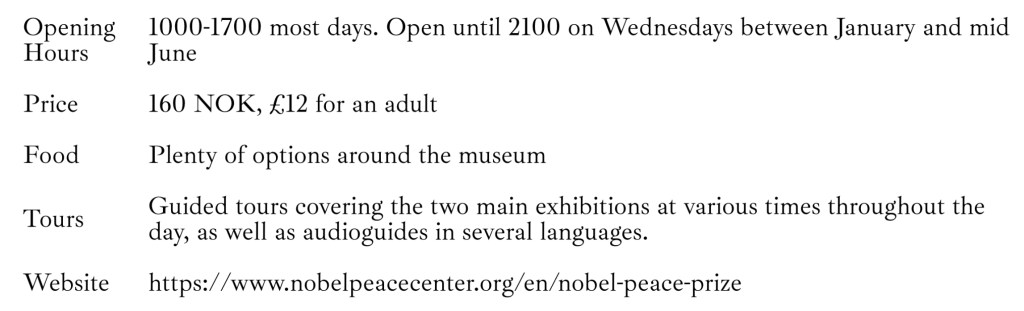
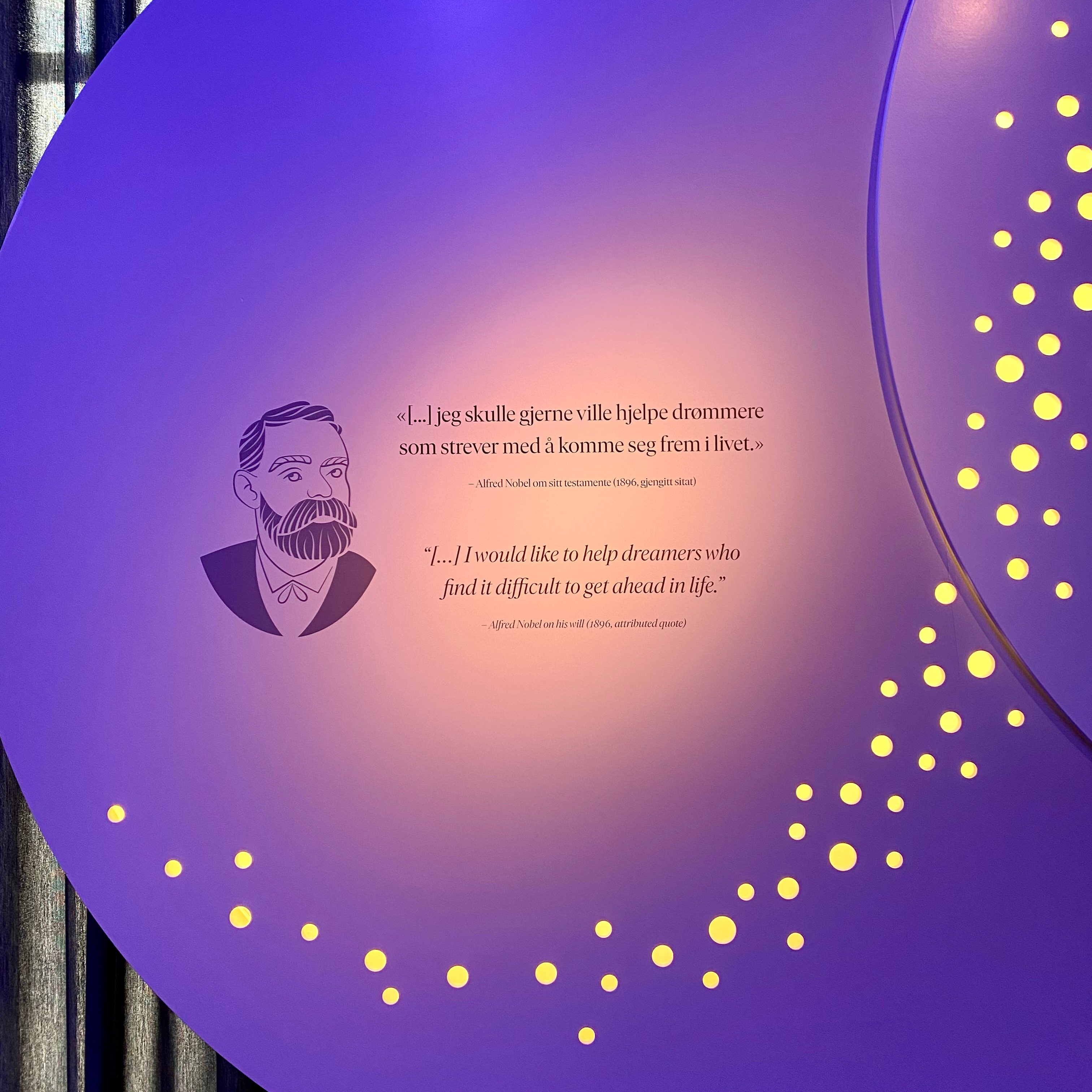
The Nobel Peace Prize is presented each year in Oslo and decided upon by a committee of five members elected by the Norwegian Storting, as stipulated in Alfred Nobel’s will. No one quite knows why this is the case, as the rest of the Nobel Prizes, awarded to those who have made a significant impact on their field in the preceding year, are presented at the Stockholm City Hall. Along with a medal, the winners receive a monetary prize gifted from the large fortune left behind by Alfred Nobel, the inventor of dynamite, and the interest it has generated over the years.
Along with learning about the life of Alfred Nobel, you can see a Peace Prize medal, designed by the famous Norwegian sculptor Gustav Vigeland and made in the Mint of Norway. There is also a larger exhibition on the most recent winner, in this case Narges Mohammadi, which gives you a real sense of the impact she has made in her community and the wider world, as well as displays on all the previous winners. A humbling, thought-provoking end to the day.
Day 3
Oslofjord Kayaking Tour
Key Details:
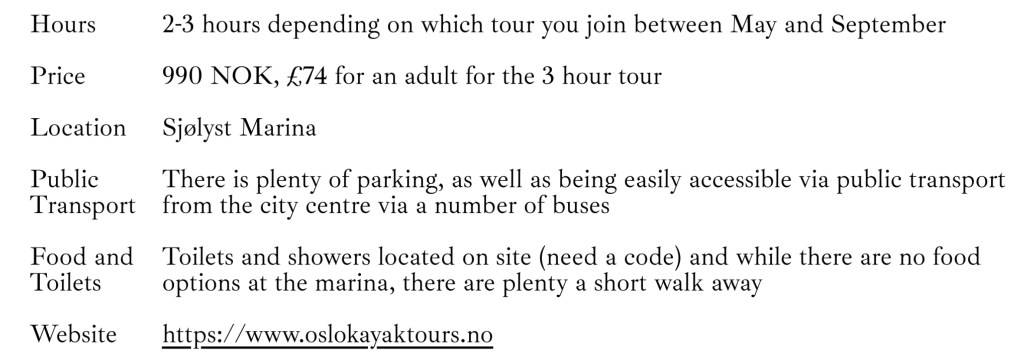
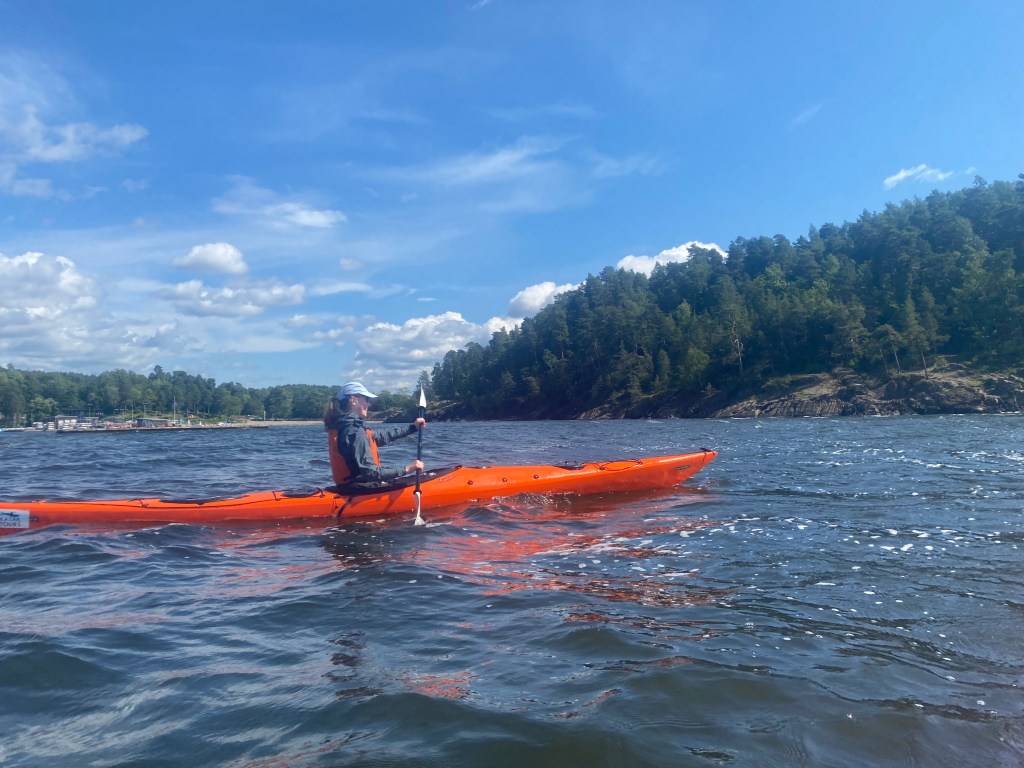
Waking up to blue skies and a cool breeze, I was extremely grateful that today was the day I had booked a three hour kayaking tour of the Oslofjord with Oslo Kayak Tours. Arriving just before 1000, we were kitted out with single and double kayaks depending on our preference, locked away our bags, and donned our waterproof shoes, life jackets and sprayskirts, all provided and fitted by our extremely friendly and knowledgeable guide, Annett, founder of Oslo Kayak Tours.
In safe hands, we set off across the shimmering water on a loop around this section of the fjord, past lovely beaches, pine forest, gorgeous houses and houseboats, and learning all about life in this beautiful area, fully appreciating the desire to live in one of these houses, as well as the difficulty in picking up groceries both in summer, having to travel by boat, as well as in winter when the water freezes over!
There are many birds in this area, including eider ducks, known for their incredibly warm feathers used to make luxurious eiderdown products. The extreme lightness and insulating properties of the feathers keep these sea birds warm in freezing Arctic waters, spending much of their time above the Arctic Circle. Nesting and wintering along the coastlines of Northern Europe, from the UK, Northern France and the Netherlands to as far north as Svalbard, they nest on the ground in exposed sites, laying a clutch of four to six grey-green eggs in a nest made of a scrape in the ground that is lined with soft plant matter and down plucked from the mother’s chest. During the 24-26 day incubation, the female does not leave the nest, losing up to 40% of their ample fat supplies. As soon as the chicks are dry, they head off into the water with their mother surviving for as long as 58 years on a diet of mussels and small crustaceans.
It is at this point when the ducks leave their down-lined nests that their down is collected, a practice that has been going on for hundreds, if not thousands of years, and is still continued today in more limited numbers in places such as northern Norway and Iceland. Here the ducks come to coastal farm land to nest in large numbers, knowing they will be protected throughout the spring by the local farmers who form a nightwatch to keep predators away, even tying up their cats and limiting outdoor play for their children during this period. One eiderdown duvet requires eider from up to 60 nests, costing between 40 and 50,000 NOK (£3,000-3,800). Down has been found in Nordic graves from 500-1000 CE and is mentioned in sagas written about the 800s, with a northern seafarer telling King Alfred of Wessex that he receives bags of down as tax from the Sami people.
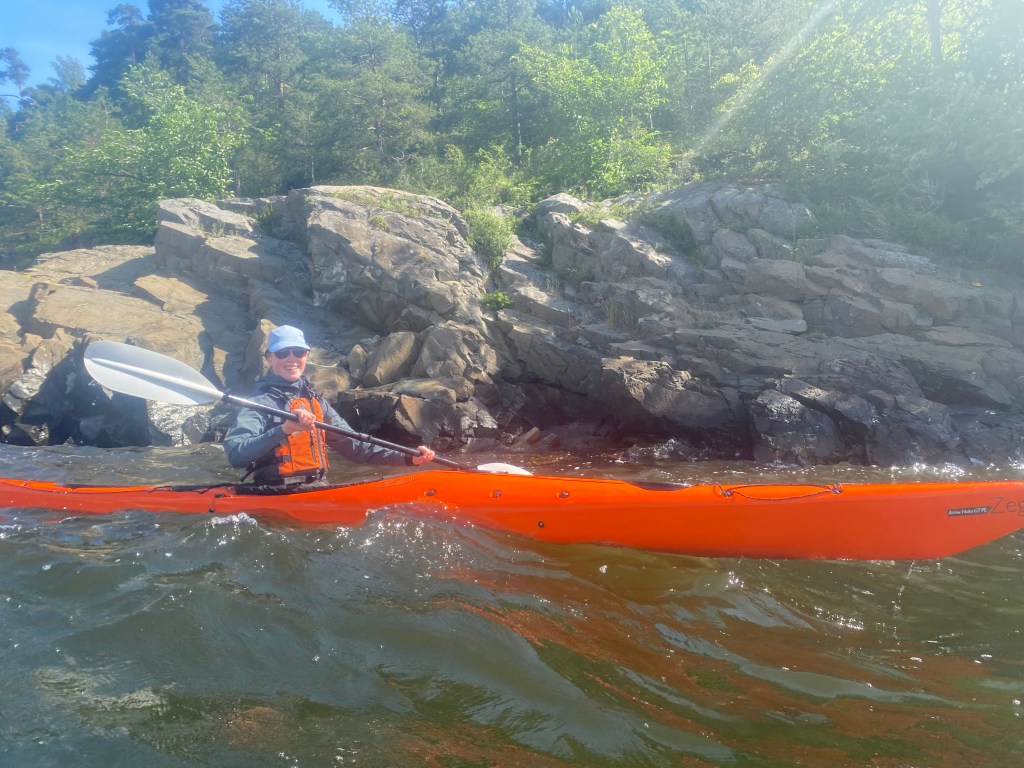
Continuing along the Bygdøy peninsula to the secluded Homolulu beach in amongst a lovely forest with a range of walking trails, the wind and waves had picked up, so we crossed over past Killingen island, home to a number of beautiful houses, before looping our way back to the start. Before leaving, Annett gave a number of excellent recommendations of ways to spend our remaining time in Oslo including places to eat.
Feeling invigorated by the elements, I filled up on a delicious lunch at LETT Sjølyst, a chain of cafes serving wraps and salads, then caught the number 30 bus for 10 minutes to my next destination, The Fram Museum.
The Fram Museum
Key Details:

Situated at the tip of the scenic Bygdøy peninsula, known as the “Museum Island” due to the large concentration of museums in the area, the Fram Museum is very high up in the ranks of my favourite museums of all time. I spent three hours immersed in polar exploration, a topic that I had previously not spent much time thinking about but am now utterly fascinated by and was able to learn so much through the well thought-out displays in this museum. Housed inside two distinctive triangular-shaped buildings, the first of which was the winning design by architect Bjarne Tøein in a competition run in 1934 by the Oslo Association of Architects, are the famous ships the Fram and the Gjøa.

Starting from the entrance, I followed the recommended route by heading through a tunnel connecting the two buildings lined with the history of polar voyages, of which there have been an overwhelming number, through to the Gjøa building. Here I watched the museum’s introductory video on polar exploration which runs every 15 minutes. With a better handle on the basics, I tackled the rest of the museum, which included climbing onboard the Fram and the Gjøa and exploring below decks, as well as learning all about the various voyages of these two ships, the scientific discoveries made throughout, and the truly remarkable men heading these expeditions.
The Fram made three major expeditions over its working life, purpose-built for the first of these in 1892. Designed by Otto Sverdrup and Colin Archer to the requirements set out by the captain of the first expedition, Fridtjof Nansen, the ship was unlike any ship built before. Nansen wanted to test the theory of an east-west current over the Arctic Ocean, first theorised in 1884 by the first Director of the Norwegian Meteorological Institute, Henrik Mohn. The American expedition ship, Jeanette, had sunk near the New Siberian Islands and years later its remains had been discovered off the coast of Greenland, much further to the west. Further evidence was collected by Nansen himself who had found debris and soil from Siberia off the coast of Greenland on his legendary crossing of the island. To test it out and get as close to the North Pole as possible, which had not previously been reached, the Fram had to be small and incredibly strong; strong enough to withstand the upwards, crushing pressure of being trapped in icefields for several years. This was achieved and the theory proved. The Fram first reached the ice around the New Siberian Islands in 1893 and trapped in the ice at the mercy of the currents, it travelled west between the North Pole and Franz Joseph Land, eventually being freed from the ice around Svalbard in 1896, three years after setting out, and returning to Norway that same year virtually unscathed and with a wealth of new scientific research.


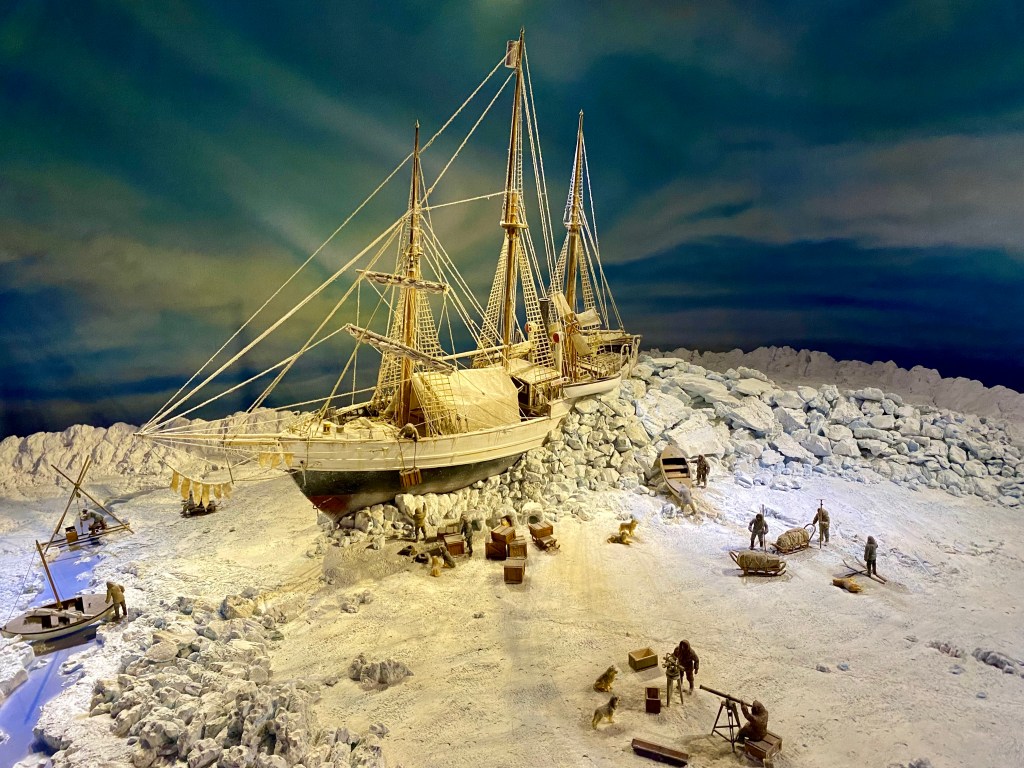
The Second Expedition was led by Otto Sverdrup and after the success of the first expedition of the Fram, the Norwegian peoples’ interest in Polar Exploration had been ignited. This expedition set off for Northwest Greenland and performed an extensive survey of mapping and scientific research over the next four years (1898-1902) through the east of Canada, reaching previously unchartered territories and mapping an area equivalent to Southern Norway. The scientific research was invaluable, bringing back thousands of plant samples and small animal samples, plankton, rock and fossil varieties not seen before, and data on subjects such as the earth’s magnetism, ice and temperatures.
The third and final expedition of the Fram (1910-1914) was led by one of the spearheads of the Heroic Age of Antarctic Exploration, Roald Amundsen. The original plan was to repeat the first expedition, drifting across the Arctic Ocean as completed by Nansen, but hopefully reaching further north and ideally the North Pole itself, still unreached. This all changed when Amundsen heard of Robert Peary and Frederick Cook’s claims of reaching the Pole in 1906, so without telling any of the crew except for the captain and second-in-command, or financial supporters, he changed goals to the South Pole. Along with massive amounts of food, ski equipment and essential supplies, 97 dogs were onboard to assist with the sledge pulling.
Setting off in 1910, it wasn’t until their final stop before the South Pole in Funchal, Madeira, that the crew were informed in the change of plans. British Explorer, Sir Robert Scott, also set off in 1910 with the goal of reaching the South Pole, and found a telegraph informing him of the Fram’s change of plans on reaching Melbourne, Australia. Determined to continue, it became a race.
Reaching the Bay of Whales in Antarctica four months later, the Fram added the claim of the most southern point reached by a ship to their record of the most northern point reached in its first expedition. This point was 96km further south than Scott’s landing point at McMurdo Sound and here the Fram’s crew divided into two; one group would be performing oceanographic studies in the Southern Ocean, while the other would be setting off on land for the South Pole. After extensive preparations over the winter months, Nansen and his crew set off on the 8th September, 1911, but finding it still much too cold, returned to camp, before finally leaving on 20th October.
Amundsen, his three crew mates and 17 dogs reached the South Pole on 14th December thanks to their careful planning and invaluable knowledge about sledges, dogs and igloo building gained during the voyage of the Gjøa (see below). Three days were spent in the area collecting data and scouting the area on skis to ensure the invisible point of the South Pole had been covered. A small tent and Norwegian flag were left at the South Pole, along with a letter written by Amundsen to King Haakon, to be delivered by Scott’s team in case he and his crew didn’t make it back. This was discovered by Scott when his team reached the South Pole a month later on 17th January, 1912. While Scott’s team died on their return journey, Amundsen and his team finished the return journey on 26th January, 1912, with 11 remaining dogs, having covered 3,000km over 99 days, and claiming the record of the first expedition to reach the South Pole.

In between these voyages was the expedition of the other ship on display, the Gjøa. Between 1903 and 1906, the Gjøa, led by Roald Amundsen, became the first ship to make a single crossing of the Northwest passage to the north of mainland Canada. Since the 16th century Europeans had been obsessed with finding a route through the Northwest Passage to avoid the long and arduous voyage to trade with China around the Cape of Good Hope, and this subsequently led to the interest in Polar discovery.
An important part of this expedition proved to be the two years spent in Gjøa Haven where regular contact was made with the Inuit people. Amundsen gained extensive knowledge of their techniques for surviving and travelling through Polar conditions, critically adopting their clothing instead of the insufficient European clothing, learned their language, and taught and traded with the Inuit’s who had minimal previous contact with Western civilisation. This was critical for the success of Amundsen’s expedition to the South Pole.

With so many other topics covered, it was easy to spend hours in this fabulous museum. Somehow I managed not to buy a book in the well-stocked shop, possibly because I was too dazed by all this new-found information, and reluctantly left as I had somewhere to be that night. Being a lovely afternoon, I opted for the scenic Museum ferry back to City Hall Pier rather than the longer bus journey. This ferry is not included on the same app you can use to pay for public transport, Ruter, but tickets can be bought at City Hall Pier, onboard or online where the price is slightly reduced, and is a regular ferry service between Bygøy and central Oslo throughout the warmer months.
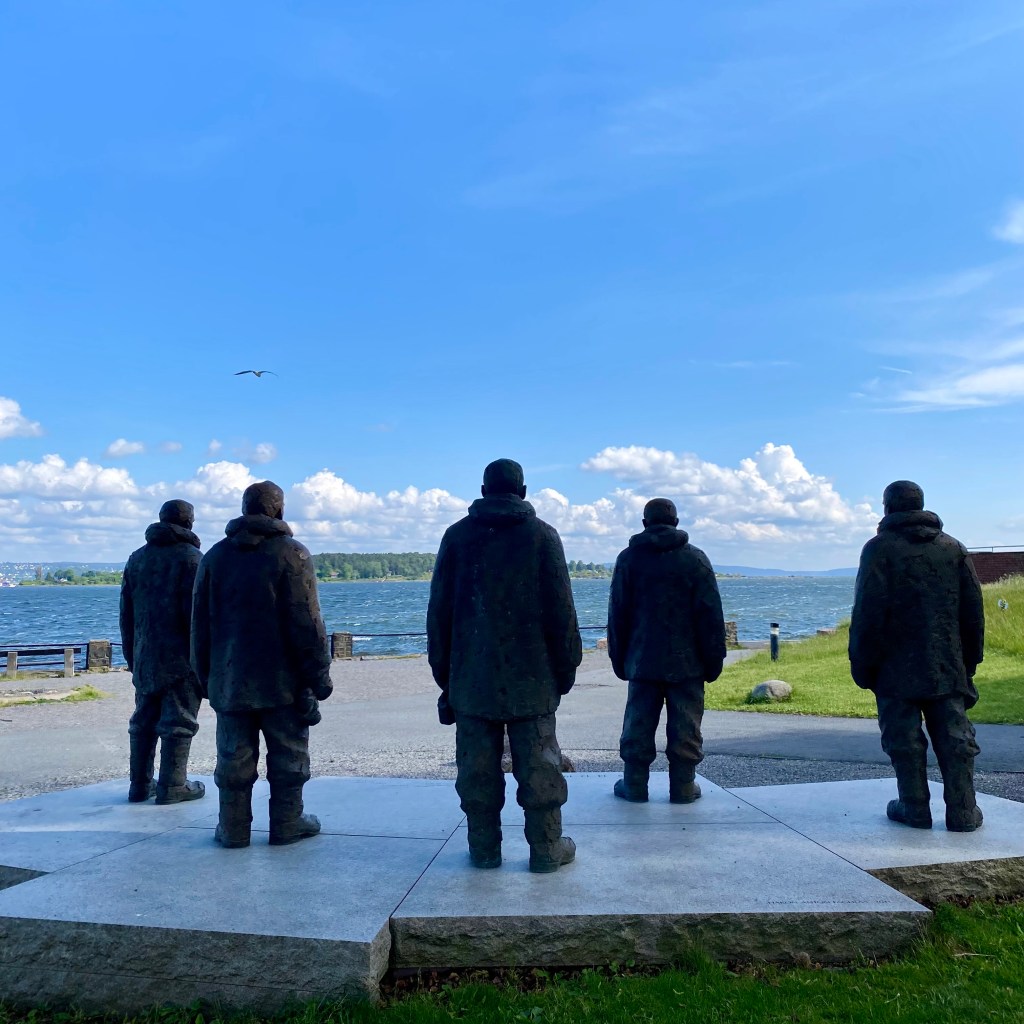
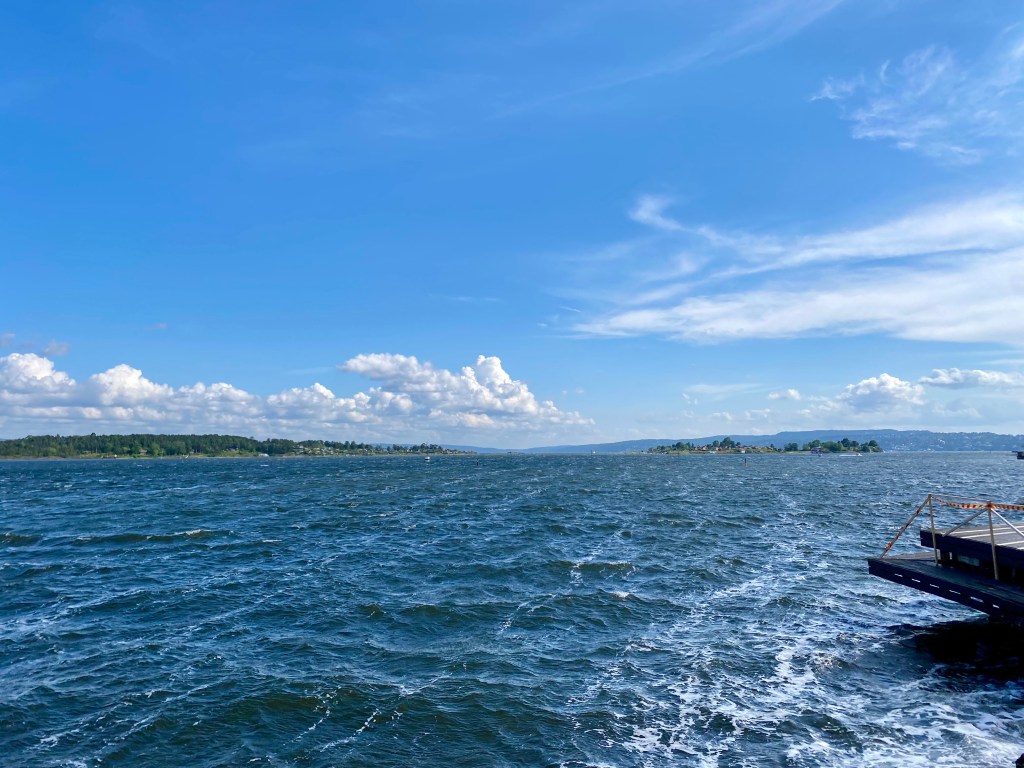
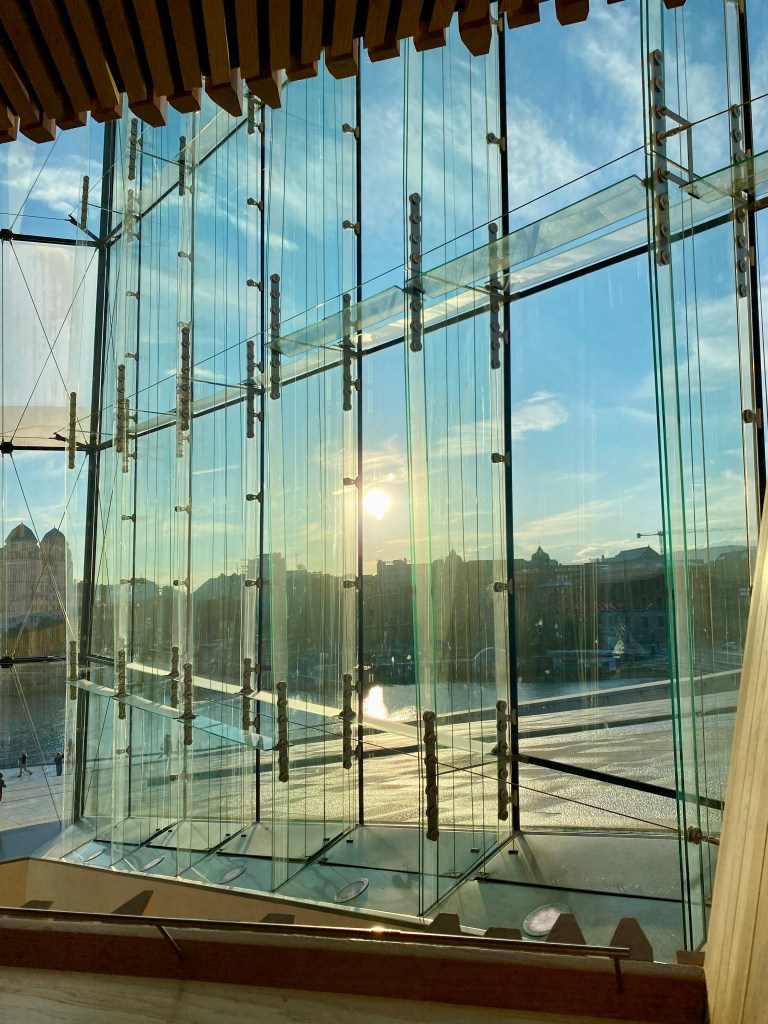
I enjoyed dinner at the Barcode Street Food market, which has a range of delicious food options with a shared eating space in the middle, so good for catering for a group with varied tastes, then headed back to the Oslo Opera House for a performance by the Norwegian National Ballet of two pieces choreographed by the Swedish avant-garde choreographer Mats Ek. This was a memorable performance, made even more so by the post-storm sunshine on exiting the theatre. If I thought the theatre was beautiful before, the late-evening sunshine streaming through the expanse of glass and bouncing off the fjord and the damp Italian marble outside was quite breathtaking. After taking several photos that did nothing to capture the magic, I was ready for bed after another busy day exploring.

Day 4
Nordmarka Forest Hike
Key Details:
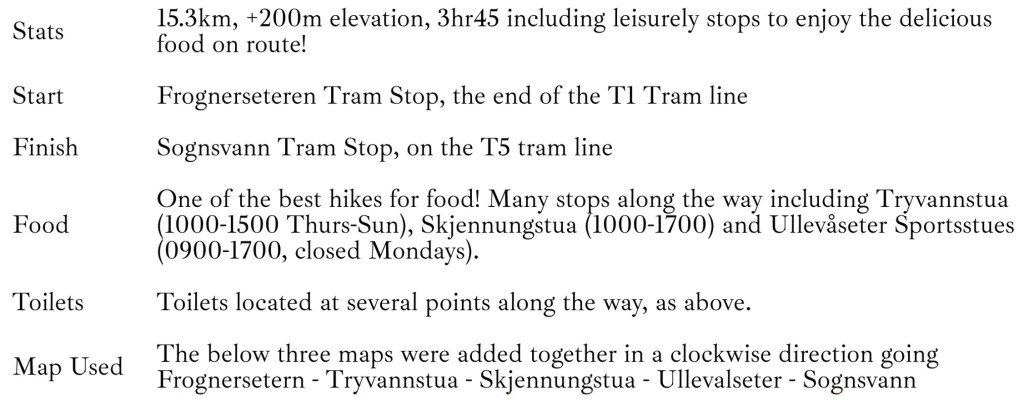
https://www.alltrails.com/en-gb/trail/norway/oslo/frognerseteren-skjennungstua–2
https://www.alltrails.com/en-gb/trail/norway/oslo/ullevalseter-skjennungstua-osl85
https://www.alltrails.com/en-gb/trail/norway/oslo/sognsvann-ullevalseter–2
Keen to explore more of the stunning Norwegian scenery, I caught the tram for 40 minutes to the end of the line at Frognerseteren for a hike through the Nordmarka Forest. Located to the north-west of the Oslo, this is a hub for hiking and trail running in the summer and skiing in the winter, just north of the Holmenkollbakken Ski Jump and Museum.
The tram ride in itself is extremely scenic once heading up towards Frognerseteren with views back towards Oslo and the forest is streaked with well-made, wide gravel trails lined with deep emerald pines, wild flowers, mosses and flitting birds, as well as more secluded, off-the-beaten-track hiking trails. The cool air and immersion in green made this easy trail a joy; I could have bounced along through Nordmarka all day if I didn’t have to get to the airport at some point in the afternoon.
There are a huge variety of other trails through Nordmarka and the signage makes it extremely easy if you wish to branch off, often giving distances or estimated times on the signs to landmarks including tram stations and sportsstues (cafe/restaurants with delicious home-made food). While I chose to hike, many of the trails are open for mountain biking and if brave enough, there are plenty of beautiful spots for a swim. All in all, if you have time for only one hike while visiting Oslo this is the hike for you. It was definitely the highlight of my four day trip!
Find out all the details here, including what is quite possibly the best pastry I’ve ever consumed.


Back in the real-world with a little time to spare before I had to head to the airport, I caught the tram back to the Central Station and walked to MUNCH, the gallery dedicated to the Norwegian artist, Edvard Munch.
MUNCH
Key Details:

In a striking, purpose-built gallery on the edge of the fjord opened in 2021, this museum is all about Edvard Munch, the prolific Norwegian artist. Bequeathing all of his works to the city of Oslo in 1944, four years before his death, it was not until 1963, 100 years after his birth, that the first museum opened to house his works. Best known for the Scream, this artwork is given a prominent location on the fourth floor. In fact, the museum owns eight finished versions of this motif with three versions on display here. There is always one on display for half-hour while the other two are hidden behind black panels to minimise light damage. This is because each version was made on paper or cardboard which, along with colours fading, break down with excessive light exposure unlike oil paint on a canvas. On display is one of the two painted versions, the other shown in the National Museum, a lithograph and a drawing.

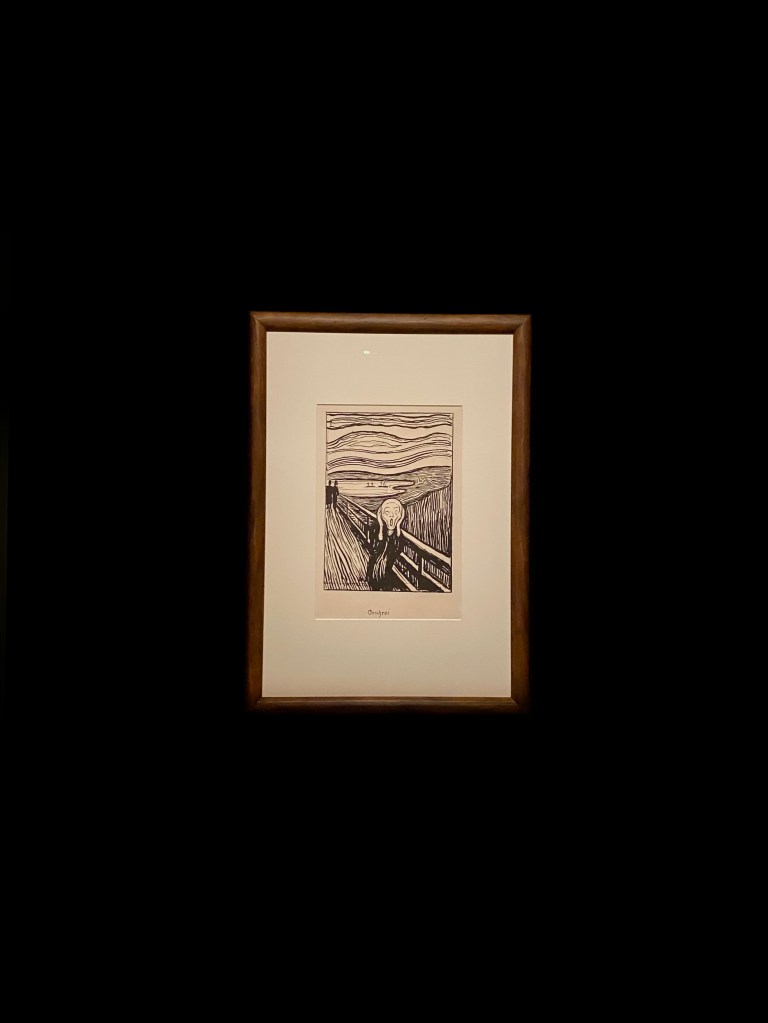
Inspiring its own emoji, this powerful motif speaks of anxiety, depicting a moment where Munch wrote that “shaking with angst – I felt the great Scream in nature.” The enigmatic figure is said to be able to reach us all, being genderless, ageless and of no distinctive cultural background. As well as being a significant pop-culture icon, the background has raised questions for scientists trying to explain the vibrant colours and pattern of the clouds. Some point to the eruption of Krakatoa volcano in 1883 or nacreous or “mother-of-pearl” clouds, a phenomenon seen only in polar regions where clouds at high altitudes with much smaller ice crystals than usual reflect mother-of-pearl-like colours from the sun when it sits just below the horizon.
With that, my first venture into Scandinavia had come to an end. I certainly plan on returning before too long!
Practical Bits
- The currency is Norwegian Krona. I didn’t need cash for anything, even the cabins I visited in Nordmarka used card.
- While Norwegian and Sami are the offical languages of Norway, English is very widely spoken and while I was often greeted in Norwegian, everyone I dealt with spoke fluent English.
- It is very simple to get to central Oslo from the airport. You can get public trains; however, I ended up catching the Flytoget Airport Express train which leaves the central station and the airport every 10 minutes and takes just under 20 minutes to reach your destination. This option is definitely more expensive (240 NOK, approx £18), but it is quick, regular and was extremely clean and comfortable. You can buy the tickets on their app, Flytoget, online or tap your debit/credit card.
- Public transport, excluding a few things such as the express train from the airport and the ferry from the Fram museum, are paid for using the app, Ruter. Everywhere I went was covered by a Zone 1 ticket, including catching the tram to the last stop for the Nordmarka hike.
- The ferry to and from Bygdoy (B9) where the Fram museum is located, is not included in the Ruter app. Instead you can buy these separately on their website beforehand, at the ticket office at City Hall Pier 3, or a staff member comes around for you to buy your tickets on board. They accepted card on board and you could buy a single ticket or day pass. Tickets are more expensive on board, at 75 NOK instead of 67 NOK (approx £5.60 vs £5).

Sources
https://www.operaen.no/en/about-us-oslo-operahouse/about-the-oslo-opera-house/
https://www.munchmuseet.no/en/this-is-munch/built-for-the-future/
https://www.lifeinnorway.net/history-of-oslo/
https://thehiddennorth.com/the-history-of-oslo/
https://www.britannica.com/topic/Hanseatic-League
https://www.britannica.com/place/Oslo
https://www.royalcourt.no
https://nyc.no/ferry-to-the-museums/
https://flytoget.no
https://ruter.no/en/
https://www.nasjonalmuseet.no/en/stories/explore-the-collection/queen-maud–150-years/
https://www.historiskmuseum.no/english/
https://www.npolar.no/en/species/common-eider/#:~:text=The%20common%20eider%20is%20a,zones%20of%20the%20northern%20hemisphere.
https://www.theguardian.com/world/2019/jul/19/eiderdown-harvesting-iceland-eider-duck
https://norwegianscitechnews.com/2018/03/eider-farming-living-cultural-tradition/
https://www.metoffice.gov.uk/weather/learn-about/weather/types-of-weather/clouds/other-clouds/nacreous
https://frammuseum.no




 Xanthe Explores
Leave a comment