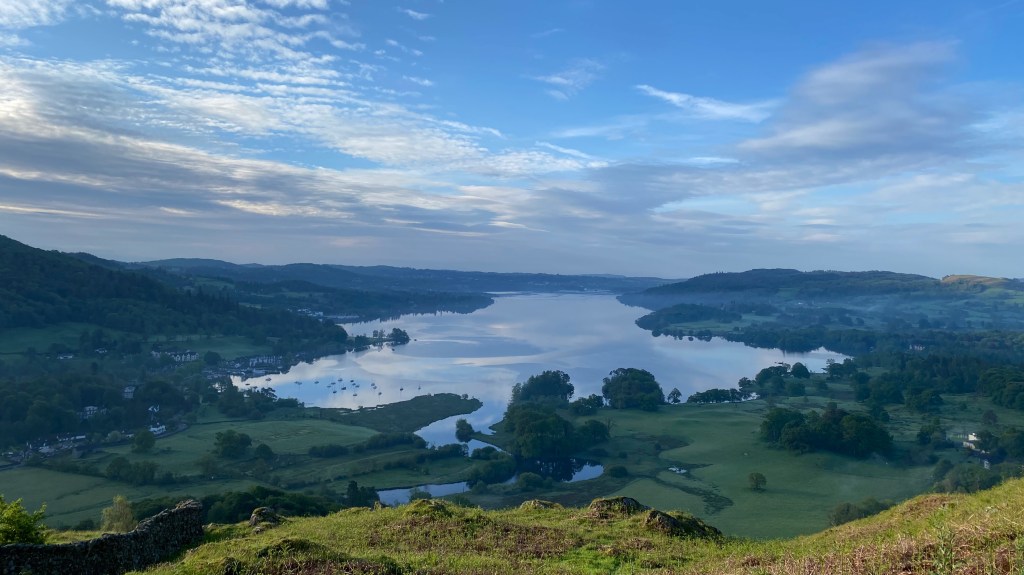
May is a beautiful time in the Lake District; the crowds are not yet at their peak, temperatures are a little warmer, and the spring flowers are in bloom. This was my first trip to the Lakes so I was desperate to see as much as I possibly could have of a place I had heard so much about. Growing up reading Beatrix Potter and later William Wordsworth, I had visions of endless green, wooly sheep, big raindrops, capricious weather, bluebells… and I was not disappointed. In fact, the Lakes delivered all of this and more.
There are so many beautiful B&Bs and hotels scattered throughout the Lakes, but we opted for YHA’s, which are in picturesque locations, have fantastic facilities including spotlessly clean self-catering kitchens, cosy lounges, and a good selection of breakfast and dinner options, as well as the much-needed drying rooms with the Lake District’s fairly constant drizzle. While it is possible to get around via public transport, hiring a car made more sense for us to travel in our own time and get to and from the starting points of hikes with ease; however, parking can be an issue and the roads are often very narrow and windy.
So if you love the outdoors, hiking with incredible views to make every upwards step (or scramble) worthwhile, so many gorgeous sheep, cosy coffee shops and lakes (there is a reason it is called the Lake District after all), this is the place for you.
Brief History of the Lake District
Situated in Cumbria, the national park known as the Lake District covers over 2,000 km2, containing the highest mountains in England, with Scafell Pike taking the crown. Designated a UNESCO World Heritage site due to its abundance of remarkable natural beauty, the area sees 16 million visitors annually.
Settled in the Neolithic period, the local stone was used for axes, other tools and stone circles, with a number of Neolithic tools discovered around the country made of stone from Langdale Pike. There are also a number of stone circles that can still be visited today, the best known being just outside of Keswick.
Settlements continued to grow throughout the Bronze and Iron Ages, but remained made up of scattered communities. As the Romans occupied England, the Lake District was initially left to be independently governed, but following numerous rebellions, it came under Roman control between 77-83AD. Forts and watchtowers were built due to the continued fighting with the Britons occupying Scotland, followed by the more drastic measure of the construction of Hadrian’s wall in 122AD. The area gradually became a melting pot of successively invading cultures, including Celts, Vikings, Anglians, and Scottish kingdoms. This period also saw the landscape gradually turned to farming with significant clearing of the forests.
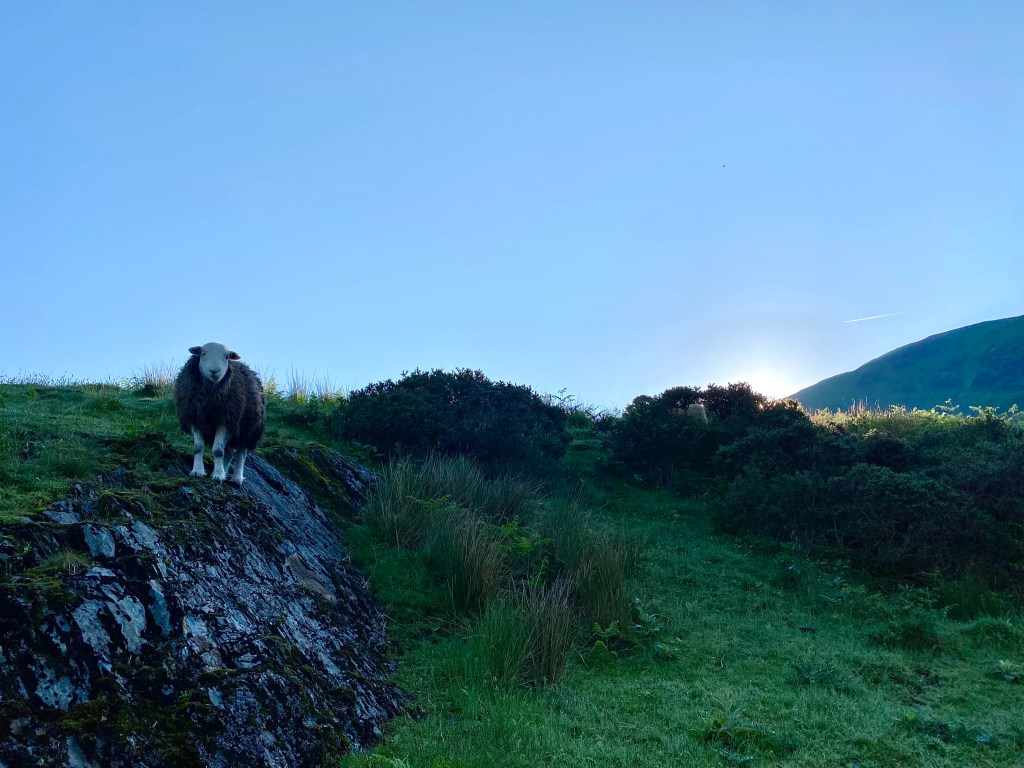
Along with small farming settlements and dividing the landscape with dry stone walls, the Vikings also had a significant impact on language, introducing many terms still used today including fell (hill from the Norse “fjall”), -thwaite (clearing), gill (ravine), beck (stream from the Norse “bekr”), and force (waterfall from the Norse “foss”). Another of these is Herdwick, coming from the Norse “Herdwyck” meaning “sheep pasture,” but now more famously as the name for the incredibly hardy Herdwick sheep, adapted to live self-sufficiently in the extreme landscape of the fells all year round. These sheep have been in the Lake District for centuries, with their ancestry dating back to the first domestication of sheep 10,000 years ago and following their arrival in England as far back as 5,500 years ago, the Herdwicks have remained isolated in the Lake District for centuries and therefore retained many characteristics of ancient British sheep, further adapting and being selectively bred to survive in this unique environment.

Eventually the area came under Norman rule following 1066, seeing the construction of a number of castles and control transferring between the Scots and the Normans several times, finally ceasing with the unification of England and Scotland as James VI of Scotland became James I of England. With peace, the area began to be exploited for its natural resources, with mining overtaking farming as the main source of industry, being an area rich in slate, granite, limestone and precious minerals. Mining had been taking place since as early as the 12th century, possibly as far back as Roman times. Slate continues to be mined today, for example at Honister Mine, and graphite mined around Keswick resulted in the famous Derwent Pencils. Canals and railways were gradually constructed to allow these resources to be transported throughout the rest of the country.
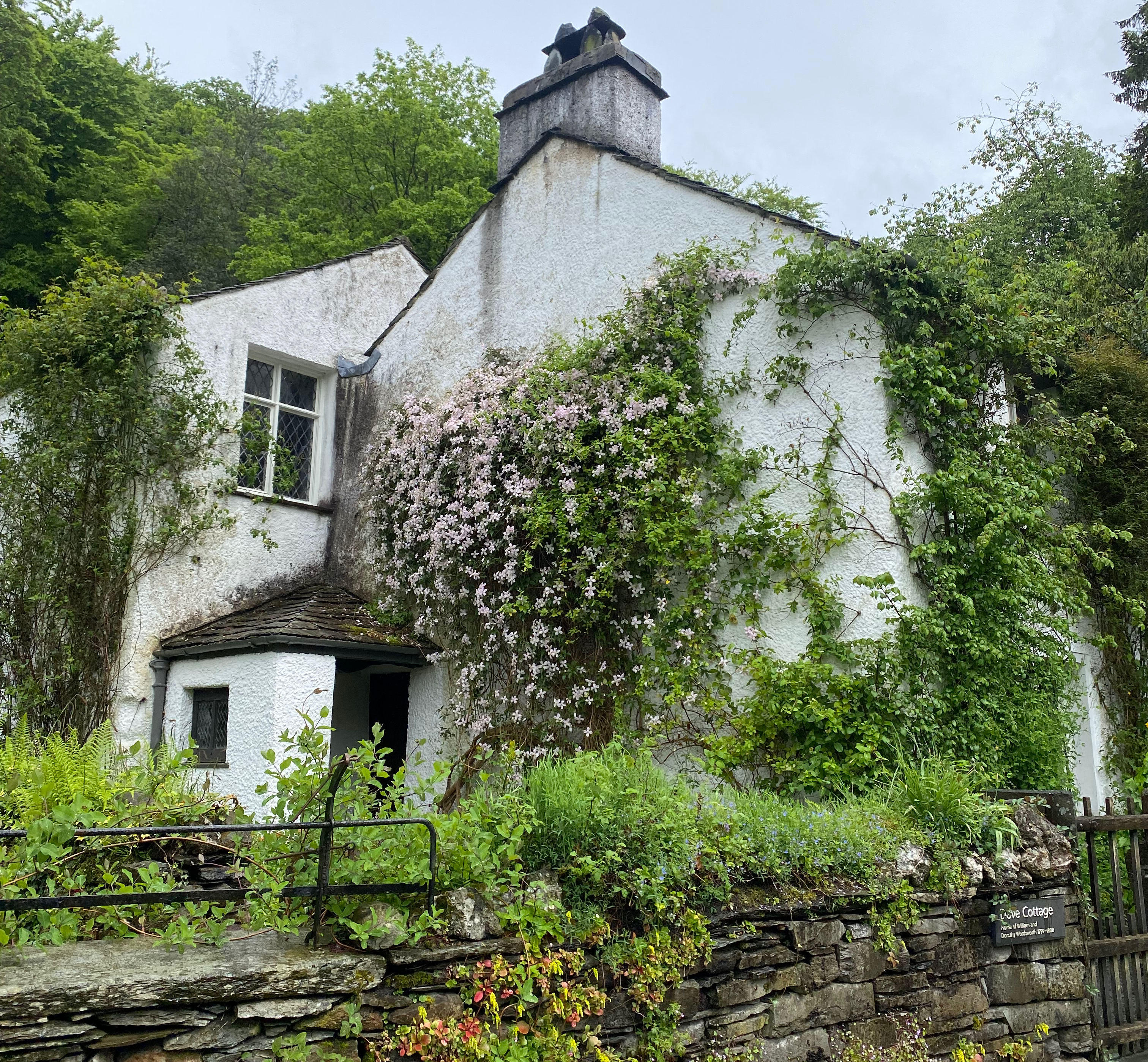
The 18th and early 19th century saw the beginnings of the Lake District becoming the tourist destination it is today, most influentially following the publication of William Wordsworth’s Guide to the Lakes. This, along with his and other local poets such as Samuel Taylor Coleridge’s works describing a place of immense beauty, brought many more tourists to the area. Hotels began to be built during this time, as was the railway into Windermere. Wordsworth lived in Grasmere at Dove Cottage with his sister for many years, spending many hours walking together across the fells. This can be visited today. Their works, along with artworks from the Picturesque and Romantic movements, led to the celebration, awareness, and later efforts at preservation of the area.
Beatrix Potter brought more fame to the region and ensured the continued survival of the Herdwick sheep. Following her death on 1943, around 4,000 acres of land were passed onto the National Trust, an organisation she felt very strongly towards, and, as a passionate breeder of Herdwicks, she added the condition that the farms continued to breed pure Herdwick sheep. She spent her holidays as a child in the Lake District, eventually leading to her permanent move to the area. Her famous stories are inspired by her garden at Hill Top farm, purchased with the profits of her early books, and the natural beauty around her.
The Lake District became a national park in 1951, resulting in even more visitors coming to the area. This increased again following publication of Alfred Wainwright’s “Pictorial Guide to the Lakeland Fells,” which contains hand drawn maps of 214 fells with detailed guides on how to reach them. It has since become a challenge for hikers to summit all 214 “Wainwrights.” Fast forward to today, and you have one of the most visited regions in the UK, and after finally ticking it off my bucket list, I can understand why.
Itinerary
| Day 1 – Ambleside | The Grasmere Gingerbread Shop |
| Loughrigg Fell and Grasmere hike | |
| Day 2 – Ambleside | Wansfell Pike hike |
| Ambleside village | |
| Wordsworth Grasmere – Wordsworth Museum & Dove Cottage | |
| Lake Windermere Boat Cruise | |
| Day 3 – Borrowdale Valley | Todd Crag and Lilly Tarn hike |
| Hill Top | |
| Herdwick Experience | |
| Ashness Bridge and Surprise View | |
| Day 4 – Borrowdale Valley | Cat Bells hike |
| Keswick | |
| Keswick Launch Co | |
| Castle Crag hike | |
| Day 5 – Buttermere | Rannerdale Valley hike |
| Buttermere village | |
| Scale Force hike | |
| Day 6 – Buttermere | Haystacks hike |
| Keswick Mountain Festival |
Starting with a long drive up from Heathrow Airport, about an hour out from our first stop of Grasmere I noticed the landscape suddenly begin to change and my excitement growing. Hills began to rise up, the light softened, and the greens became more vibrant and varied. The drive through Ambleside and on to Grasmere was a particular favourite, passing quaint shops and the distinctive stone buildings with their blue-grey slate roofs. Eager to get out and explore, we laced up our hiking boots and began our first hike of the week.
Loughrigg Fell and Grasmere
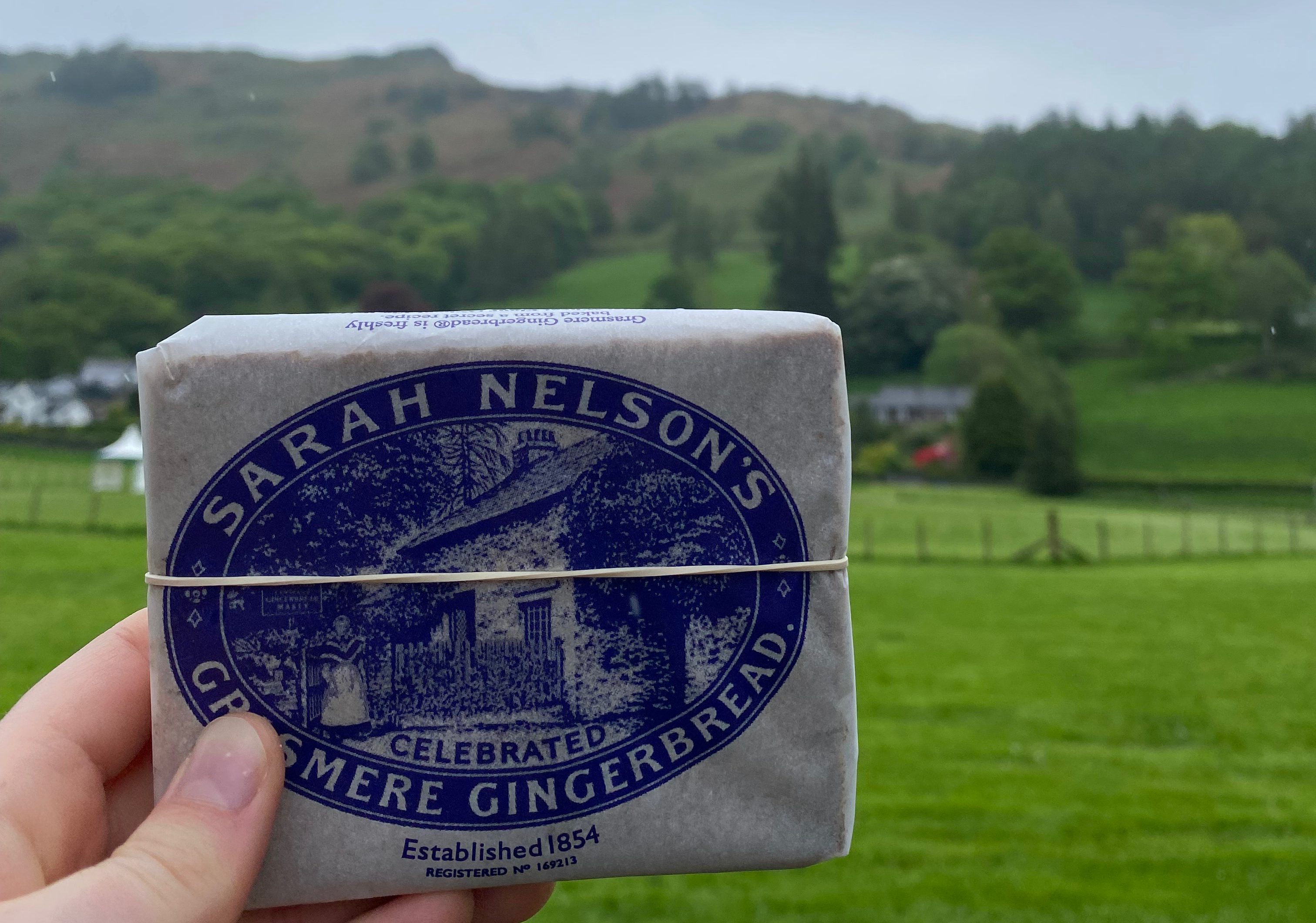
To stretch our legs after hours cramped in a car, a lap around Grasmere (the lake that gives the gorgeous, cosy village its name) and Loughrigg Fell was in order. Prior to this, however, was an essential stop at The Grasmere Gingerbread Shop, a tiny shop within a 17th century school house selling the most incredible gingerbread. Mouths watering as we joined the queue outside the shop, our sense were assaulted by the heady, gingery aromas. Ginger is one of my favourite flavours, so I was in heaven. Invented by the Victorian cook, Sarah Nelson in 1854, celebrating its 170th anniversary this year, it is said to be a cross between a biscuit and cake. Whatever it is, do not let a queue put you off.
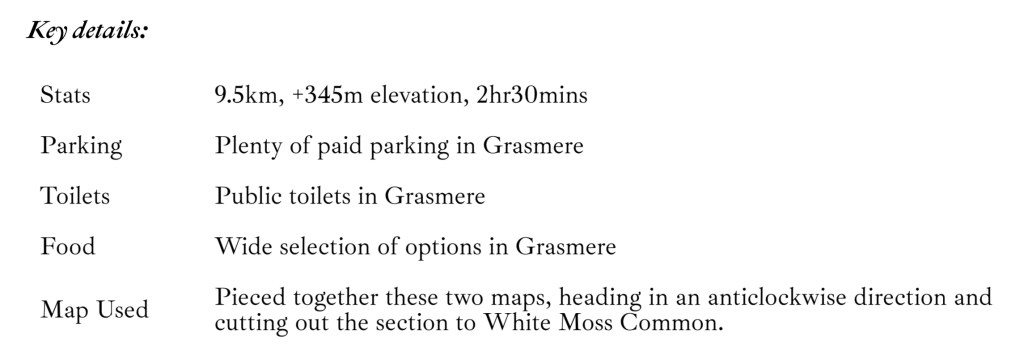
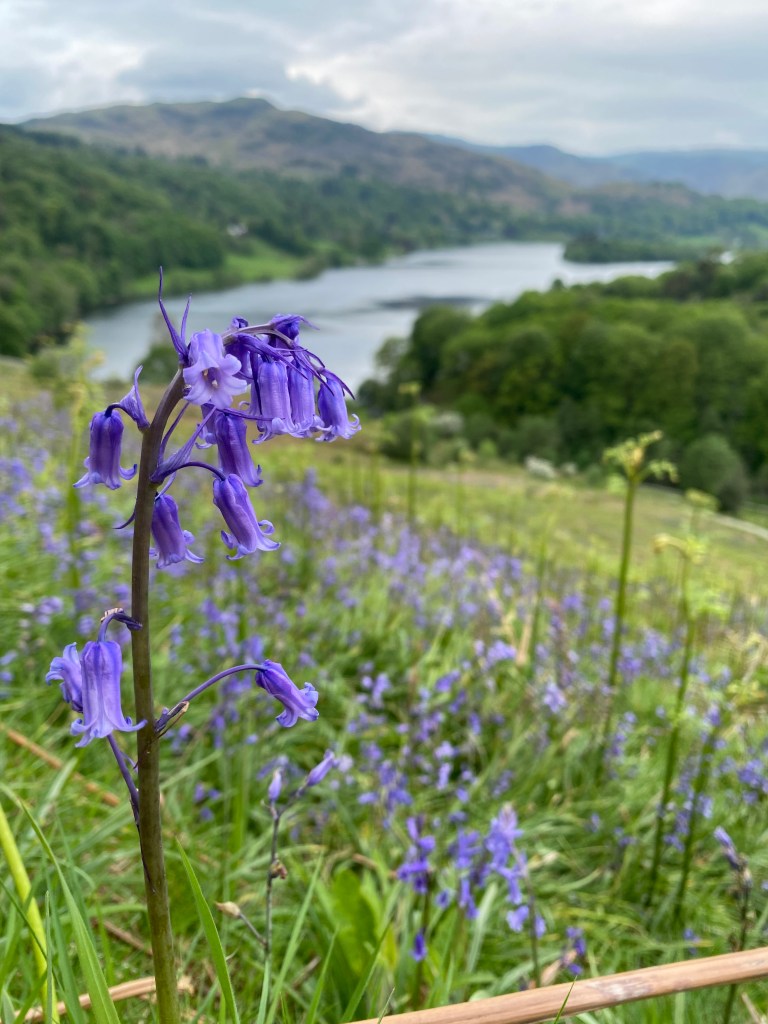
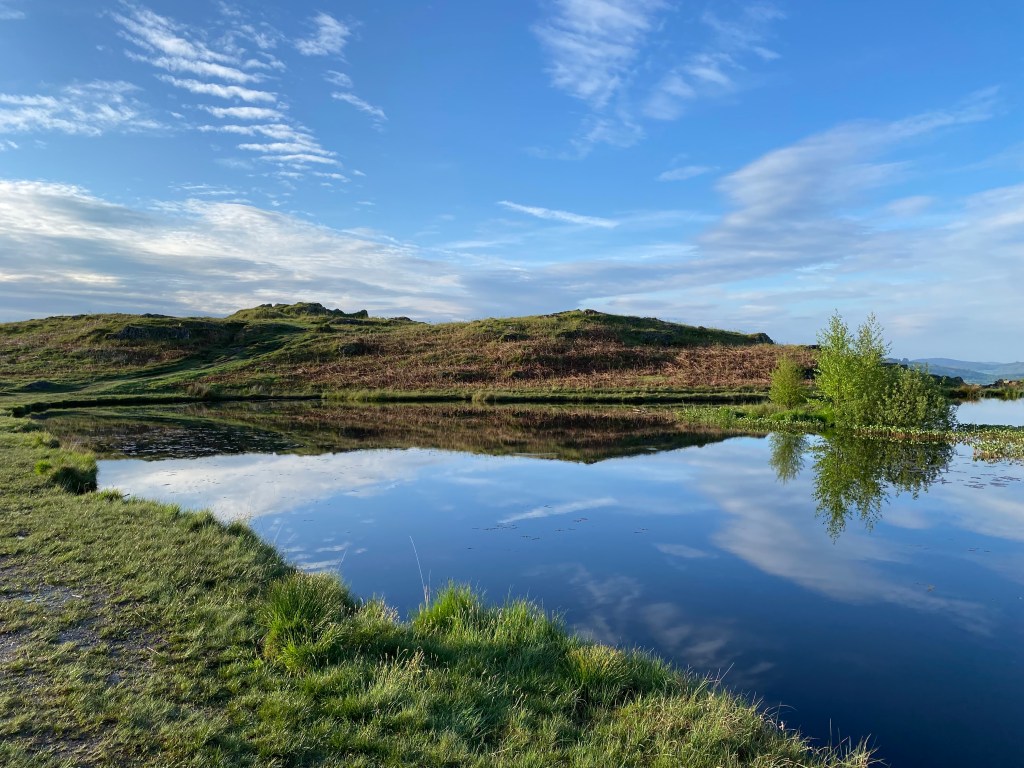
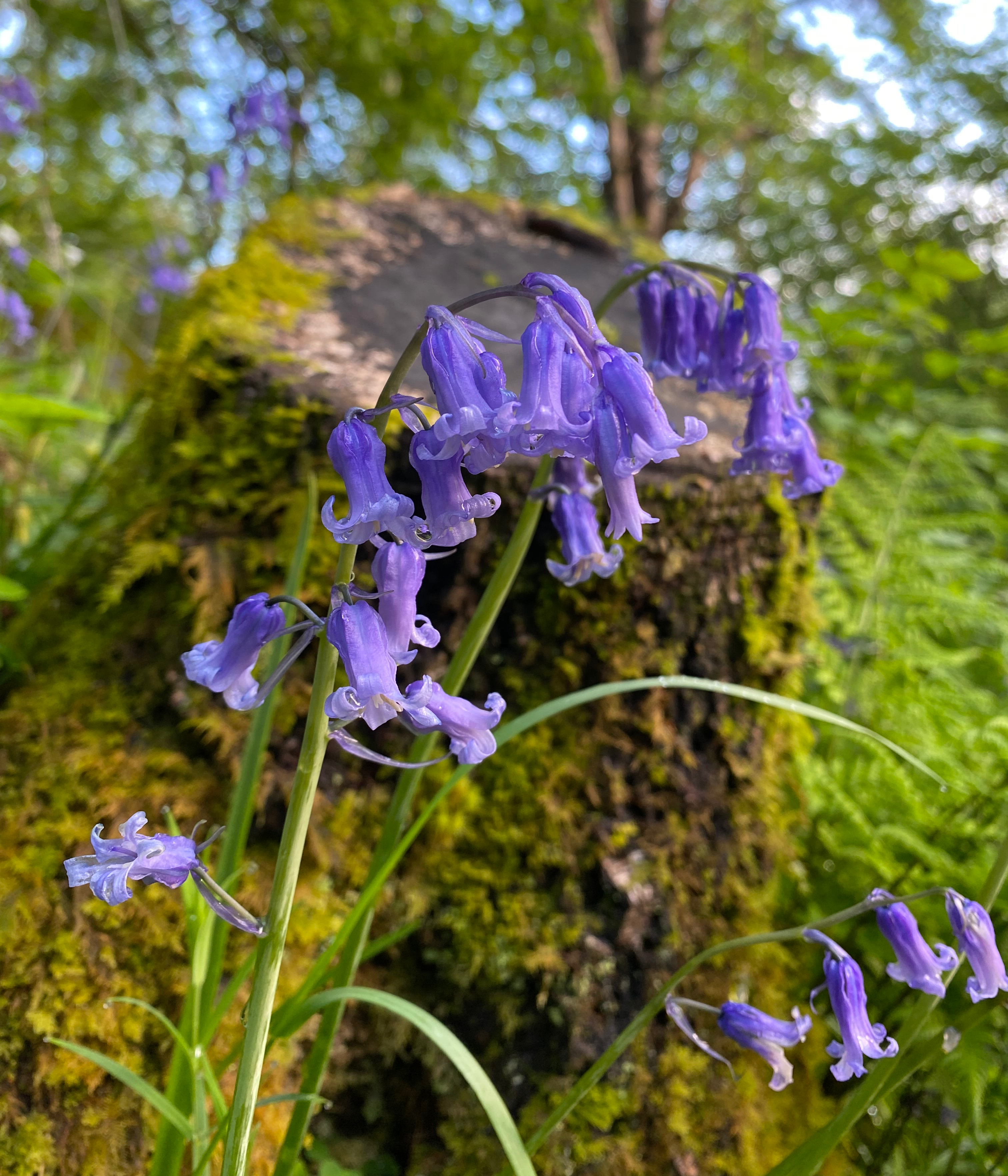
Saving our purchases for a post-hike reward, we set off anticlockwise around the lake. I was quickly treated to so many other rewards for our efforts in climbing up to the top of the fell, including a mirror-like lake and so many bluebells. Having researched the best spots to see bluebells in the Lake District, this one was an unexpected surprise.

As the gentle rain became slightly more than gentle at the summit, we decided to carry on and enjoy our gingerbread somewhere dry instead, not before taking in the views of the surrounding and much bigger fells, as well as Rydal Water and Lake Windermere in the distance. So we headed down the other side, past Rydal Cave and along the eastern side of Grasmere. Coming down the eastern side of Loughrigg Fell were some of the most vibrant patches of bluebells and we were continually astonished by how verdant the place was, although we were experiencing the very reason it remains this way! While a good pair of boots would be recommended, care taken on the steep descent and a descent amount of uphill to get the heart pumping, this hike delivers incredible scenery for the amount of effort required; however, even a lap of Grasmere lake would be a joy.
After finally sampling the spiced, sweetness of the Grasmere Gingerbread, we headed for YHA Ambleside, situated at the southern end of the village on the banks of Windermere, for a hot shower and dinner, made full use of the drying room, and enjoyed the views across the famous lake, albeit rather grey with the surrounding fells hidden behind the cloud.
Wansfell Pike

The next morning, as predicted, was very wet, but as you would never get anything done in the UK if you waited for a rain-free day (or at least, that’s my mentality), particularly in the Lake District, I set off from the Youth Hostel into the gorgeous town of Ambleside. While I had hoped to tackle Helvellyn or the Fairfield Horseshoe, I decided that with the weather as it was, I would opt for a shorter hike which also allowed me to enjoy the non-hiking activities in the area. Peeling off to the right following signs “to the waterfalls,” I took my time enjoying Stock Ghyll Force, which tumbles its way down through Ambleside, once powering twelve mills that produced bobbins, fabrics, paper and ground corn. At this time of year, the banks were carpeted with wild garlic in bloom, filling the air with the heady scent of garlic in the rain.

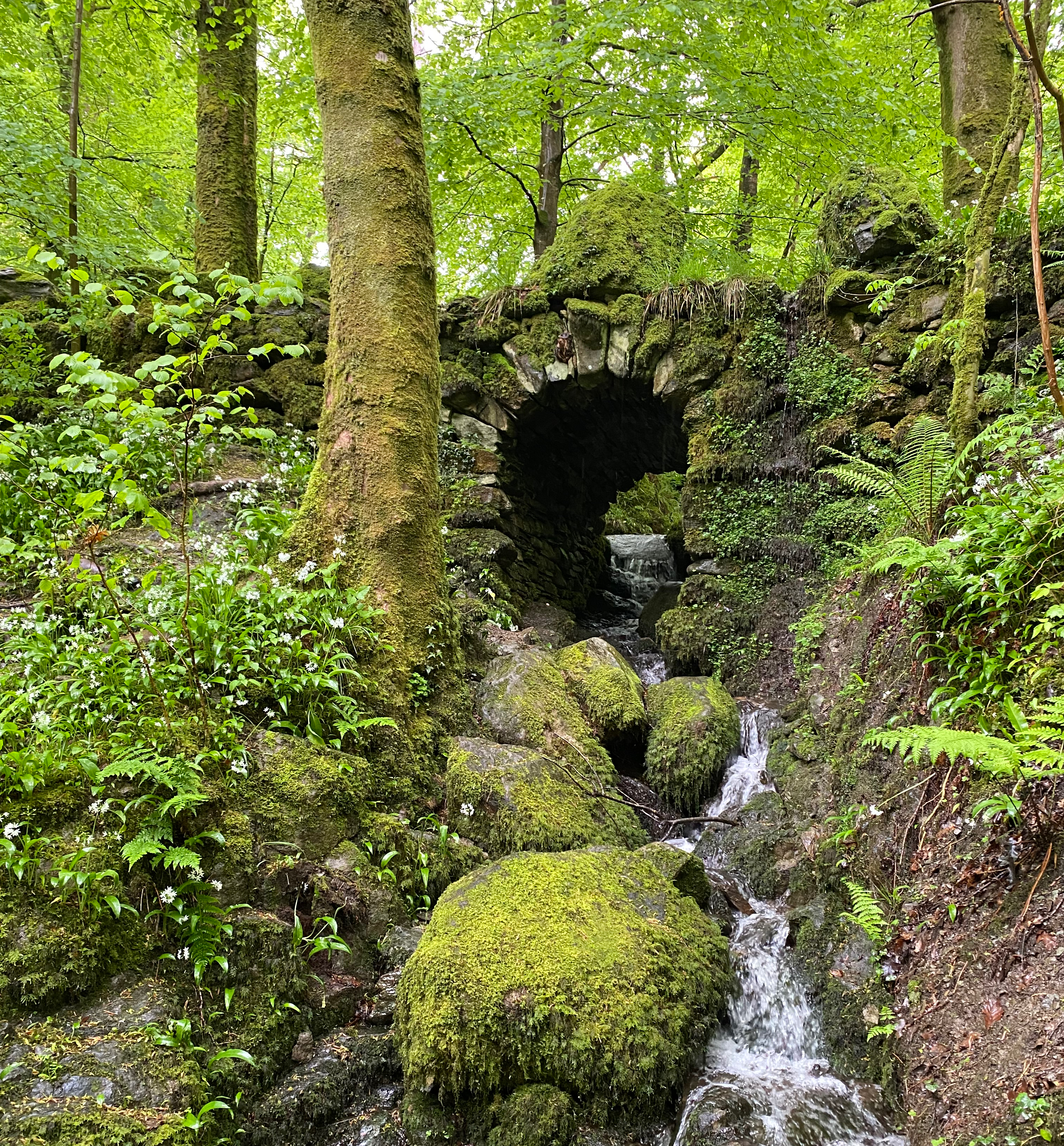
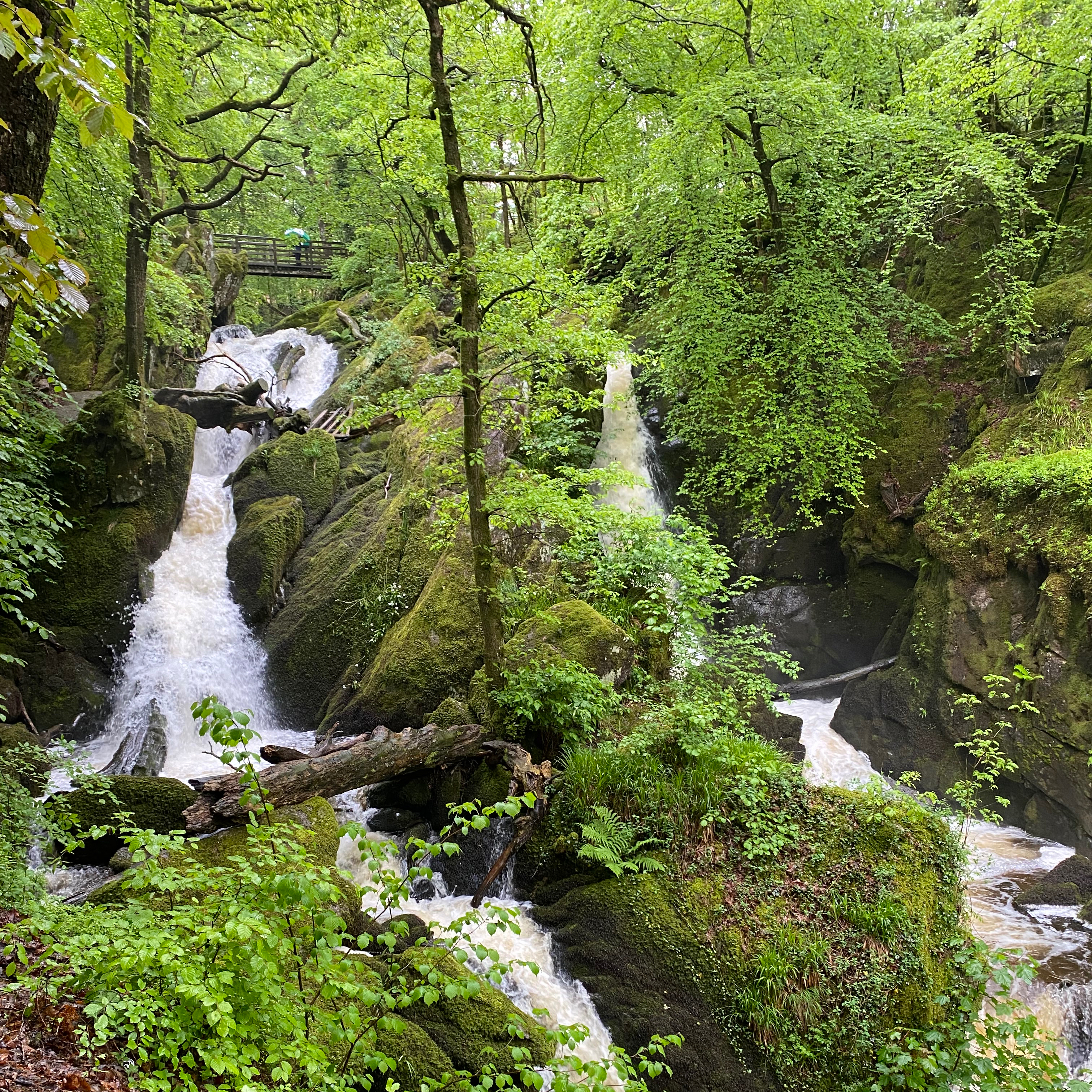
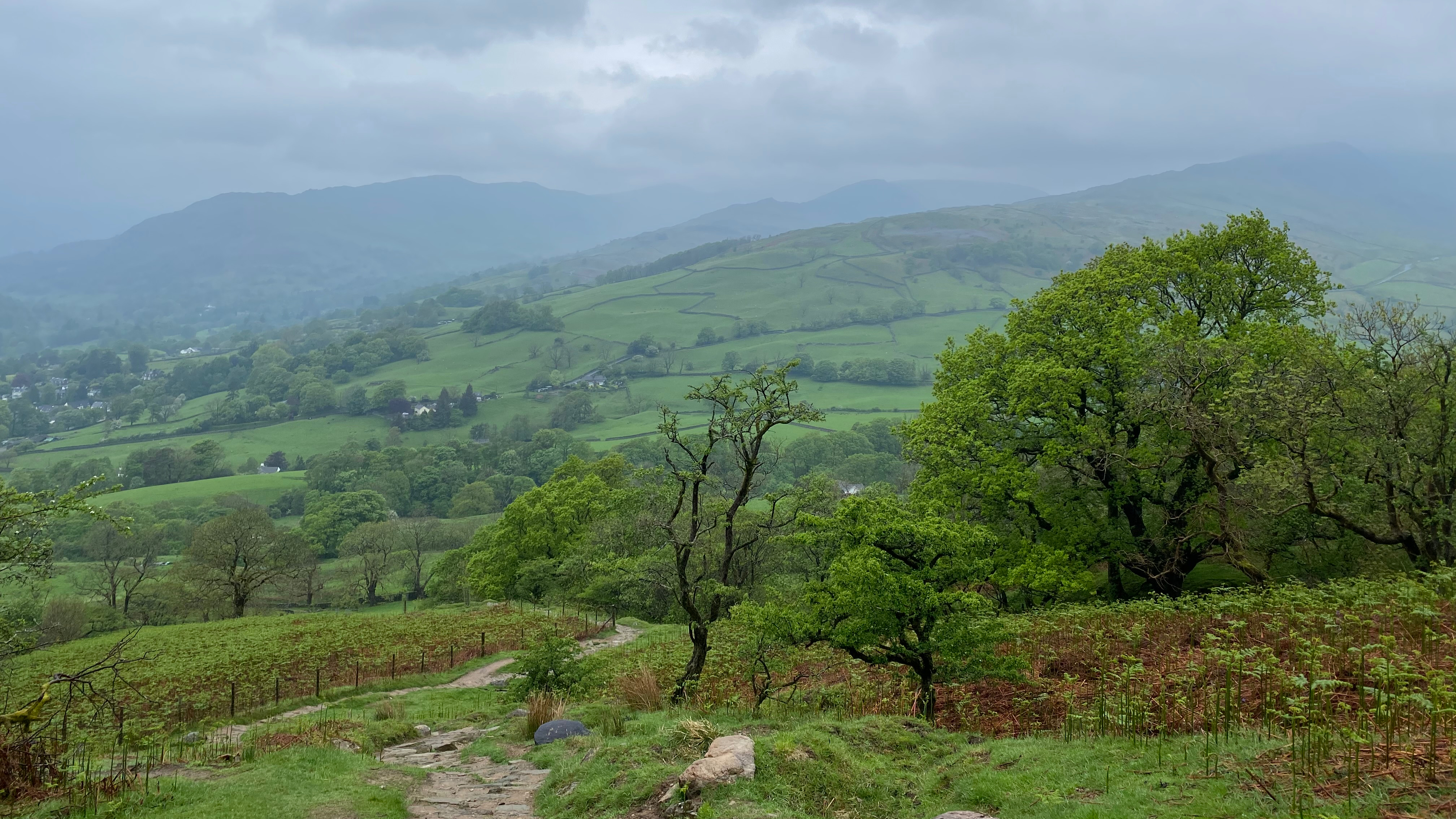
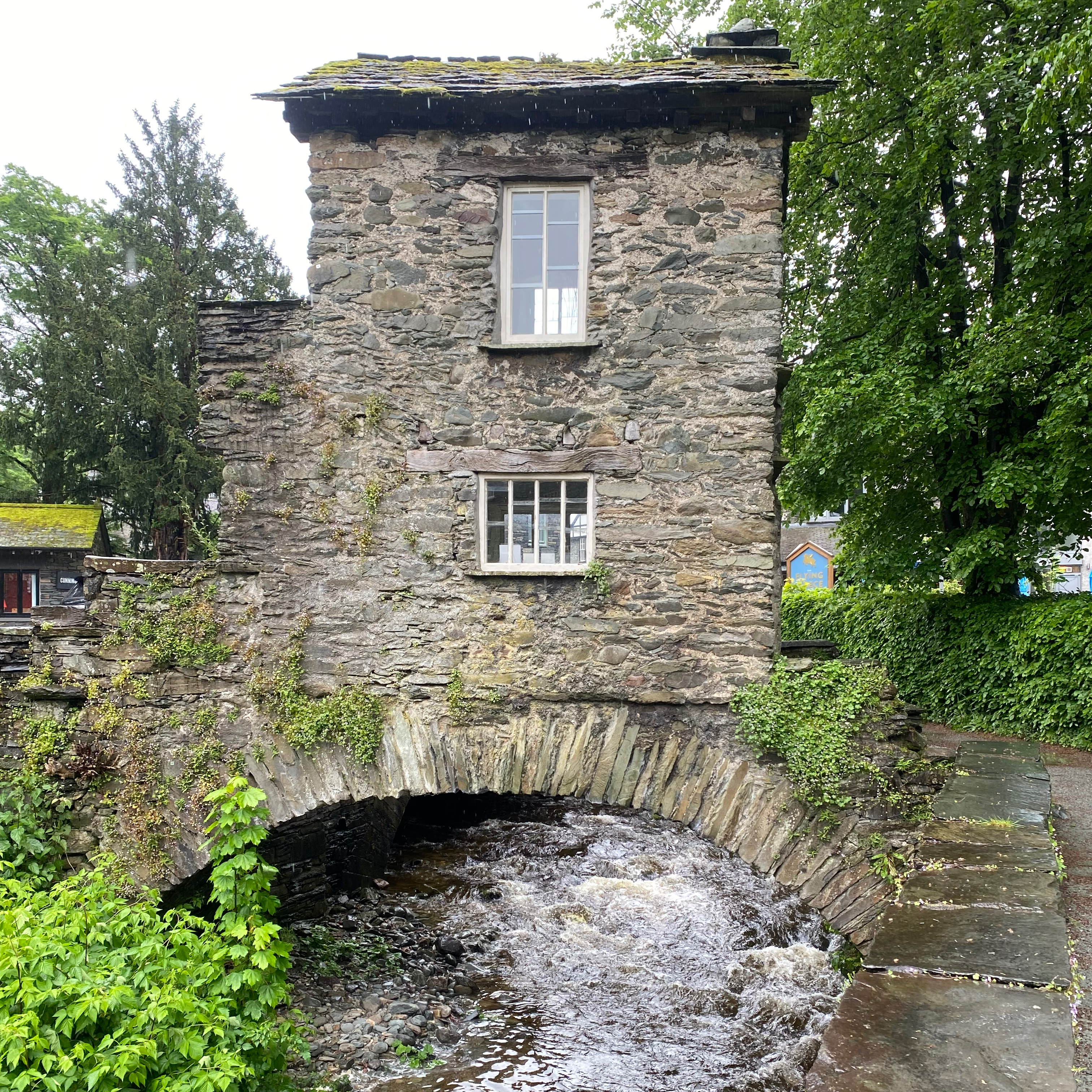
Continuing steadily upwards, the track opened up, at first following a stream with banks of bluebells, then damp sheep grazing in the fields with views back down to Ambleside. Ever upwards, the track was well made, with sturdy stone steps up to the summit. Sadly there was no reward of blue skies and breath-taking views at the top, as I was suddenly exposed to the full force of the wind and rain, now horizontal and bitingly cold. My original plan was to carry on to Wansfell itself and then loop back down into Ambleside, but I ended up deciding to retrace my steps down into Ambleside and enjoy what the town had to offer. This included a look at Bridge House, a 17th century, tiny stone building hovering over Stock Ghyll that was build to avoid land taxes, its original function as an apple store. It has since served as tea rooms, a weaving shop, a cobblers, a chair makers, and even the home of a family of eight.

Wordsworth Grasmere – Museum & Dove Cottage

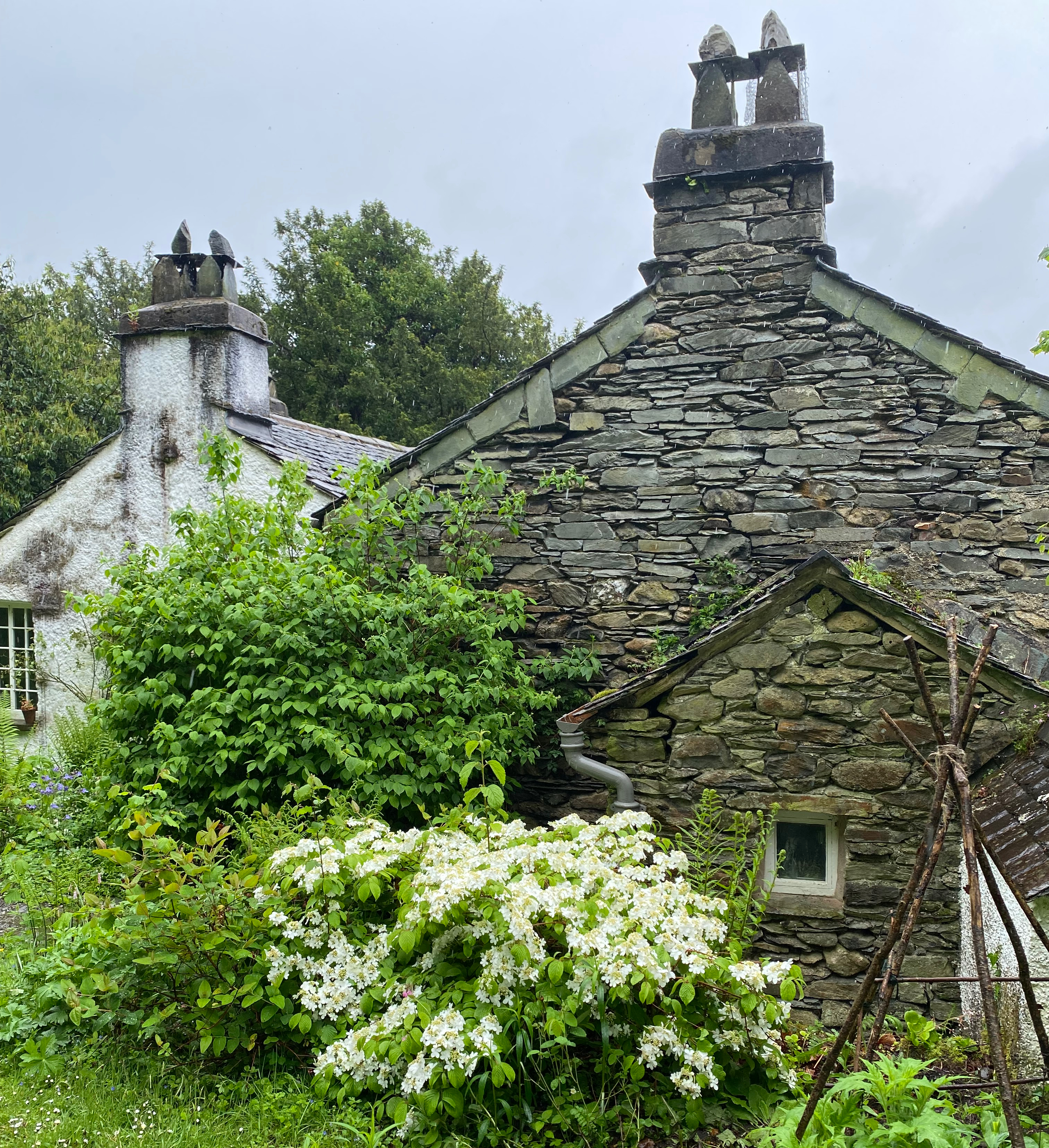
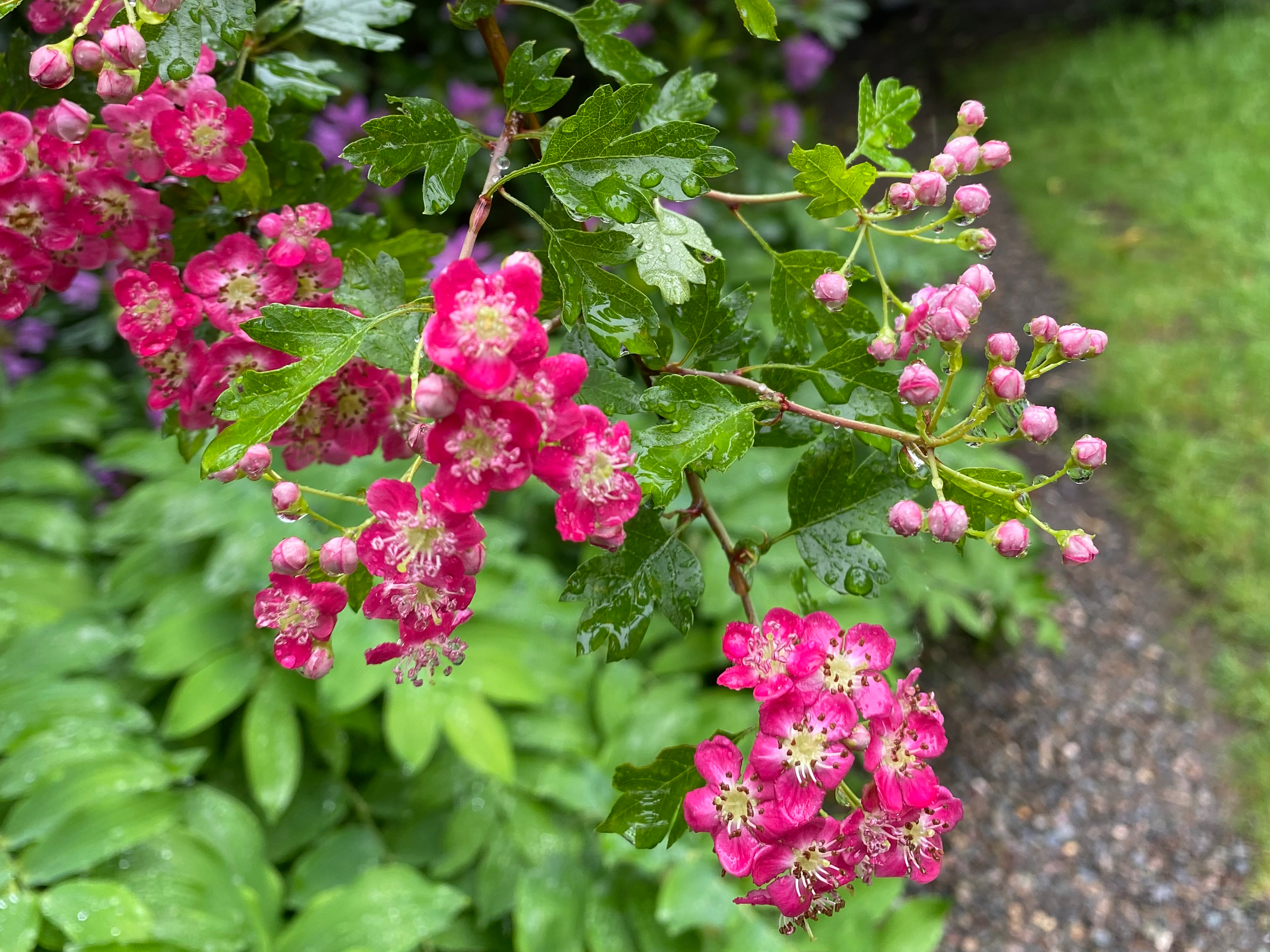
Next was a visit to Wordsworth Grasmere, the Wordsworth Museum and Dove Cottage. This was a definite highlight of the trip, fully immersing you in the day to day life of William Wordsworth and his lesser known, but equally fascinating sister, Dorothy Wordsworth. Starting with a tour of Dove Cottage, you find yourself transported back over 200 years and it feels as though William and Dorothy have just stepped out for an amble over the surrounding fells. Their home feels cosy and with their beautiful garden and the incredible scenery in all directions, it is easy to see where their inspiration came from. After our fill of the cottage and beautiful garden, we headed into the museum, housed in a separate, modern building, to learn more about the siblings and their influence on the area and the wider world.
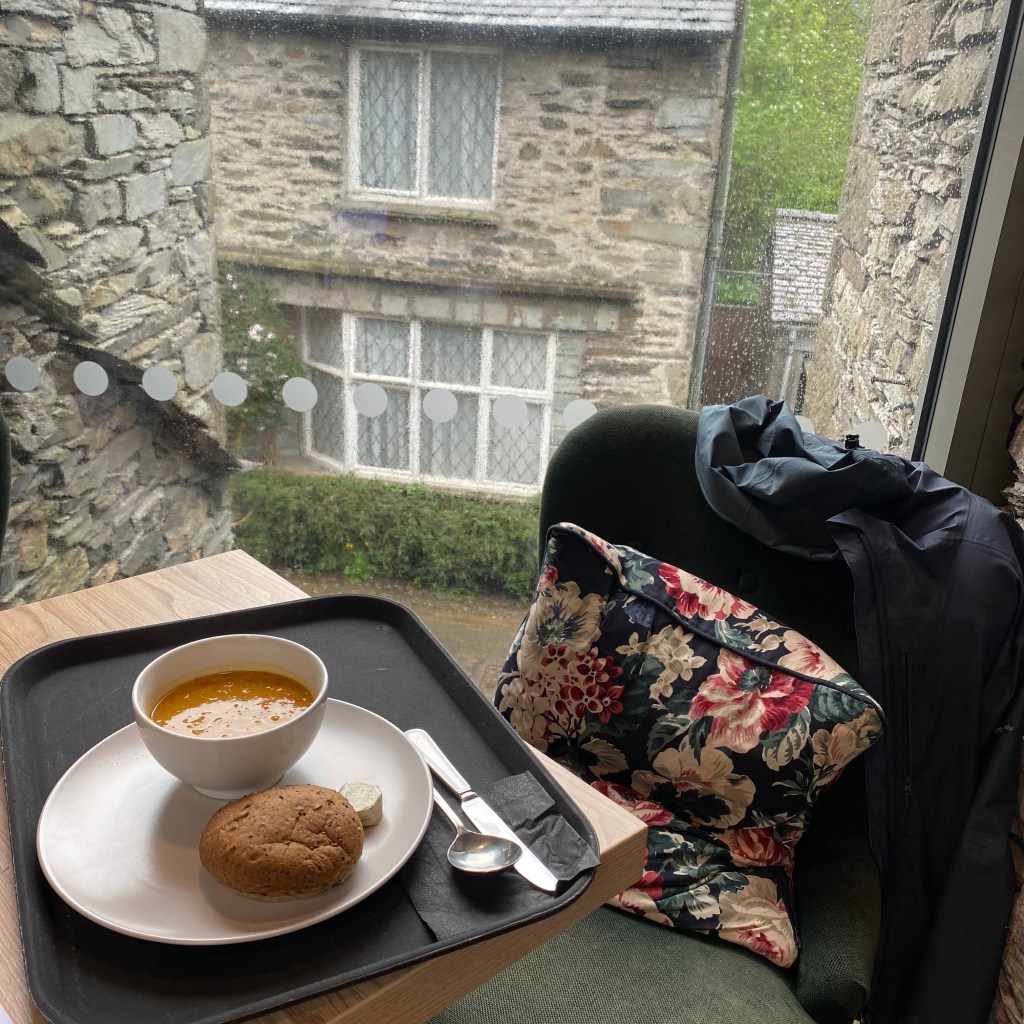
Our visit was completed with a necessary stop at the cafe, where I had the most delicious Sri Lankan style veggie curry. Perfect for a cold, rainy day!
Full of knowledge and food, we parked back at the YHA and headed to Ambleside pier for a lap around Windermere. Windermere is the largest lake in England in length, area and volume, but significantly smaller than the largest in Scotland and Ireland. I was particularly keen to explore Windermere as one of the huts on the Overland Track in Tasmania, Australia is at a lake named after this one although it looks quite different! Windermere Lake Cruises provide a number of different routes, starting from Ambleside and Bowness-on-Windermere, with the option to hop-on and off as many times as you like. Starting at Ambleside, we got off at Bowness-on-Windermere to explore another beautiful Lake District village, with the rain finally easing off. We were amazed at the number of places for ice-cream and had we not been so cold, we would definitely have joined the many others enjoying it before our return journey.
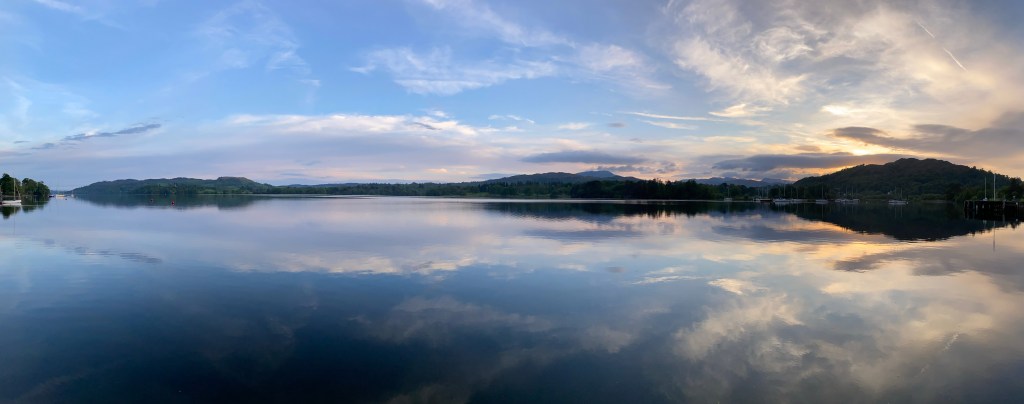
The rain had finally eased off by dinner time allowing us to enjoy a sunset over an incredibly still Lake Windermere and finally see all the surrounding fells that had been previously shrouded in grey clouds.

Todd Crag & Lily Tarn

Waking up to the sun shining and no hikes planned for the day ahead, I set off from the hostel at 0545 for what would be one of my favourite hikes of the trip. Seeing not a soul until nearly back at the hostel nearly two hours later, I felt like I was the luckiest person alive to be experiencing such a glorious morning to myself.
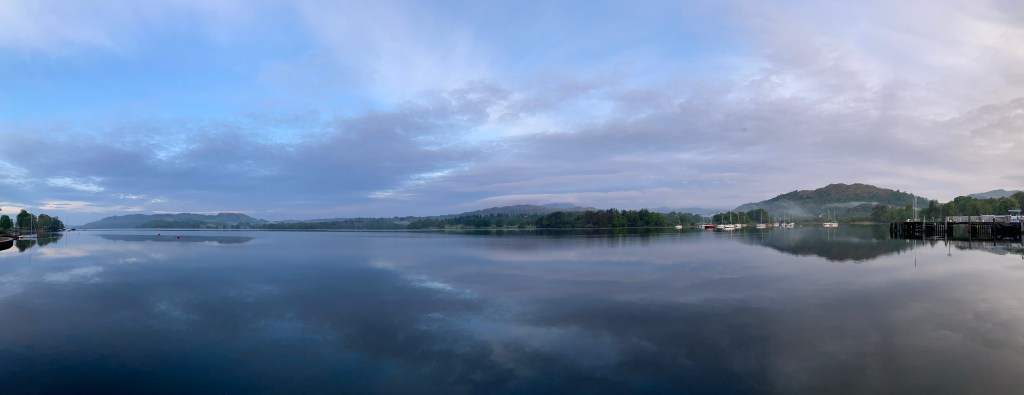
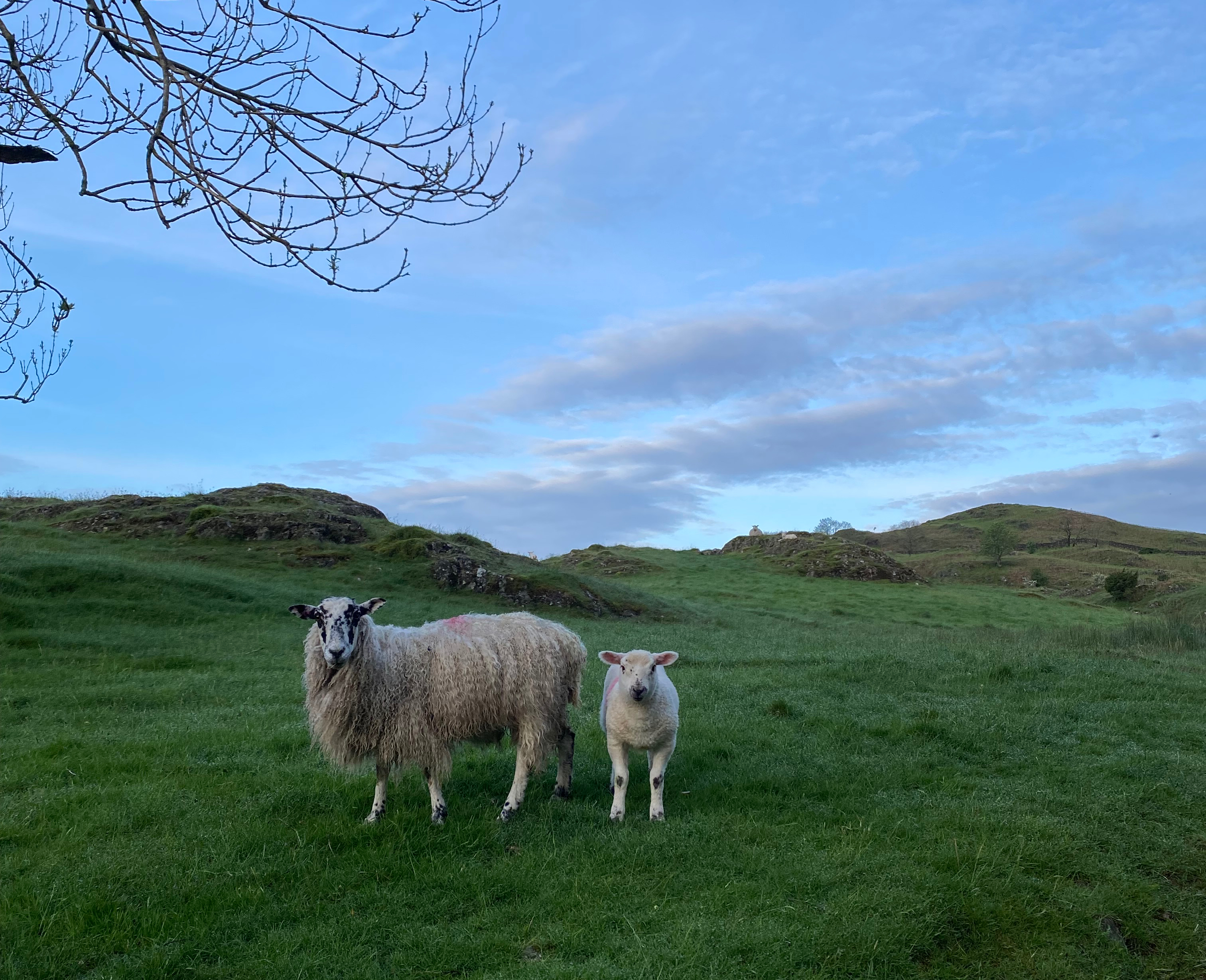
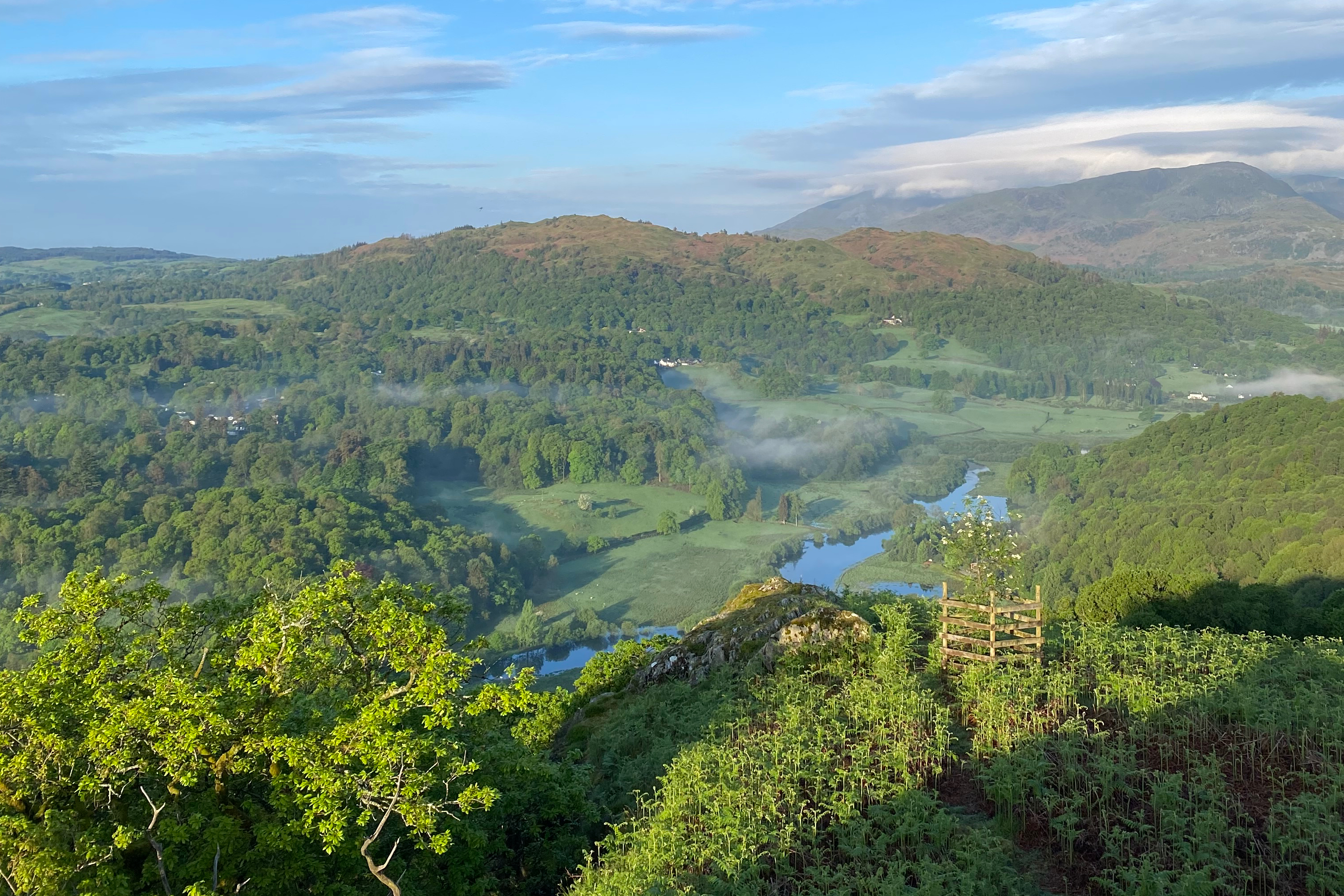
A fairly straightforward hike with minimal elevation gain, this hike was not only easily accessible from the hostel, as it is from Ambleside, it delivered breathtaking views down to Lake Windermere, as well as of the surrounding fells, gorgeous sheep with their lambs (the first of many I would see that day), bluebells, and perfect mirror reflections in the tarns. Heading north from the hostel, I skirted to the west of the village and up Under Loughrigg along the River Rothay before turning off to the left and heading steadily uphill for an anticlockwise loop. Once off the road, I enjoyed walking amongst the sheep in the early morning light. It was only really once looping around to walk back eastwards towards the summit of Todd Crag that I started to be treated to some stunning views, first of a lush, green valley below dotted with low misty cloud, and then of Windermere, looking even more spectacular from above. With the boats looking like toys and swirling reflections of the clouds above, it was a gorgeous spot to pause for a moment and enjoy the warmth of the sun.


Then it was down past Lily Tarn, which really did create perfect reflections, and steadily downwards back towards the road past bluebells, streams, and new bracken. On a high, I enjoyed a big breakfast back at the hostel and packed my bags, ready for the day ahead.

Hill Top, Near Sawrey
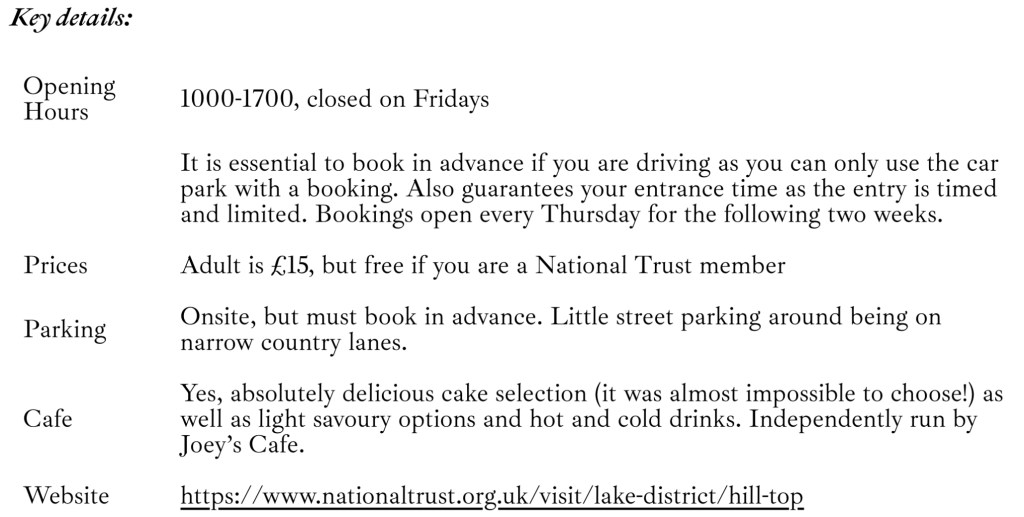
Our first stop for the day was Hill Top in the village of Near Sawrey on the opposite side of Windermere, the home of Beatrix Potter. It was purchased in 1905 with the proceeds from her first book, The Tale of Peter Rabbit, and provided the inspiration for many of her other delightful books, most notably The Tale of Tom Kitten and The Tale of Jemima Puddle-duck. Beatrix Potter often holidayed in the Lakes with her family as a child, escaping their home of London, and it is clear she fell in love with the place, gradually buying more and more land and concentrating on farming, particularly of Herdwick sheep.
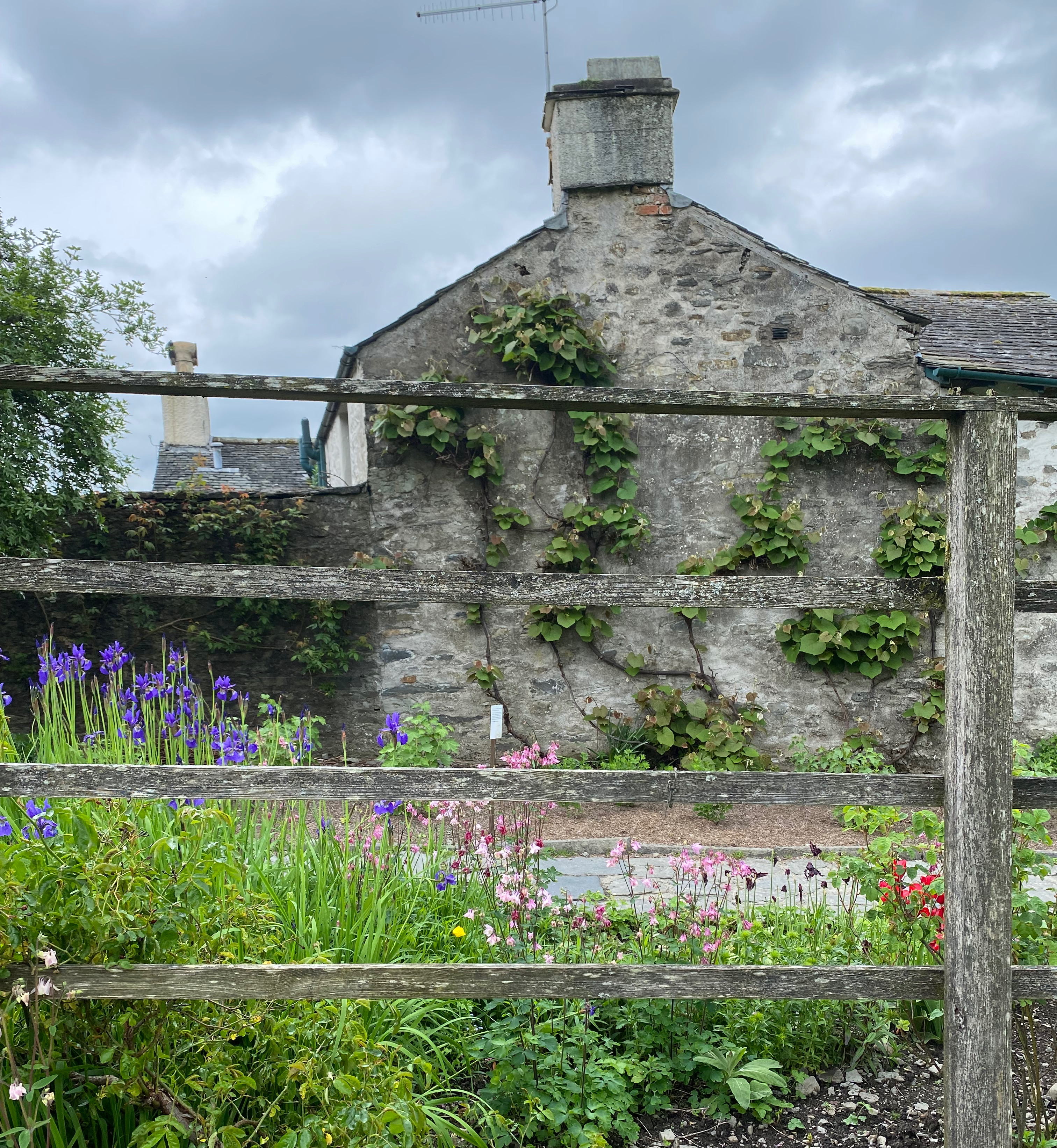
The house itself was gorgeous, filled with all the possessions of Beatrix Potter. She loved antique furniture, filling the place with beautiful antique furniture and china ware, as well as lovely wallpaper and furnishings. Like Dove Cottage for the Wordsworth’s, it felt almost as though she had just left for some errands, just leaving behind a very crowded house! Exploring the gardens was a joy, being filled with spring flowers and in anticipation of a pair of ears or some feathers appearing out of the veggie patch.

Ready for some morning tea, we were overawed with the selection provided by Joey’s Cafe, with delicious, home cakes and slices. I settled for an excellently sized (big) portion of apple cake and some tea to warm up, which was thoroughly enjoyed under a blossoming apple tree. The National Trust also has a lovely shop on site, and a second-hand book shop in the ticket office in the car park.

With time to spare before lunch, we visited Claife Viewing Station on the west bank of Windermere, the ruins of a stately home built in the 1790s with later expansions. Claife Viewing Station was regularly used in the 1830s and 40s for parties and dances, with guests walking up to the Station under Chinese lanterns and coloured lamps. It was also during this time that the windows had panels of coloured glass with different colours for each of the seasons. This has been recreated by the National Trust to give a feel for how it would have been 200 years ago. While we drove the 10 minutes from Hill Top, it can also be reached by ferry from Bowness-on-Windermere on the opposite side in about 15 minutes. There is larger Joey’s Cafe near the ferry with plenty of seating.
Herdwick Experince
Lunch was at Herdwicks Cafe in Coniston, an extremely dog-friendly cafe with a wide-ranging and delicious menu. While it was hard to look past the sweet treats, I had an excellent vegetable curry with rice and crusty bread.
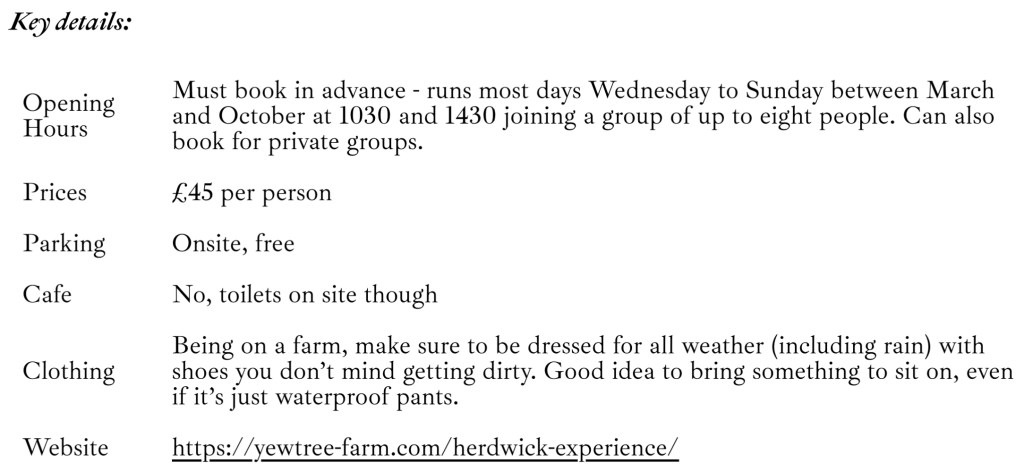
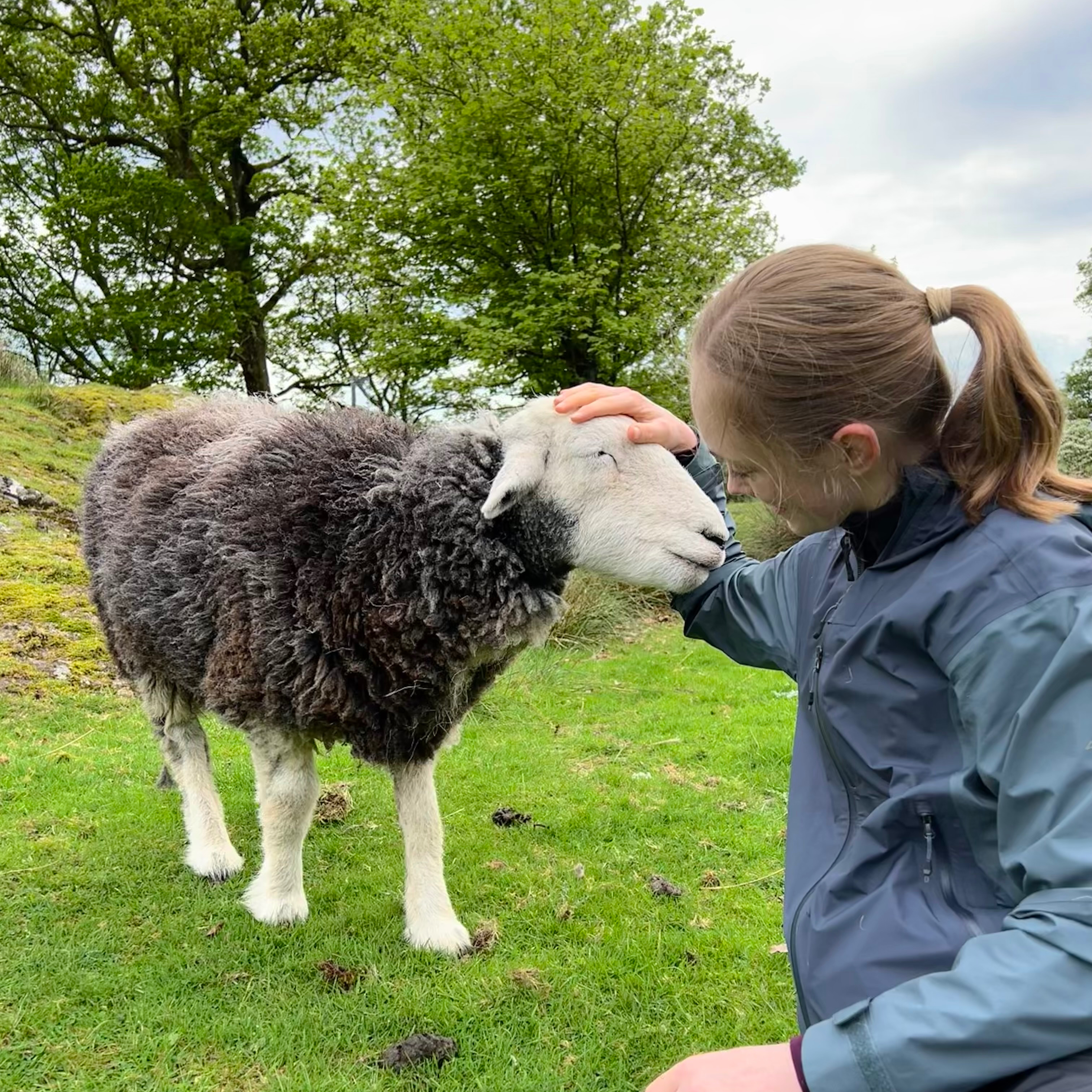
Possibly my highlight of the trip, or at least the non-hiking highlight, was the Herdwick Experience. Located on Yew Tree Farm just outside of Coniston, once owned by Beatrix Potter, this is a working farm with around 1,000 Herdwick sheep. After the most fascinating talk about the peculiarities of this breed of sheep, farming and the area, we had reached the moment we had all been waiting for. For around an hour, we had the opportunity to cuddle with a small number of these sheep who are extremely friendly with people, coming over for pats and even lying down up next to, or on, several people. While being extremely hardy to survive the tough conditions, these sheep had the most gently personalities and Merlin, the sheep I was lucky enough to cuddle, even wagged his tail whenever I scratched him! Being on a farm, make

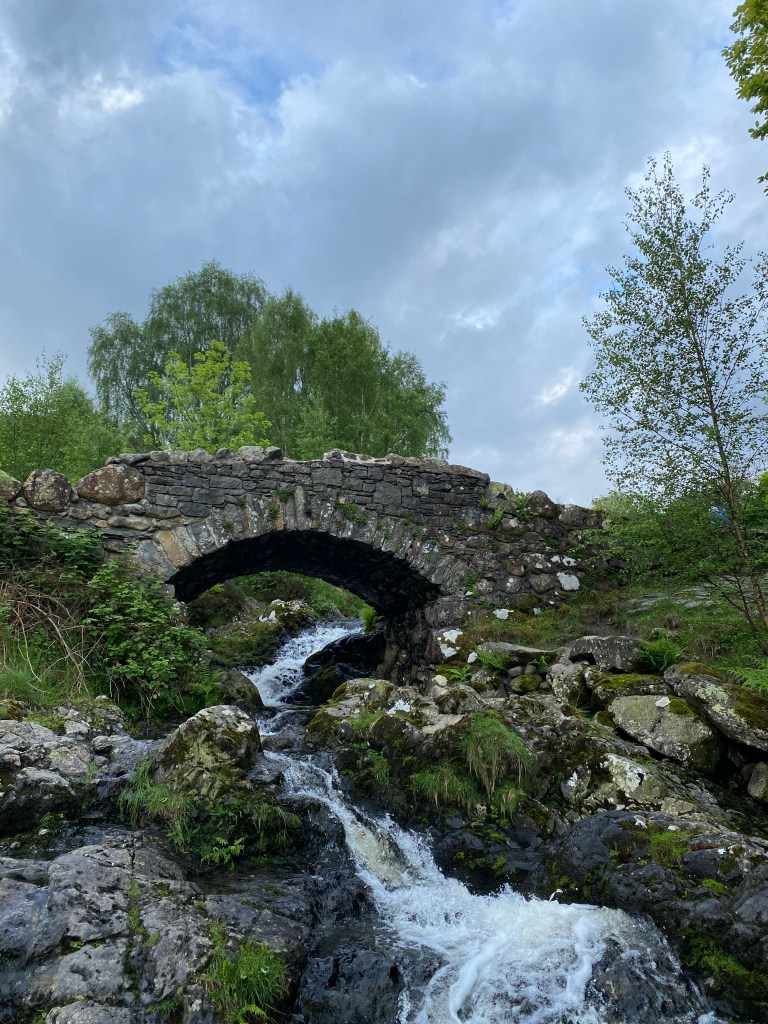
While difficult to leave, we still had a bit of a drive ahead of us and more to see. Our accommodation for the next two nights was in Borrowdale Valley on the southern end of Derwentwater. Once driving south along the eastern bank, we took a turn off for Surprise View, a look out at the end of a narrow, mostly single-lane road with incredible views over the lake and the surrounding fells. Heading back towards the main road, we also pulled over to wander around Ashness Bridge, a lovely stone bridge with a river gushing underneath. There was plenty of paid parking at both of these sites, which is free for National Trust members.

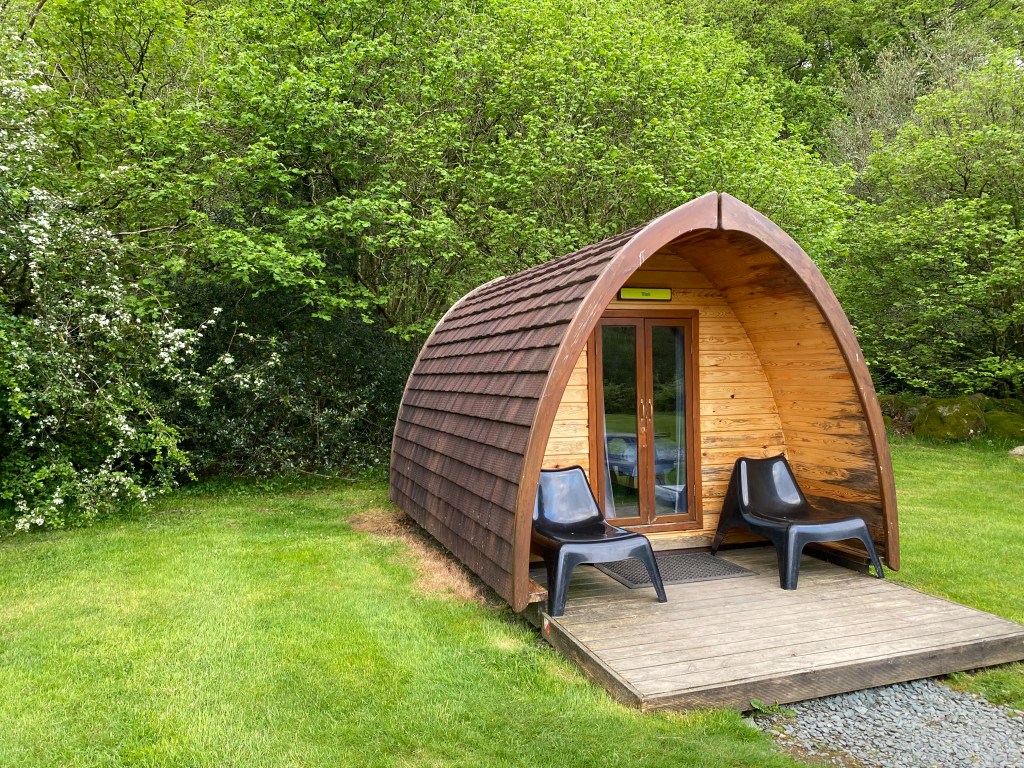
YHA Borrowdale is way off the beaten track, with no reception, making this the perfect place to stay for an escape. The main building was extremely cosy, with a restaurant and bar, along with the usual YHA self-catering kitchen, private rooms and dorms, and a lounge area with a good selection of board games. We had booked a pod for the night, which had two single beds and felt like we were camping without the hassle of putting up and packing down all the gear. Being in a more secluded location along the banks of a crystal clear stream, it is a good spot for looking out for the elusive wildlife, with sightings of red squirrels and badgers. We got extremely lucky and spotted a red squirrel running across the car park as we drove in!
Catbells

After another delicious breakfast, we set off for one of the more popular hikes in the Lake District, Catbells. Despite the small amount of scrambling near the top, this is an accessible hike to any with a good level of fitness and a good pair of shoes, with Alfred Wainwright describing it as “one of the great favourites, a family fell where grandmothers and infants can climb the fell together.” Its definitely not a breeze as there is still a decent amount of elevation to gain in a short space of time, but navigation is straightforward being mostly up and along a ridge line and there is nothing technical about it. And the views certainly deliver, particularly being such a short and accessible hike.
Parking is limited and due to its popularity, I would definitely recommend arriving early, particularly in the busier seasons. We parked at “Catbells Parking” on Google Maps, contrived.jets.comment on What3Words where there are a few spots, but in peak season I would recommend catching the ferry from Keswick to Hawes End and hiking up from there as there is plenty of parking in Keswick near the ferry and it leaves regularly. Ascending fairly steeply from the very beginning, you are rewarded the entire ascent with views over Derwentwater and the surrounding fells to the east, improving with every step, and gradually delivering excellent views to the west as well of some of the bigger fells including High Spy which can be added on to make for a longer day hike. There were a couple of short, sharp scrambles towards the summit, but nothing too long or challenging so long as you are okay with scrambling.

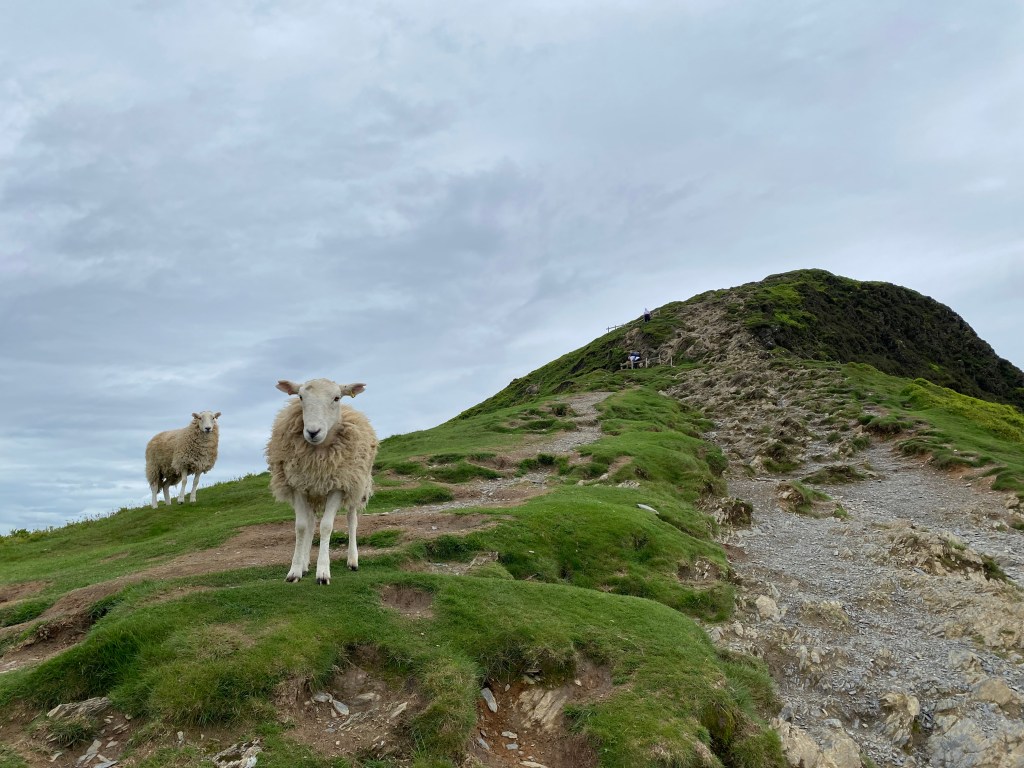
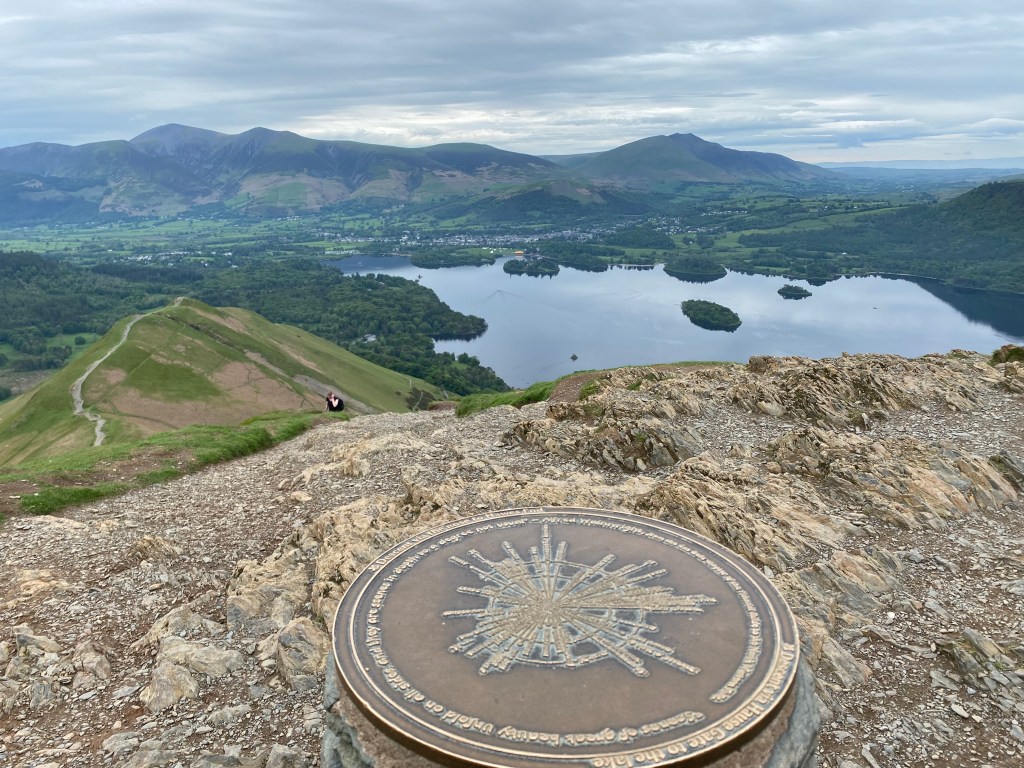
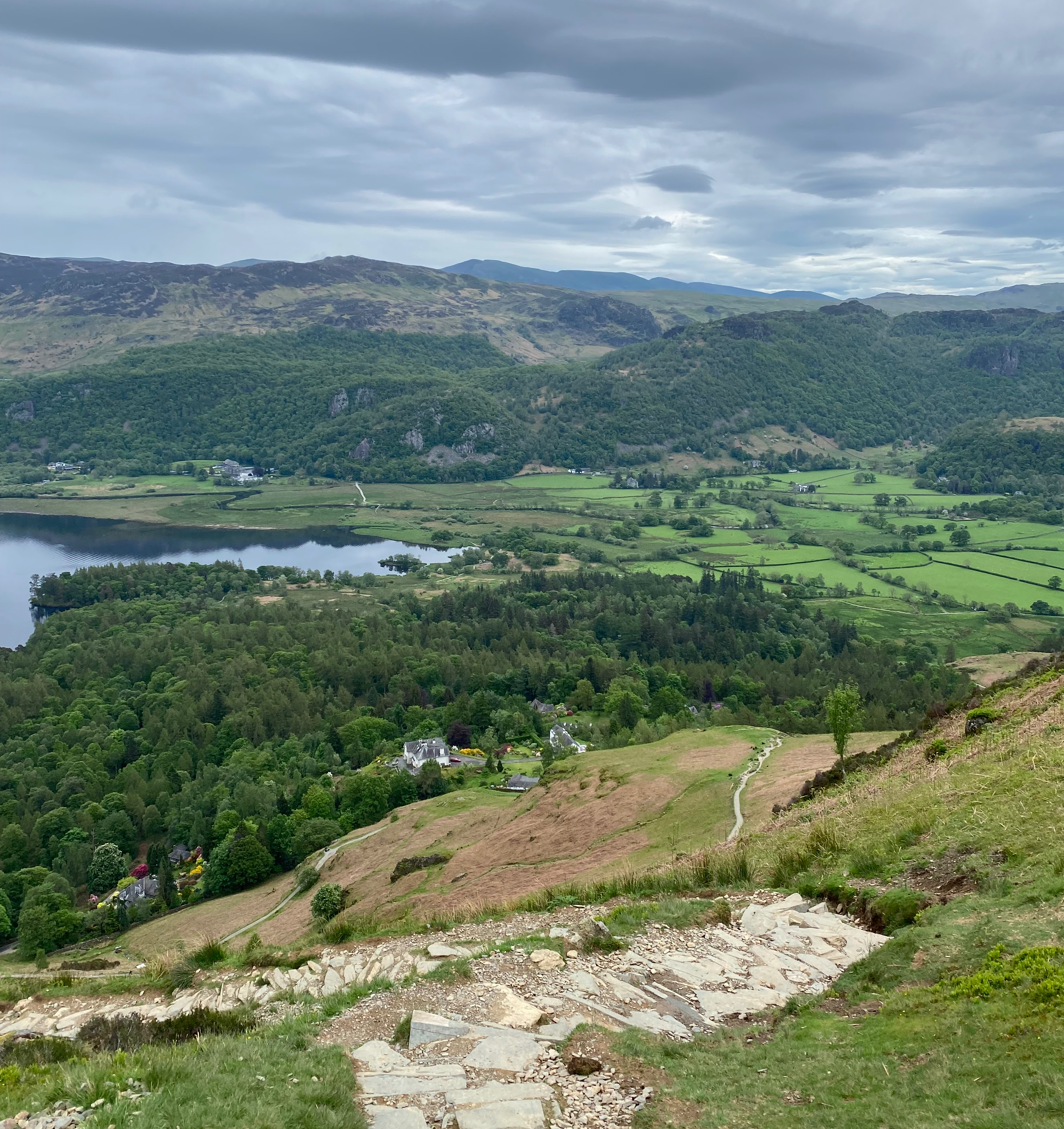
Stopping for morning tea at the summit, albeit briefly as it was definitely not warm, we took in the view with the other hikers and some very well-behaved dogs, before starting our descent. There was a small section of downwards scramble, but otherwise the descent down to Derwentwater was straightforward on a well-made trail, a lot of which was made up of stone steps. The walk along Derwentwater was a lovely addition to the route; however, if pressed for time, there is a more direct route back to the car park. This route instead takes you through a mix of forested areas and shoreline, passing a few other ferry stops before completing the anti-clockwise loop to the car park.
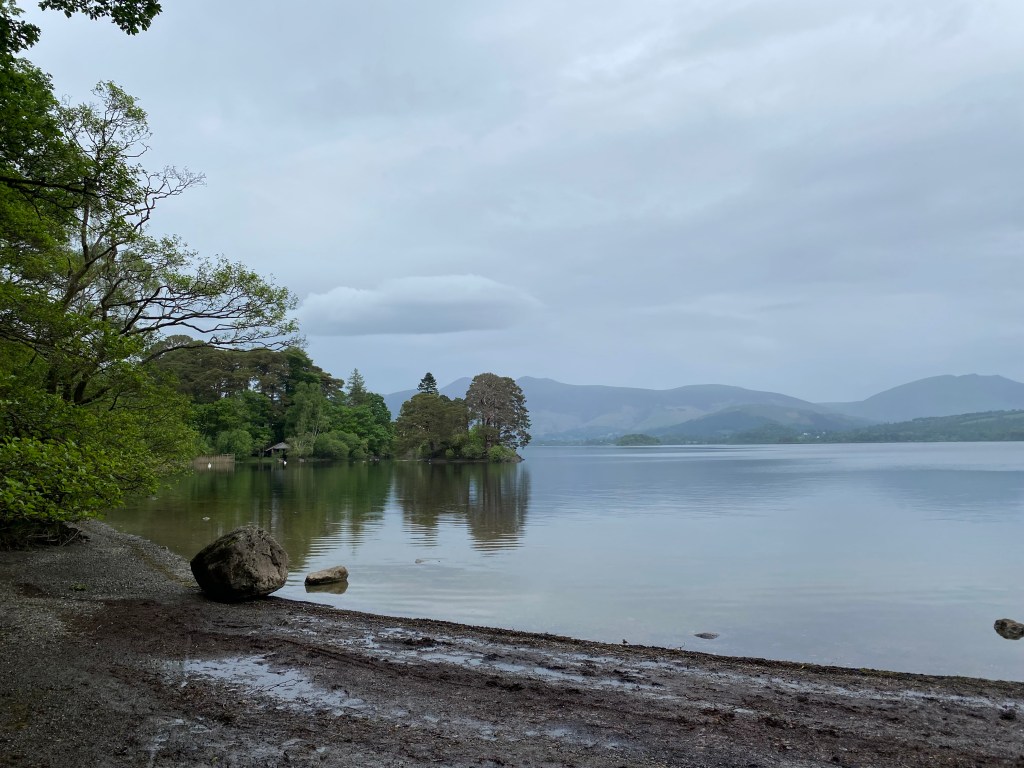
Having earned our lunch, we headed into Keswick where there were plenty of choices for food being one of the larger towns in the Lakes and walked the easy 20 minute walk to Friar’s Crag after lunch, a particularly scenic spot on the lake with gorgeous views to the Jaws of Borrowdale. For any Star Wars fans, the scenery here was used throughout Star Wars: The Force Awakens in place of the planet Takodana. We then grabbed an ice cream and enjoyed a cruise around Derwentwater. It was rewarding to see where we had hiked from a different angle and this is a relaxing way to enjoy the gorgeous scenery. Keswick Launch Co provide regular services both clockwise and anti-clockwise around the lake and their website provides lots of suggestions for what is located around each jetty, so with the ability to hop on and off as many times as you please with the one round trip ticket, it makes for a great way to spend a day. Alternatively, it is a 50 minute round trip if you remain on the boat for the full loop back into Keswick.

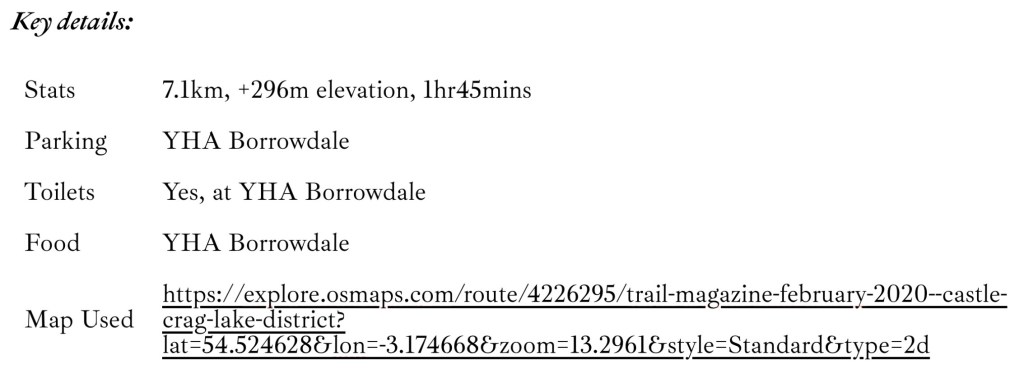
With the weather making a definite turn for the better (blue skies!) and not satisfied with just one hike, I set off for another favourite, perhaps because it was unexpected and the weather was so incredible, from our accommodation at YHA Borrowdale.
Castle Crag
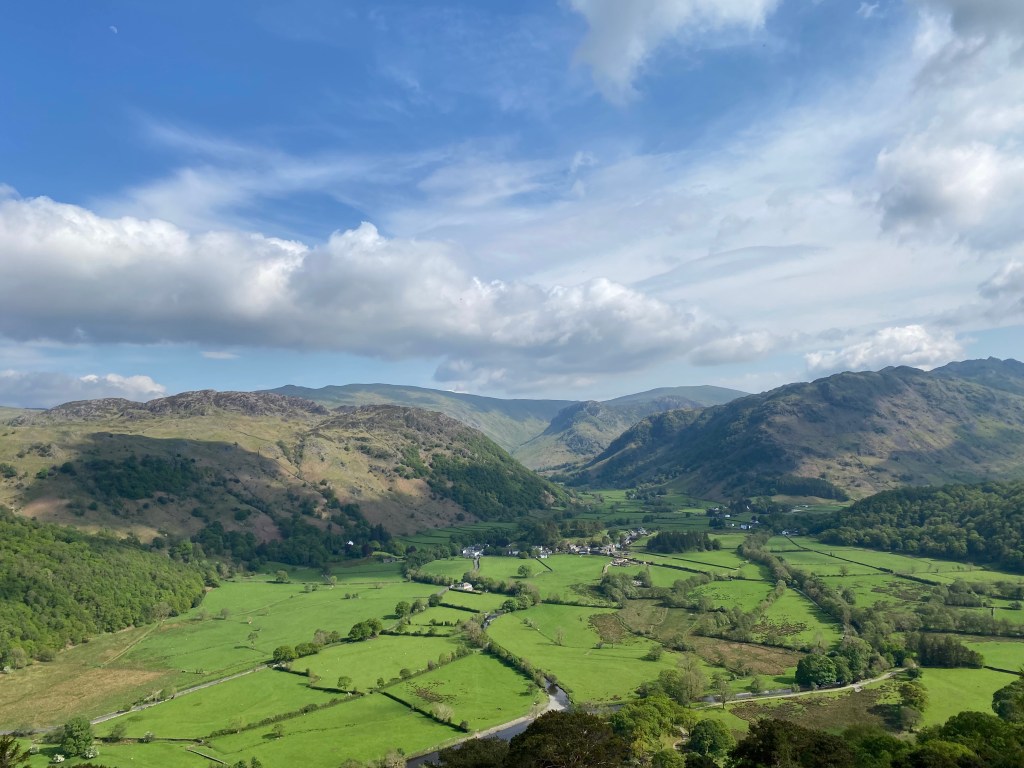
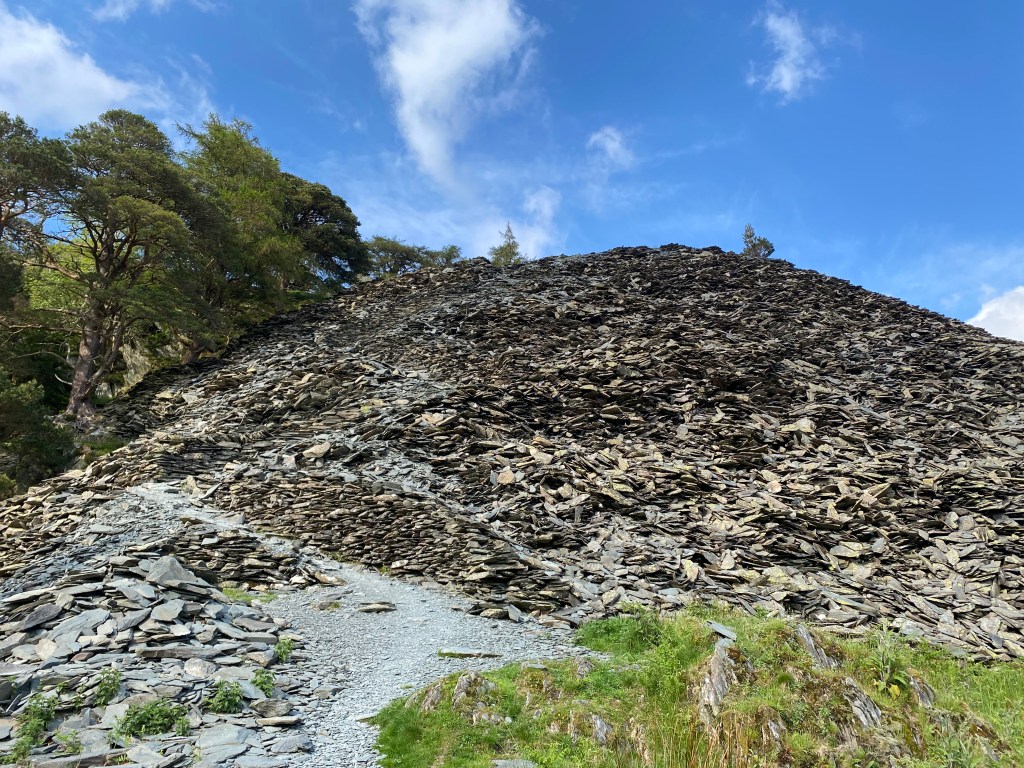
Heading north, the trail initially follows the incredibly clear River Derwent, making for a very easy flat walk with the river to your right and paddocks of sheep to your left. Eventually starting to gain the elevation promised, there is a short, sharp hill to climb before reaching a pyramid of slate with a trail of switchbacks up it. While not too bad on the way up, just very steep, care is needed on the way down as it is made up of lots of small, slippery pieces of slate. Once this has been tackled, you head around the right of the old quarry to the summit which gives gorgeous views looking directly towards Derwentwater to the north and endless green valleys and fells in all other directions.

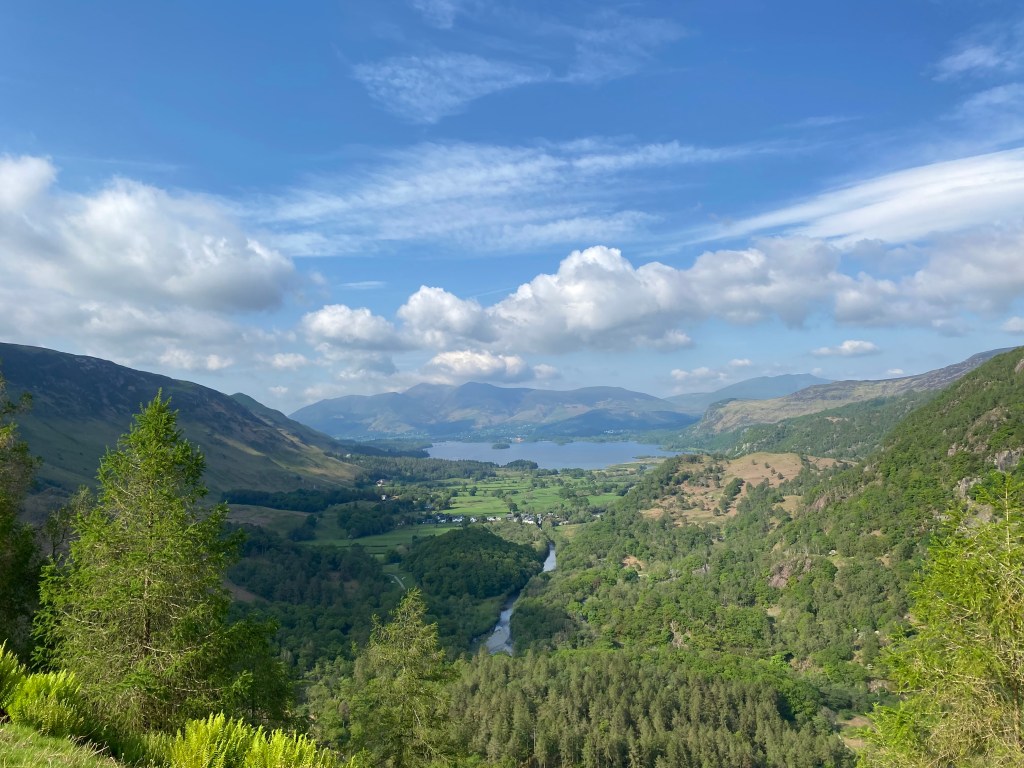
At the summit there is a memorial plaque to John Hamer, aged 20, and ten other men of Borrowdale who died fighting in WWI. John Hamer’s parents, Sir William Hamer and Agnes Hamer, purchased the land on top of Castle Crag for £150 in 1918 as a memorial for their son. Gifting the land to the National Trust in 1920 prior to Sir Hamer’s death, it was suggested that the other men who gave their lives to the same cause be added. It is certainly a beautiful spot to reflect.

Initially descending via the same route, you then form an anti-clockwise loop by heading towards Seatoller through paddocks with gorgeous sheep and their lambs. Completing the loop through Johnny’s Wood, the final section is back along the bubbling River Derwent in which I enjoyed cooling off my feet, which took seconds in the icy water, and the peace of the forest.

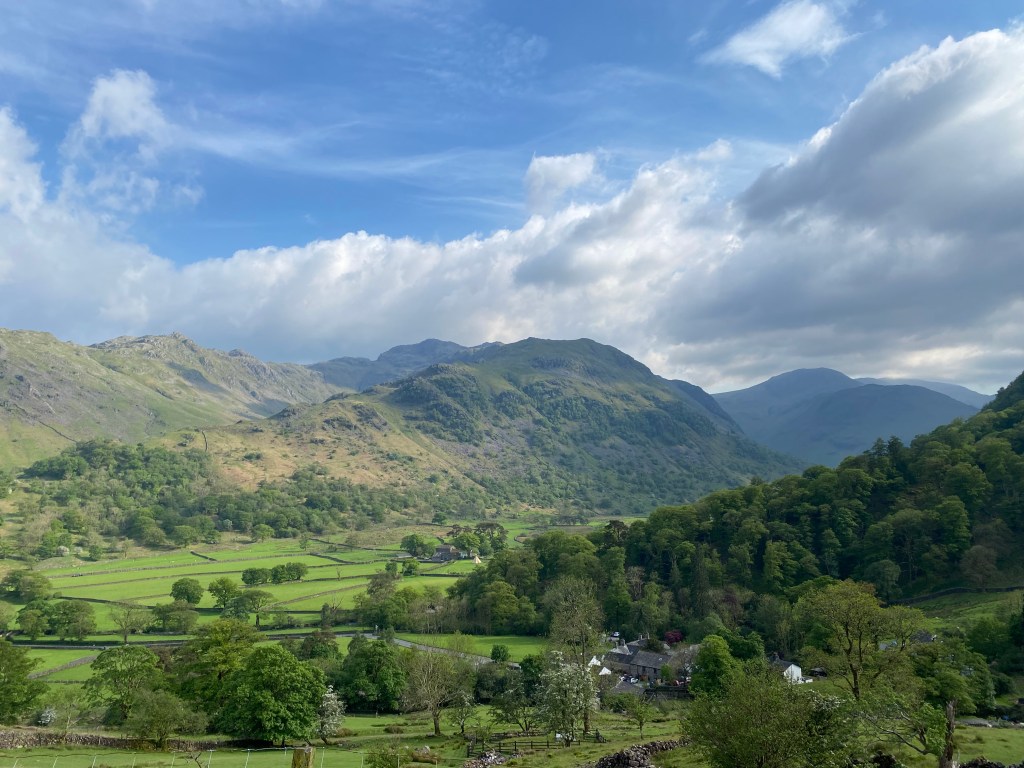

Rannerdale Knots and Valley

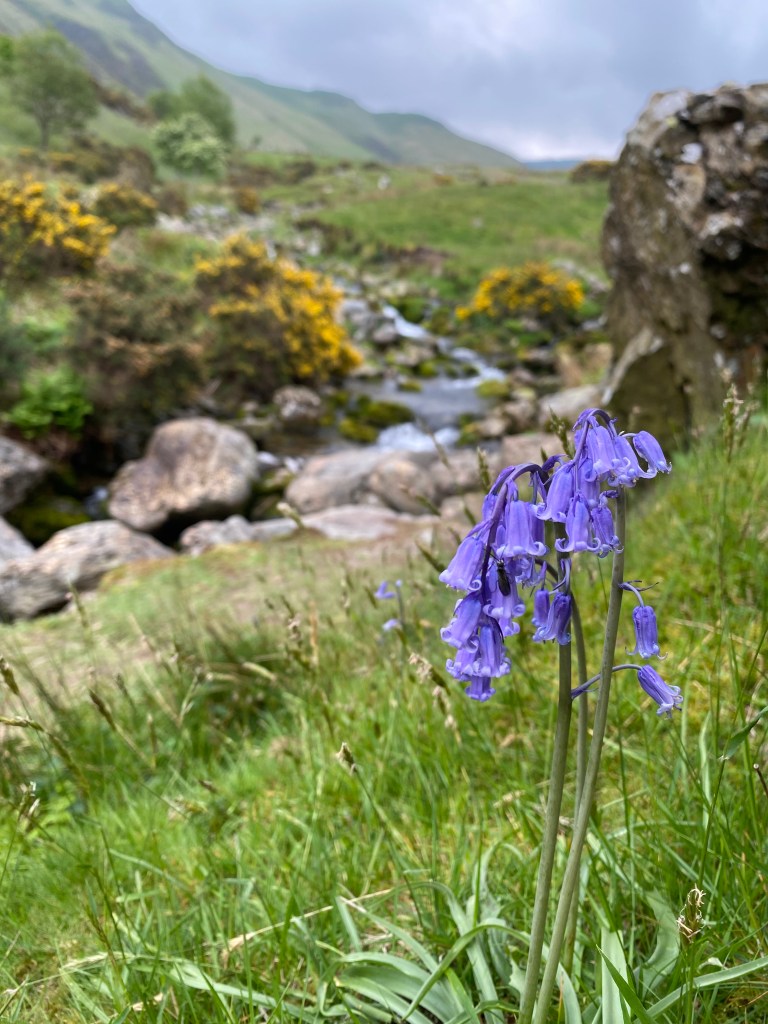
This hike had been one that I was particularly excited for as the Rannerdale Valley is famous for its bluebells in April and May. Time it right and it is a sea of purple-blues. Now owned and protected by the National Trust, the bluebells are said to spring up where the blood of Norman invaders was spilt when they were slaughtered by the local settlers and Norsemen. Whether this is true or not, this is one of the most picturesque valleys.
To get here from YHA Borrowdale, and from many places within the Lake District, we had to drive along Honister Pass. This is one of the most scenic roads in the UK and the highest mountain pass in the Lake District. It is also very narrow, requiring cars to pull over to pass, as well as being very steep and windy so care is required, but the views are incredible (if you are the passenger!). At the top of the pass is the Honister Slate Mine, the starting point of a number of hikes in the area, as well as being a working slate mine to this day and now runs adventure activities such as via ferrara, mine tours, cliff camping and an infinity bridge.
The hike begins with an easy walk through the valley itself, where care must be taken to remain on the trail to ensure the bluebells continue year after year. Walking through the valley is manageable for most being pretty much flat the whole way around and is absolutely worth a visit in April and May.
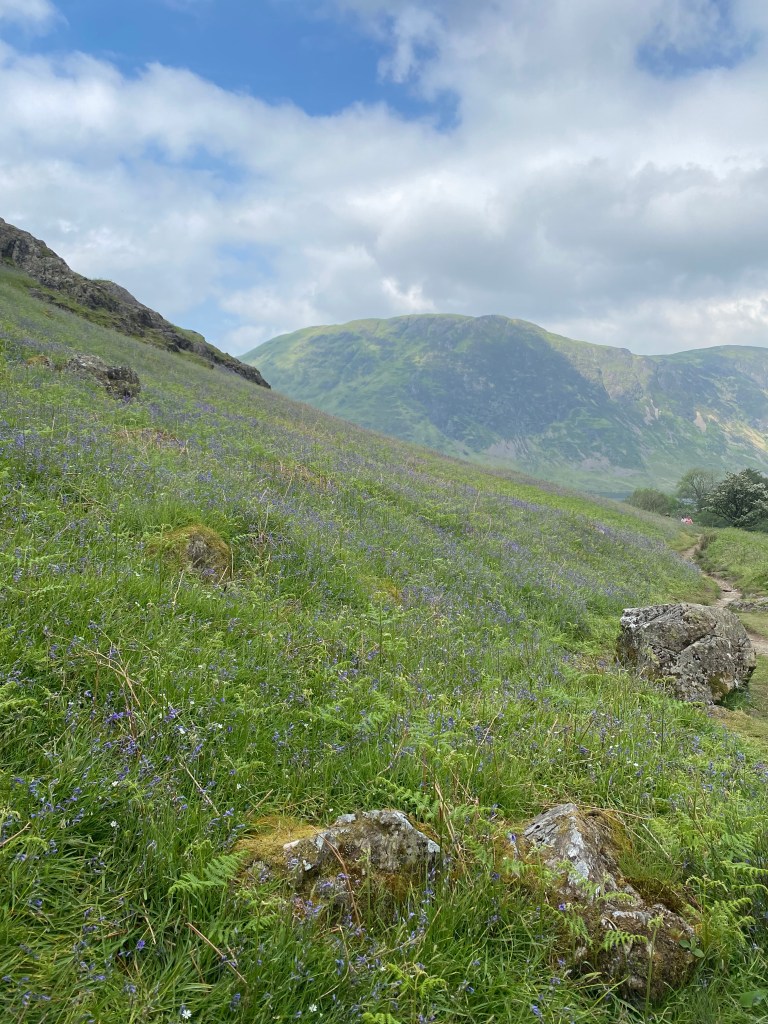


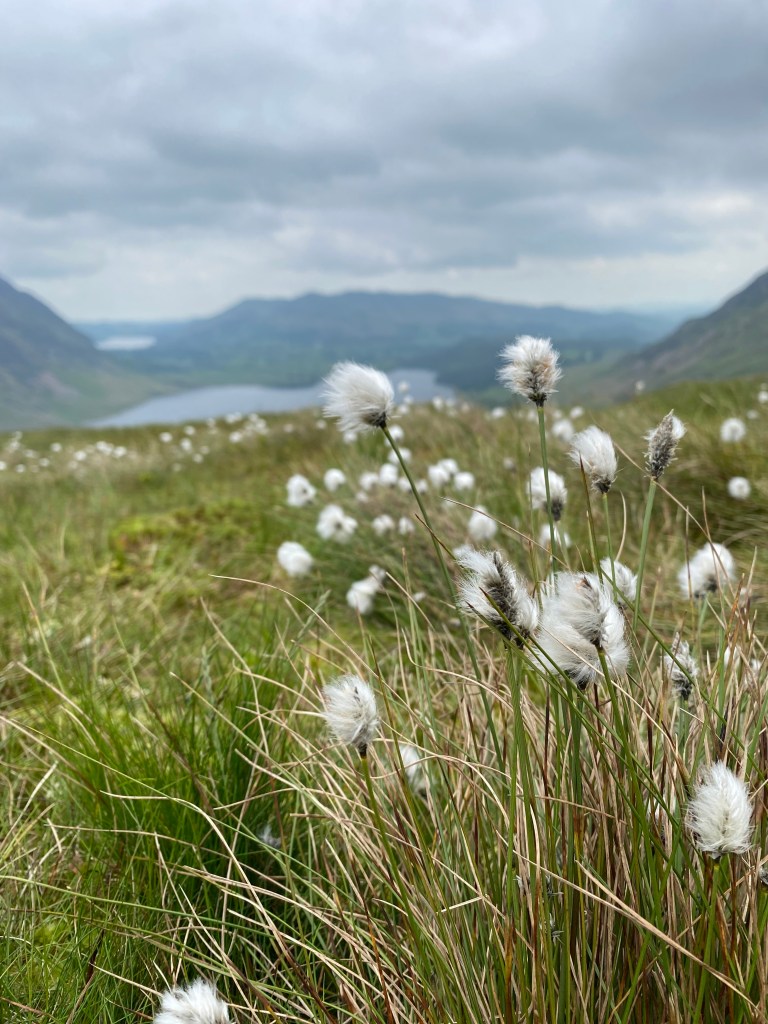
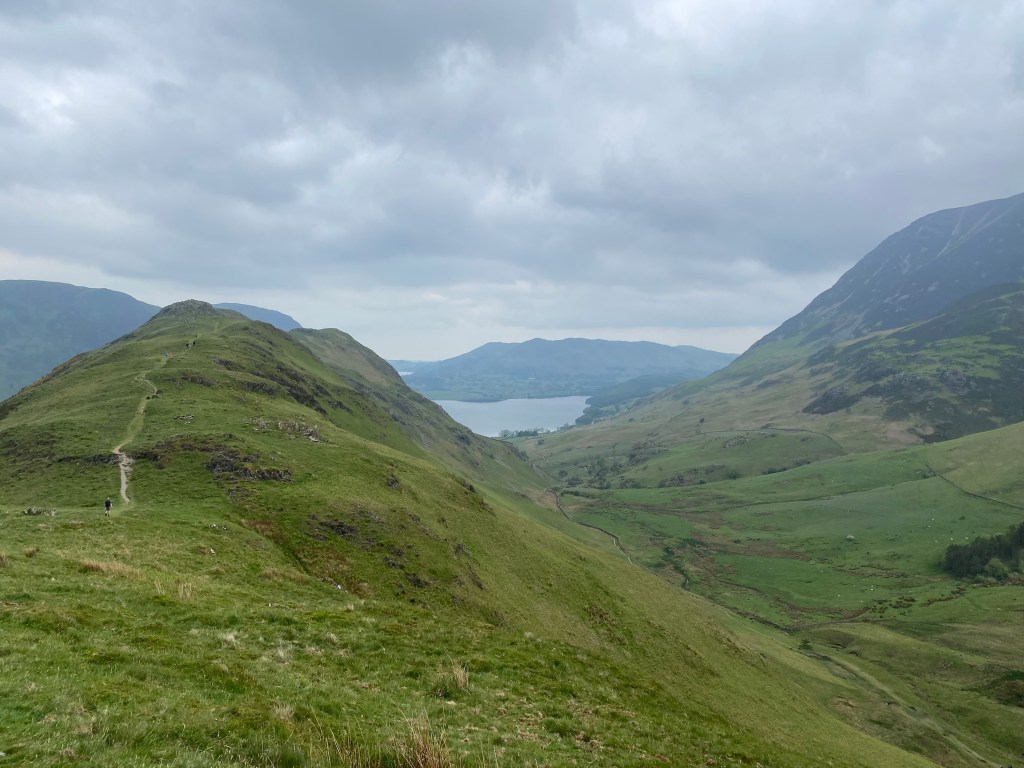
While the loop up and down the Rannerdale Knots can be tackled in either direction, we opted for an anticlockwise loop which meant a steep climb up stony steps to the summit, an enjoyable ridge line walk, and a gradual descent back into the valley (opposite direction to the map above). Either way, the views over Crummock Water and Buttermere are spectacular and we enjoyed a leisurely morning tea stop at the summit to take it all in. The steps up to the summit heading in this direction were very steep (very much the definition of short and sharp); however, I do think it is easier to climb up them as a lot of care is needed in descending them. As with any of the other hikes, a good pair of boots is required and plenty of layers as you are very exposed once up at the summit and along the ridge line.

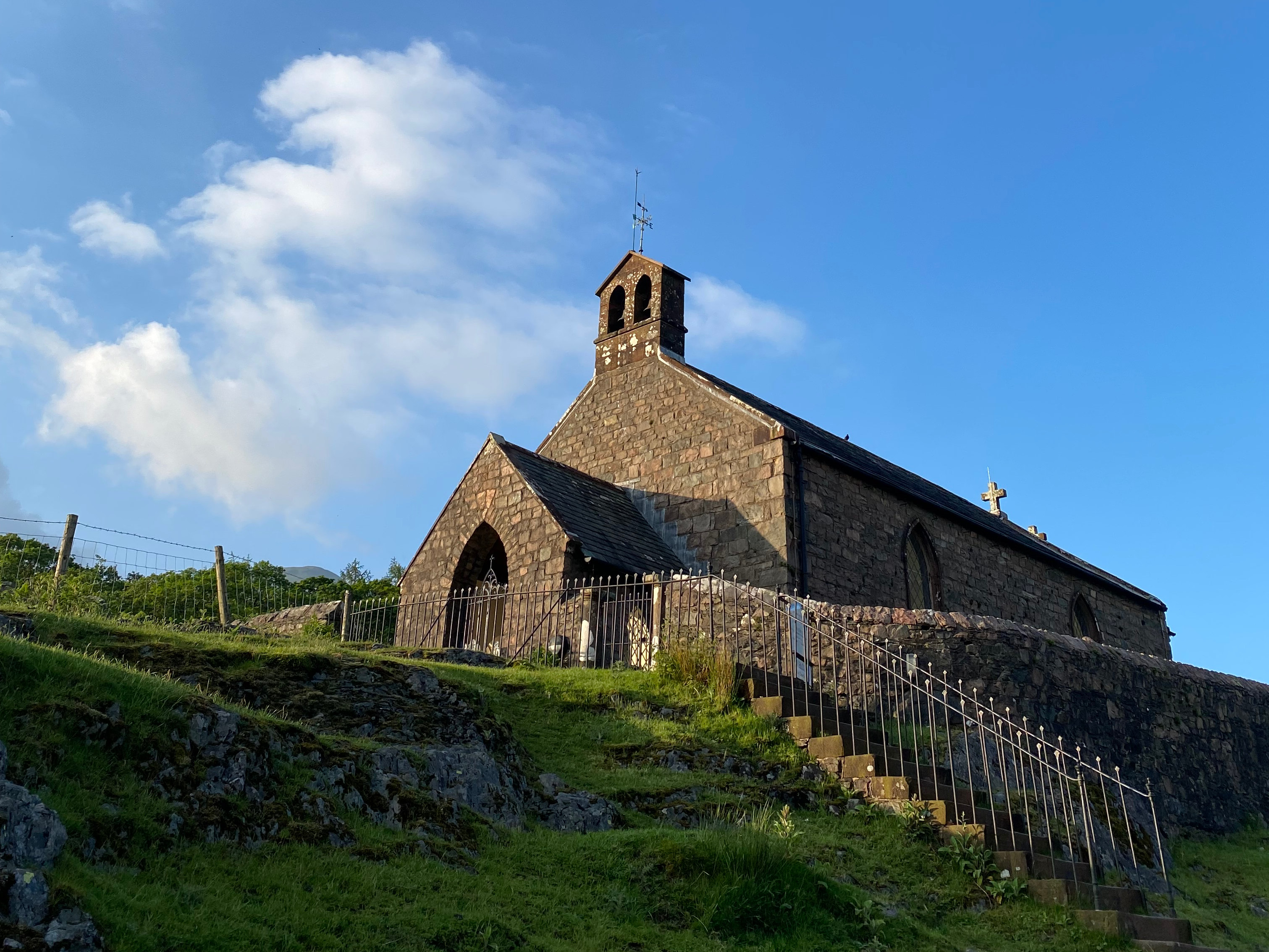
Having eaten a packed lunch near the car park, we headed into Buttermere village for tea and a delicious and incredibly generous slice of cake at Syke Farm Tea Rooms. They had a fantastic selection of sweet and savoury treats as well as lots of lunch options. Parking just above the cute St James’ Church is very limited in Buttermere village with many parking well up to road towards Keswick. Fortunately we were staying at YHA Buttermere for the next two nights so we parked here and made the five minute walk into the village.

Scale Force
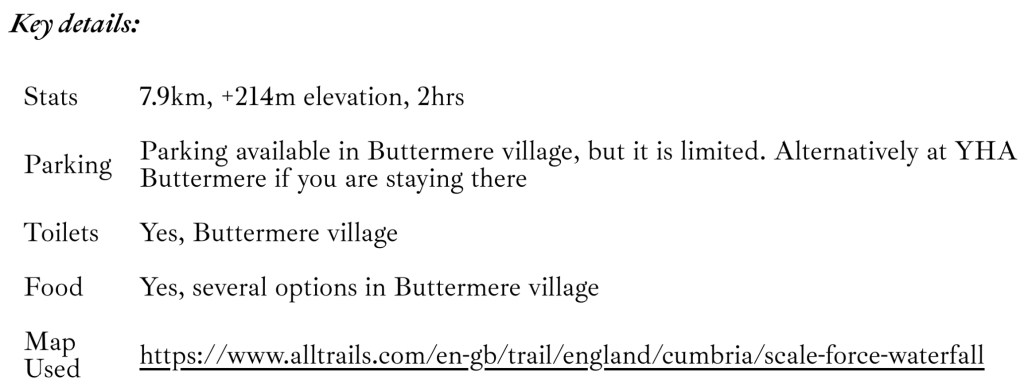
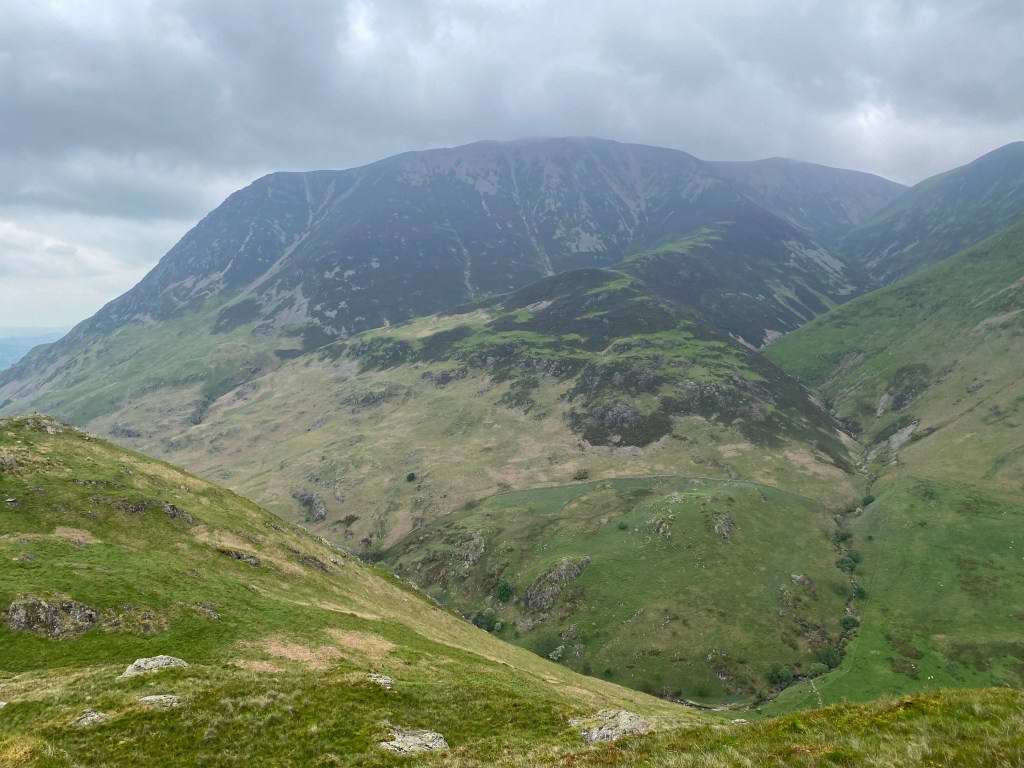
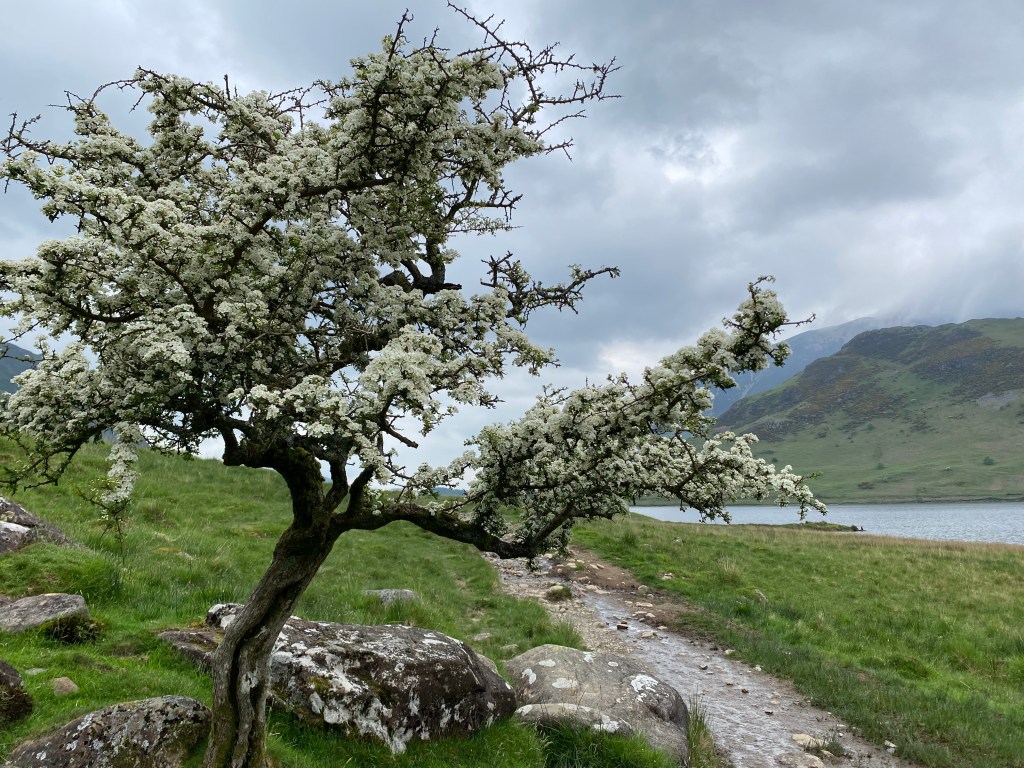
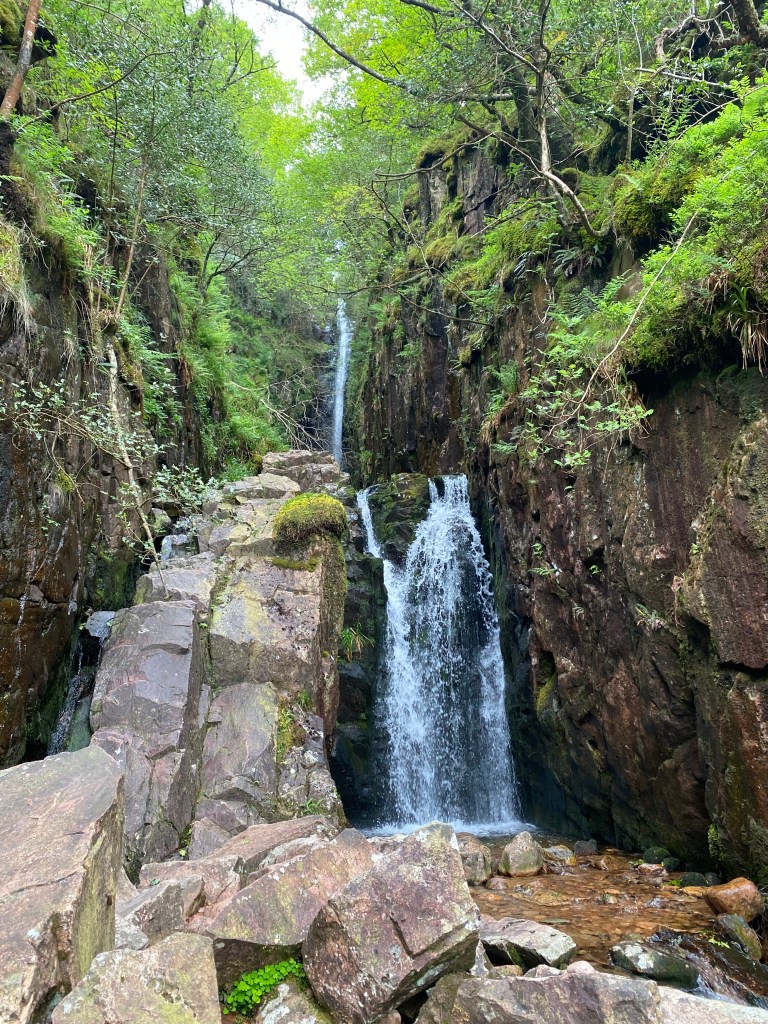
Always eager for another hike, next up was a hike from Buttermere to Scale Force and back, the highest waterfall in the Lake District. The out-and-back trail is easy underfoot and mostly straightforward to navigate. It initially heads between Crummock Water and Buttermere, then heads along the western shore of Crummock Water, giving us fantastic views back to the Rannerdale Knots we had just summited. Eventually heading off to the left, there was a small amount of ascent to the waterfall itself.

Having decided on a pub meal for dinner, we thoroughly enjoyed the bright evening sun on our walk back up the hill to the hostel, crossing our fingers that the sunshine would continue into tomorrow.
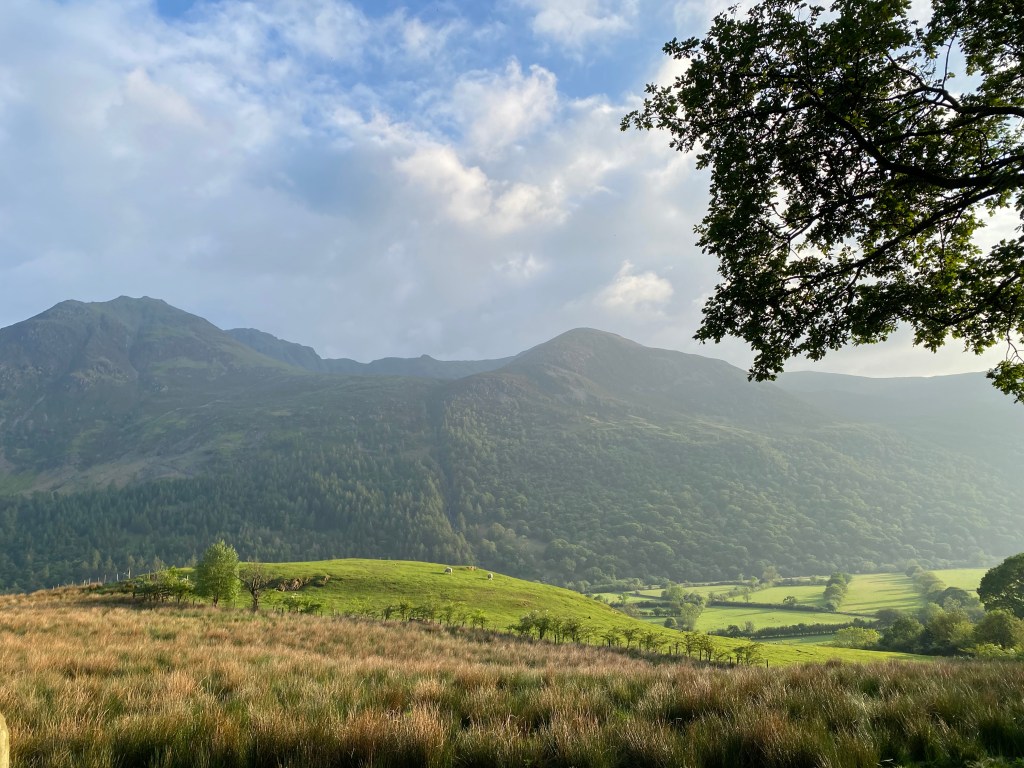
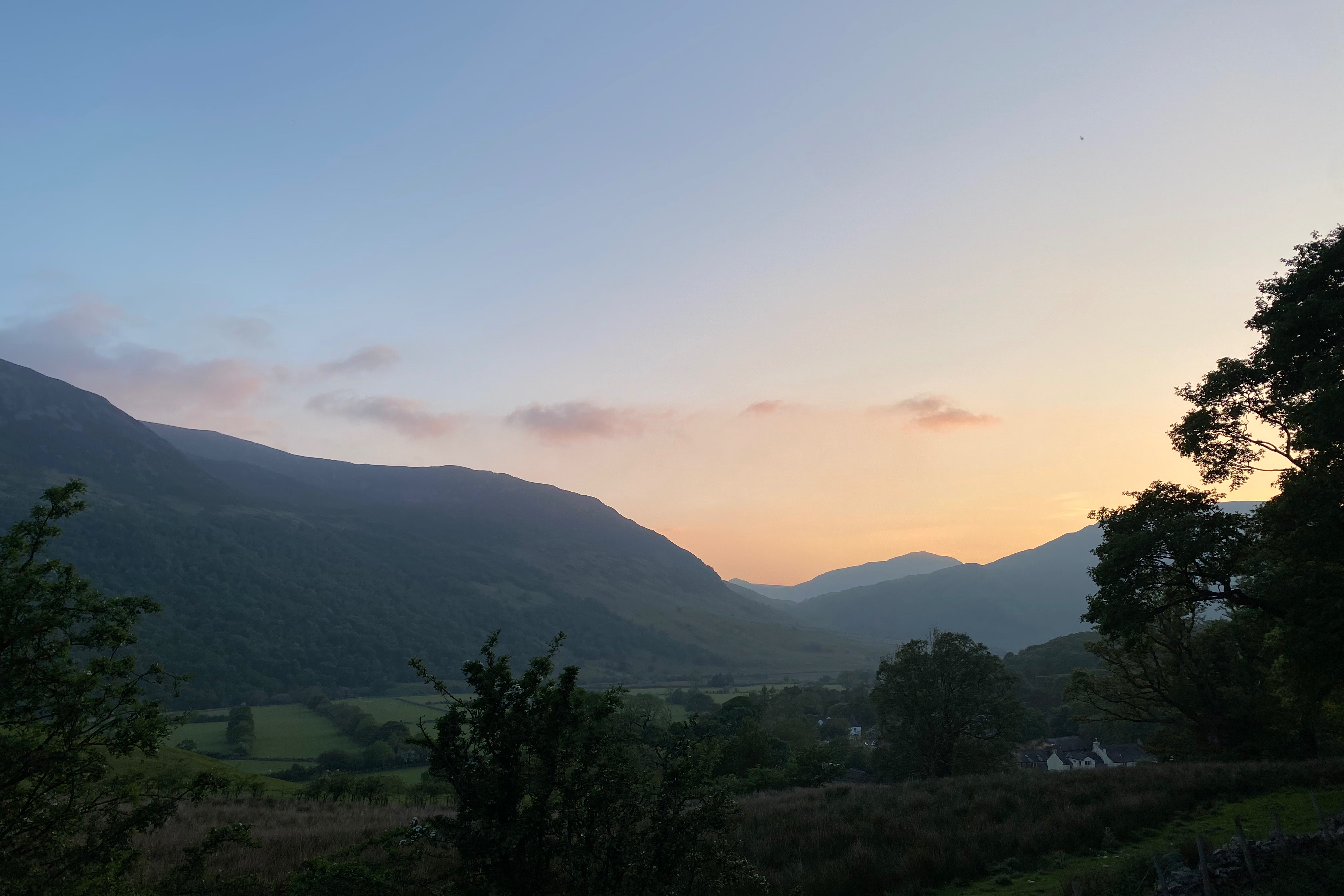
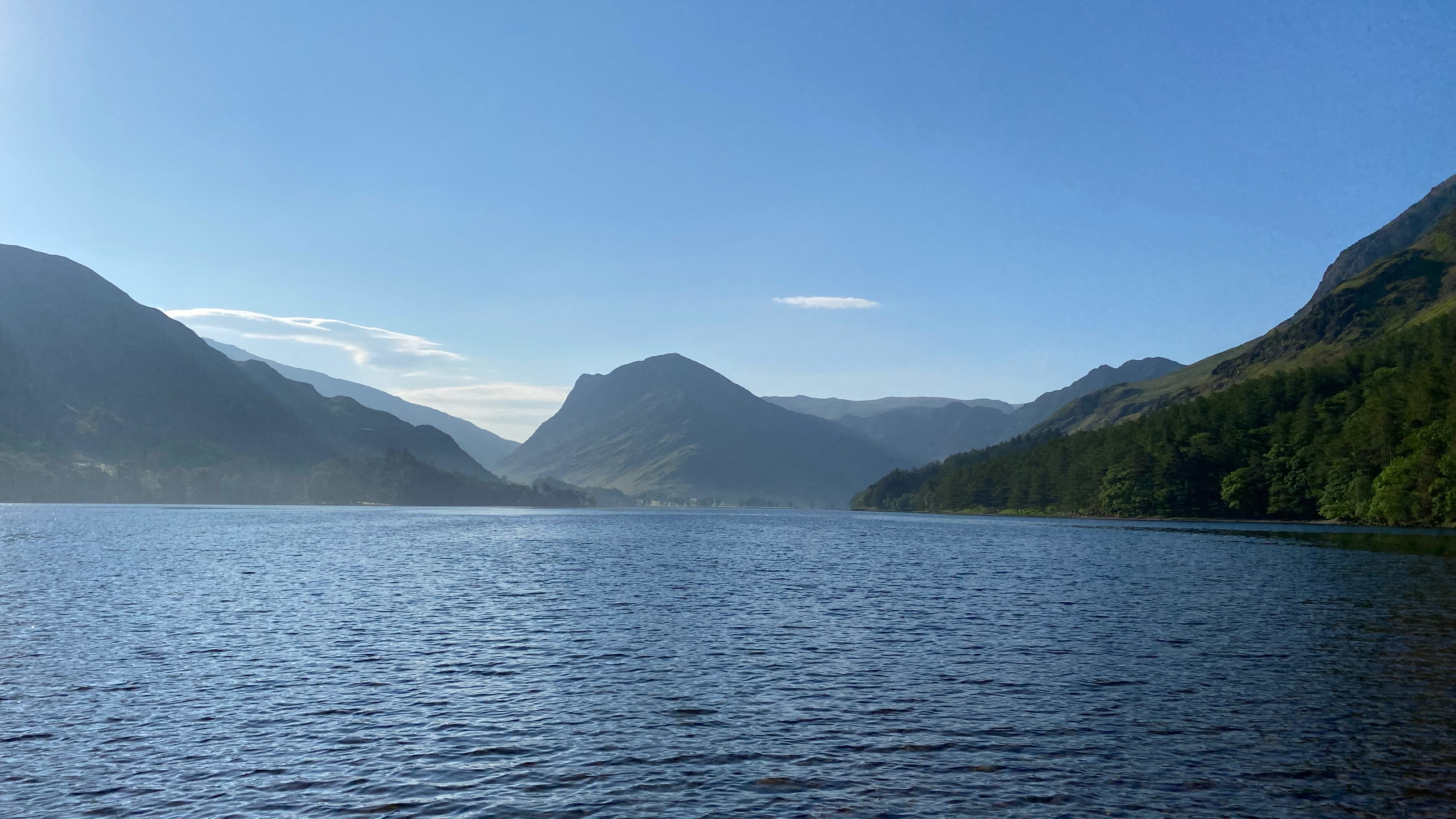
Waking up early the next morning, I enjoyed the vibrantly blue sky from the other side of Buttermere, watching several Saturday morning trail runners heading around the lake as I enjoyed the peace of the forest and lake in the early morning. Then it was time for another of the more popular hikes in the Lake District, Haystacks.
Haystacks

Hoping to park at Gatesgarth car park, we had well and truly missed every spot being a bright, sunny Saturday, warm enough for an Aussie who struggles with the cold to wear shorts! We headed back up Honister Pass and parked beside the road instead. While the first kilometre is nice and flat, you quickly begin the ascend following the anticlockwise loop, gradually climbing upwards on a well made track for the next two and a bit kilometres, with increasingly beautiful views to the valley below to distract you, particularly with a field of bluebells up the side of hill. Then the scramble to the top begins; while not technical, it does get your hands involved to zigzag up to the summit.

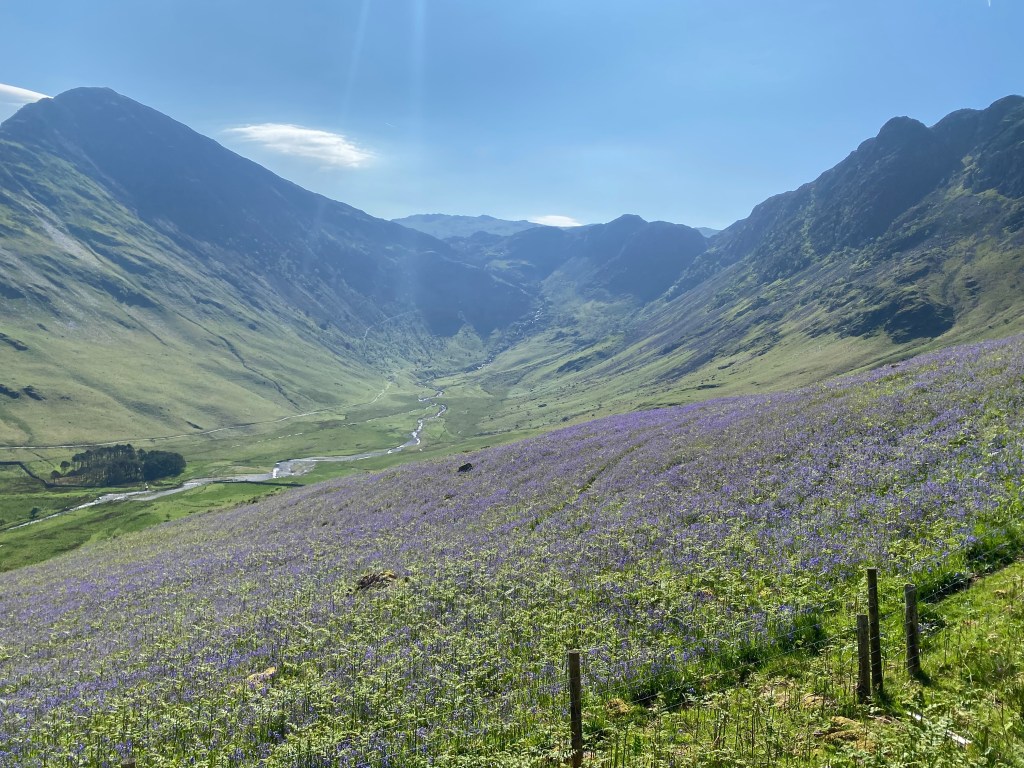
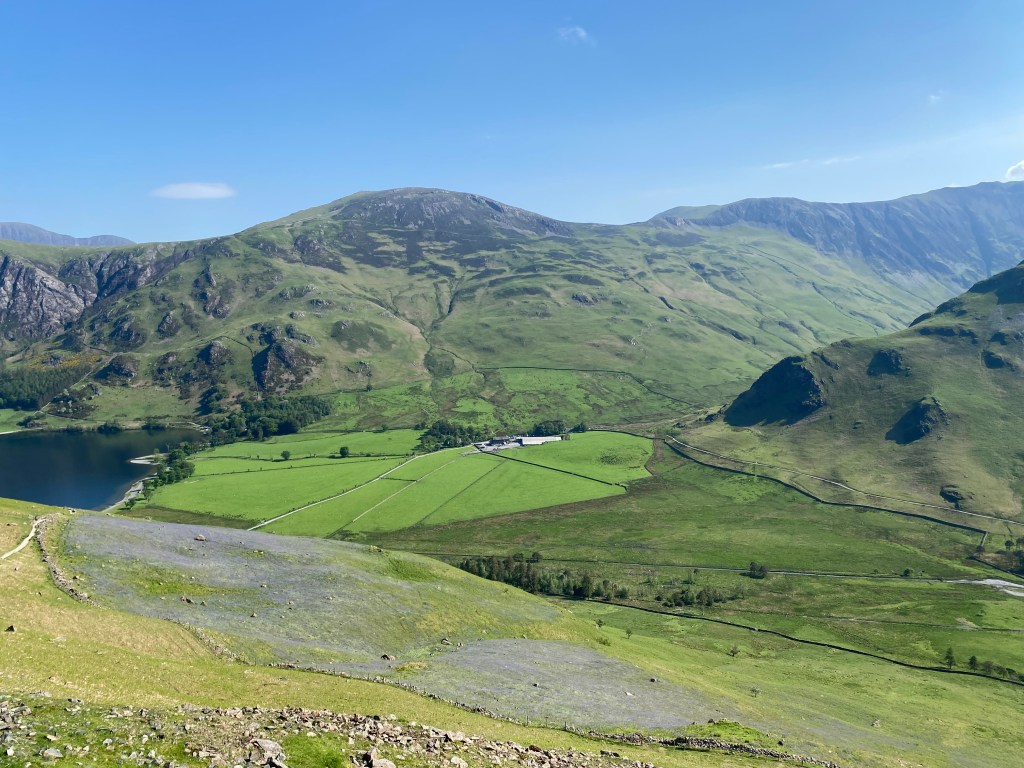
Once at the summit, the views are incredible and so far-reaching on a clear day, taking in many of the surrounding lakes and fells. Not only this, but they vary so much as you ascend and then descend, so there is no opportunity for boredom. It is clear why this was Wainwright’s favourite fell, even requesting his ashes to be scattered at Innominate Tarn near the summit! The summit has plenty to explore, with rocky outcrops allowing views in all directions and a number of tarns.
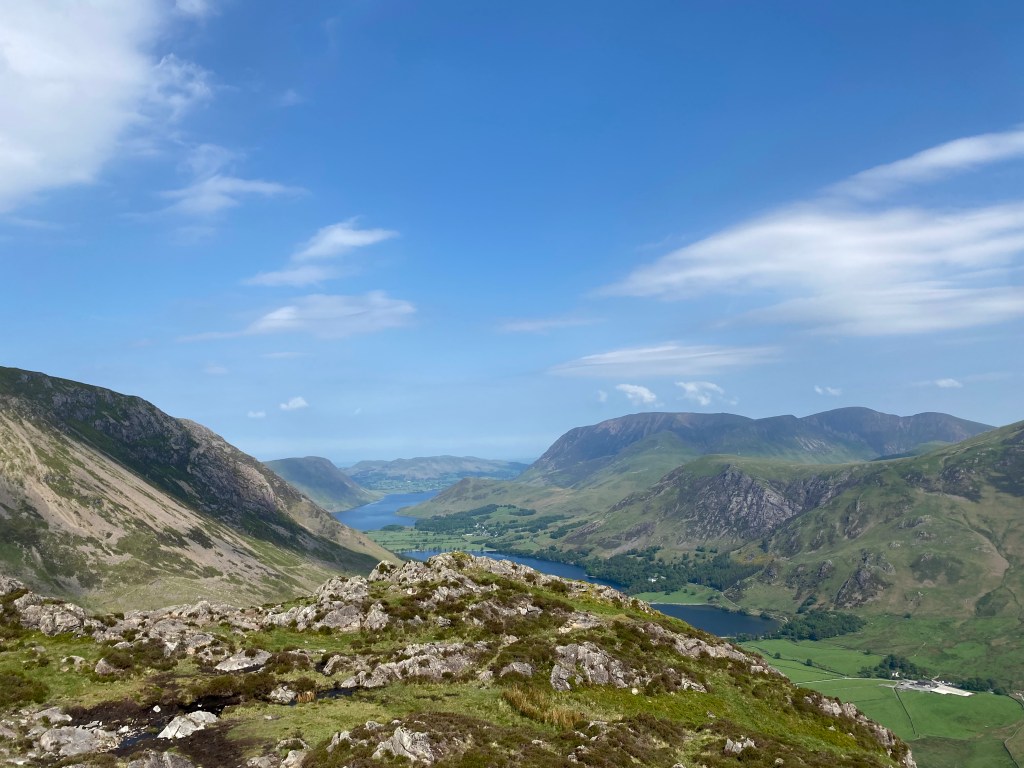
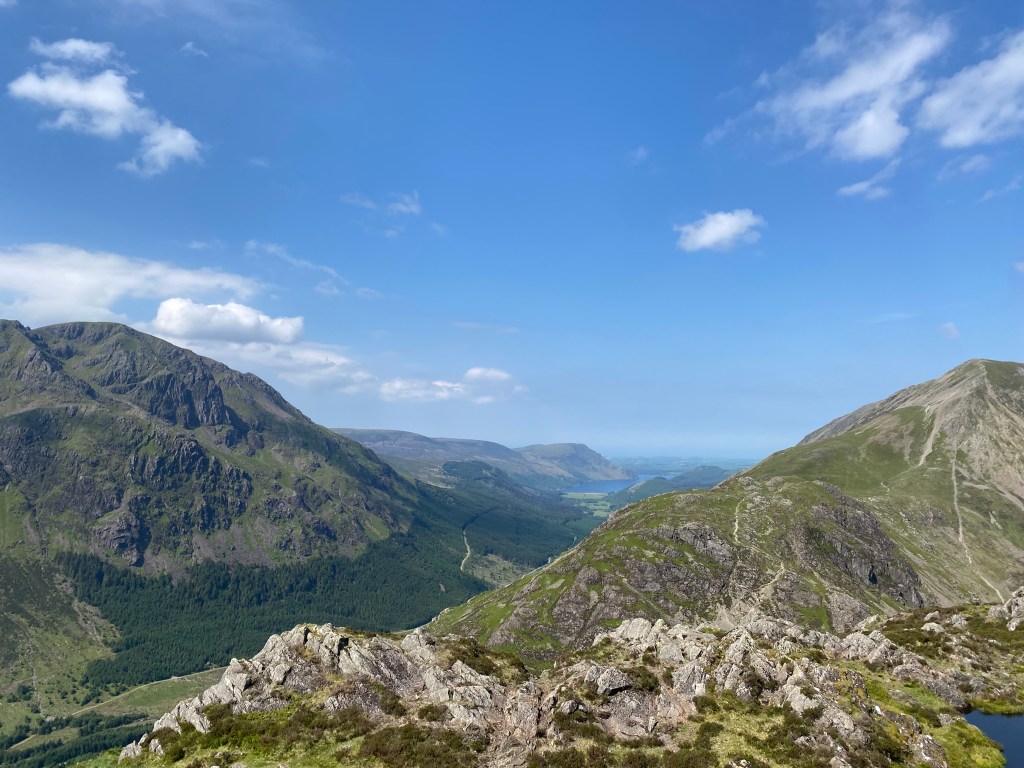
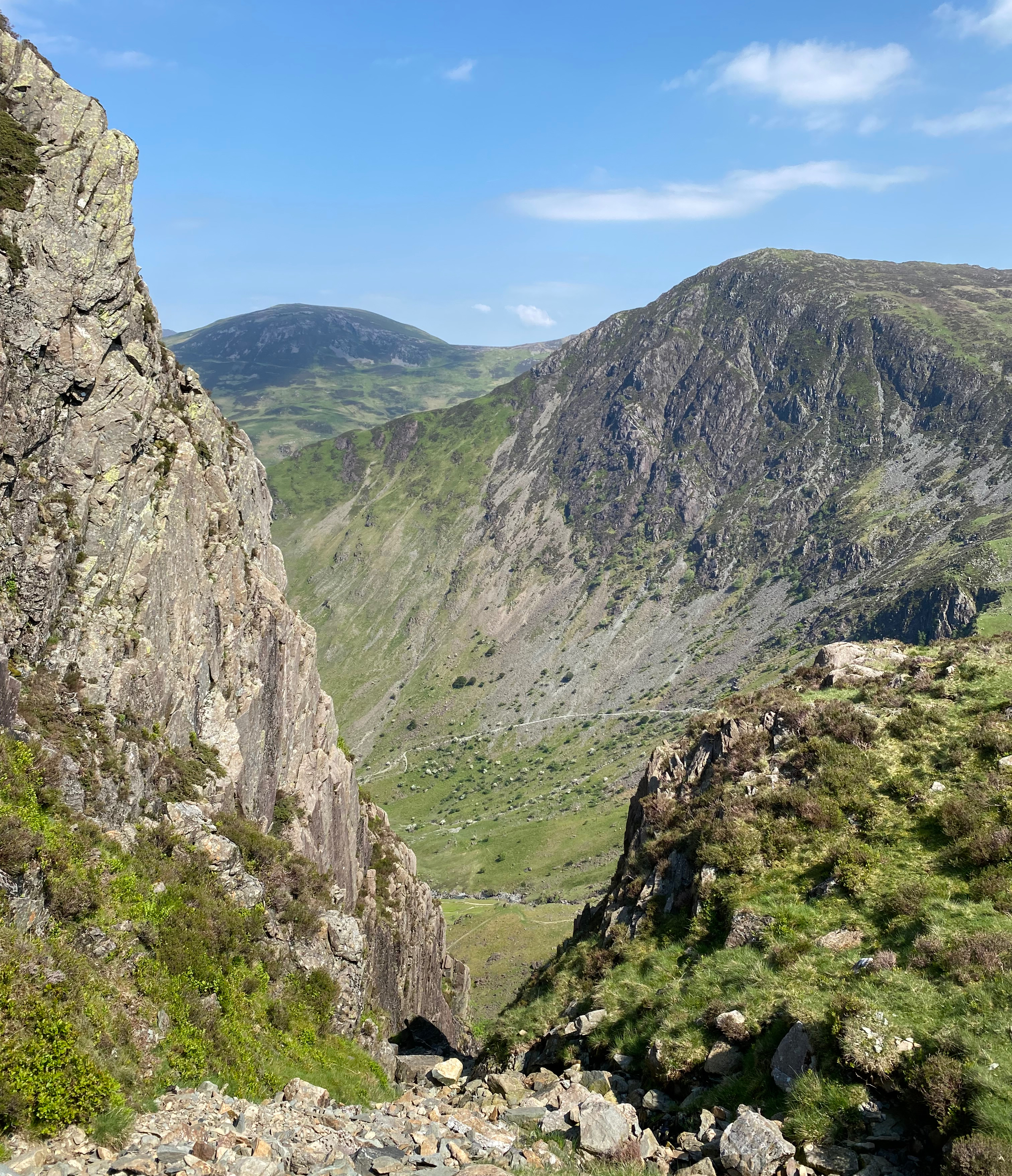
The descent was mostly straight forward with no scrambling required, but care should be taken due to large sections of the trail being made up of loose rocks of varying sizes and being at times, quite a steep descent. The final two kilometres were back on flat ground, enjoying the beauty of this gorgeous valley.
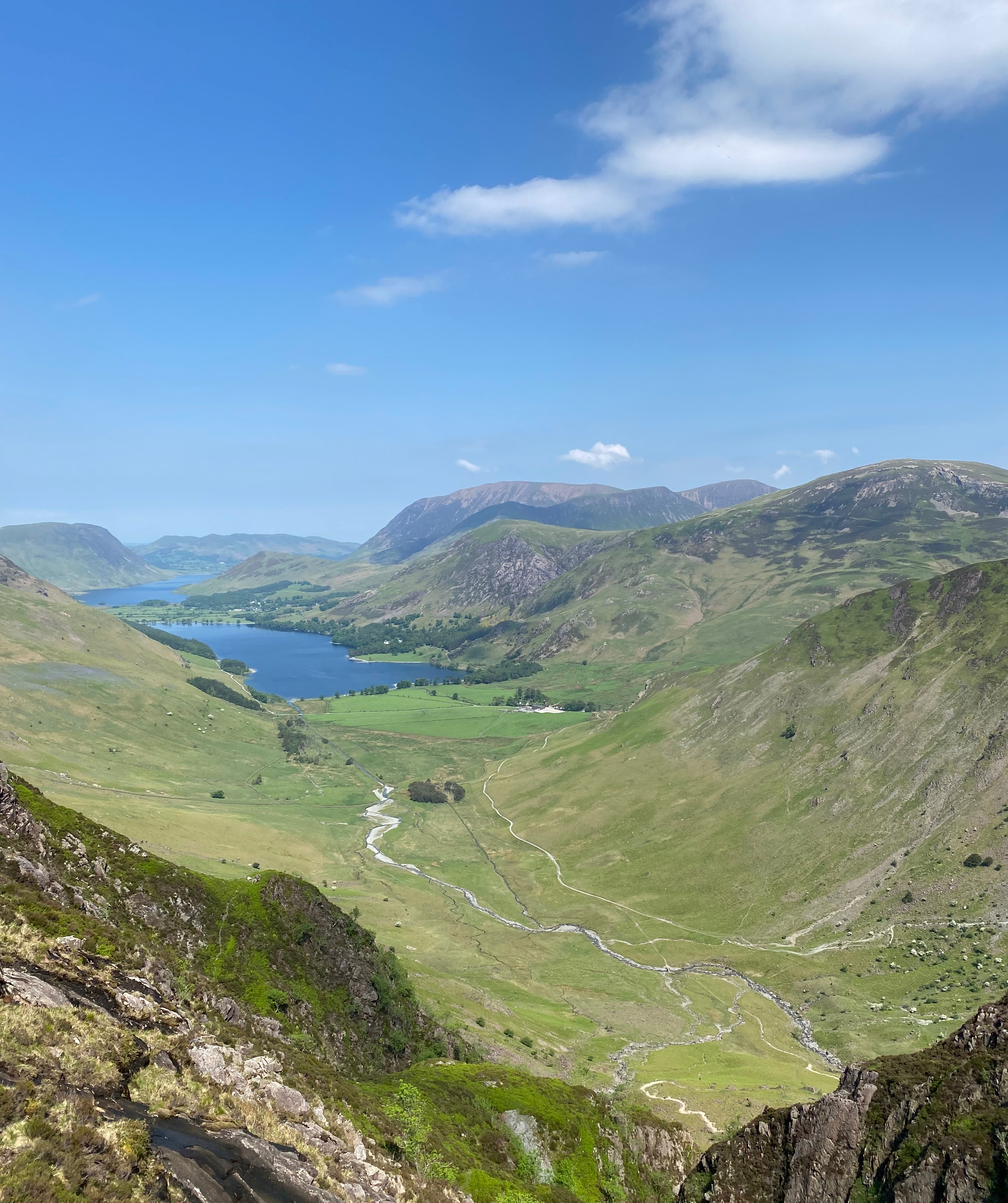
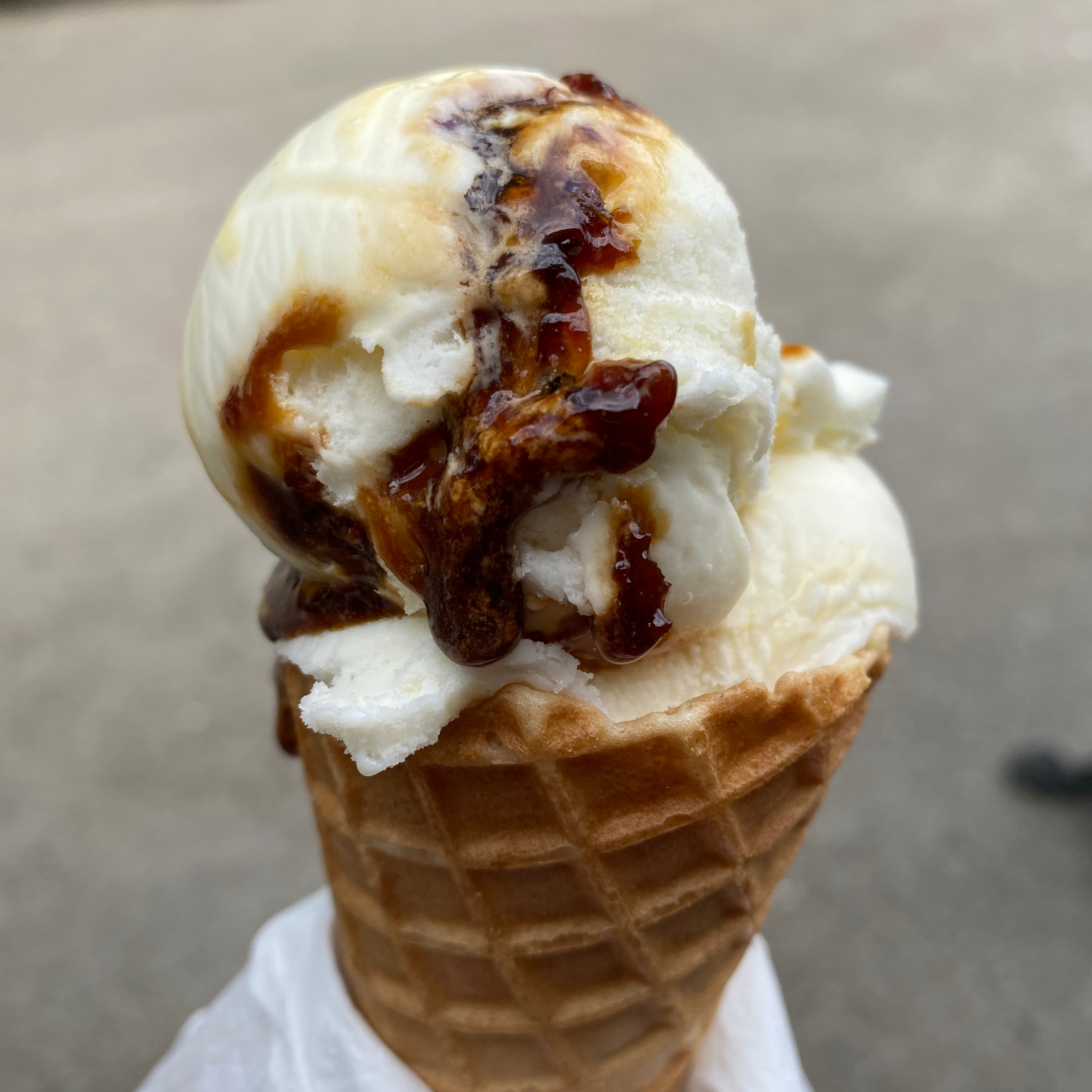
Having worked up an almighty appetite, we drove back into Buttermere for lunch at the Croft House Farm Cafe which also had a delicious menu with many options to choose from and a beautiful setting both indoors and out. Having missed out on ice cream at Syke Farm Tea Room the day before, we had to go back to try some being home made from dairy produced at their farm. I opted for fig and it did not disappoint.
With a free afternoon, we headed back into Keswick as we had seen the Keswick Mountain Festival being set up two days prior and thought we should check it out. The festival is free to enter during the day, only requiring payment to see the live music in the evenings, and had plenty to explore. There were lots of food trucks, music, stalls selling outdoor, talks and adventure brands and the finish line for their races. The festival has a number of races throughout the long weekend, including trail runs between five and 50km, open water swims, cycling, triathlons and adventure races, which include a mix of trail running, mountain biking and navigation.
After a final night in the Lakes, it was time for the long drive back into London. I certainly plan on returning to this special place for many more hikes and plenty more gingerbread in the near future!
Sources:
https://www.britannica.com/place/Cumbria/
https://www.thelakedistrict.org/info/history/
https://www.visitcumbria.com/history/
https://whc.unesco.org/en/list/422/ https://www.nationaltrust.org.uk/discover/history/people/beatrix-potter/ https://www.herdy.co.uk/did-ewe-know/beatrix-potter-and-the-herdwick/#
https://www.herdy.co.uk/the-farming-year/all-about-herdwicks/
https://www.grasmeregingerbread.co.uk/history/
https://www.visitcumbria.com/amb/stock-ghyll-force/
https://www.english-lakes.com/history.html#:~:text=The%20Viking%20influence%20lingered%20in,Thing%20mounds%20throughout%20the%20area.




 Xanthe Explores