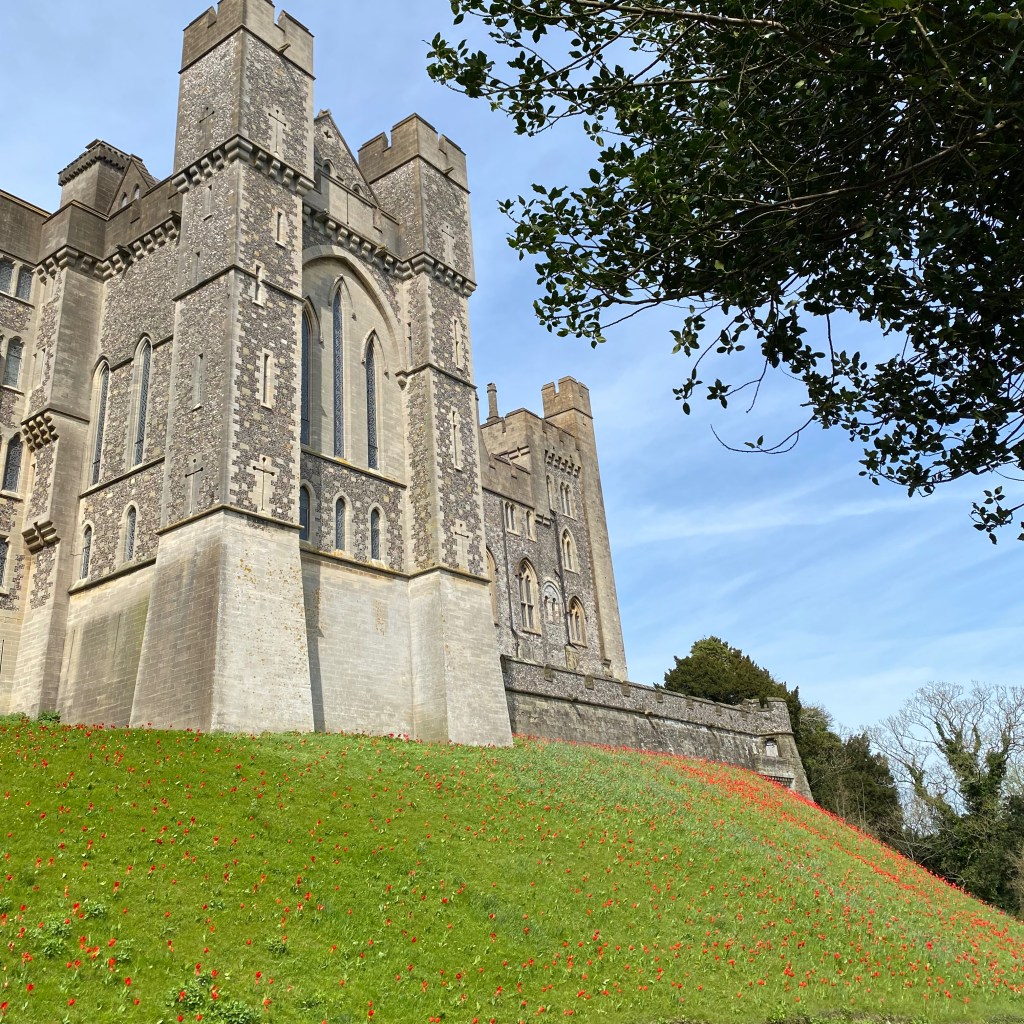
I was lucky enough to visit Arundel Castle in early April while the annual Tulip Festival was on, an absolute feast for the eyes; however, even without the Tulip Festival, Arundel Castle and the surrounds more broadly make a fantastic day trip from London. Situated in West Sussex with views of the South Downs and the River Arun, there is plenty to explore in Arundel and its surrounds.
Brief History of Arundel
With a history spanning back to Roman and Saxon times as an important inland port and market town, there is over 1,000 years of human history to explore in Arundel. Beginning as a Saxon village, it had grown to a flourishing market town as listed in the Doomsday Book in 1086.
With Arundel and the surrounding lands in Sussex gifted to Roger de Montgomery by William the Conqueror following the Battle of Hastings in order to build a defensive castle, the history of the castle has impacted much of the town’s history. As the 1st Earl of Arundel, he build a motte, which is a large, artificial mound with a wooden keep on top for accommodation, as well as lower enclosures for soldiers, animals and storage, later adding in a gatehouse and replacing the defensive walls with stone. Being located high up with views of the river, out to the coast and to the South Downs, it is ideally situated as a defensive structure.
The castle has been seiged several times, most notably during the English Civil War, first by the Royalist Force. The castle was surrendered to the Parliamentarians after 17 days due to the water supply being cut off and their subsequent poor health. They remained for 10 years, causing much damage to the chapel and the castle walls.
The castle has been passed through the family from its inception to today and is still the seat of the Dukes of Norfolk. There have been many interesting characters throughout this long family history, including the 3rd Duke of Norfolk who was the uncle of two of Henry VIII’s wives, Anne Boleyn and Catherine Howard, Lord Howard Effingham who repelled the Spanish Armada with Sir Francis Drake and served four monarchs (Henry VIII, Edward VI, Mary I, Elizabeth I) as a diplomat and military leader,
The castle as it is seen today is mostly due to the renovations and the addition of the gorgeous Gothic architecture conducted by the 15th Duke of Norfolk in the last 19th century, making it one of the great Victorian buildings. It was one of the first English country houses to have electric lighting installed, as well as central heating, fire fighting equipment and service lifts. A vast collection has been amassed over time as well, including 16th century furniture, tapestries, possessions of Mary, Queen of Scots, and many artworks by artists such as Gainsborough, Canaletto and Van Dyck.
WWII saw Arundel become a level A Nodal Point, meaning it had to be able to hold out during a siege for six without reinforcements. It was given this designation due to its proximity to the coast, and would be a likely point to pass through on the way to London in the event of invasion by the Germans, which was fully expected by Churchill following the evacuation of Dunkirk in 1940. Many of the soldiers were camped in the Castle Gardens and while the main control centre was in the old jail beneath the Town Hall, the “Battle Headquarters” were located beneath the Castle. A number of defences were set up, including rifle and anti-tank rifle posts, explosives, concrete blocks ready to block the roads and bridges, and pillboxes. Rifle posts were even set up within a jewellers on High Street and the lavatory of a property to cover the bridge.
Itinerary
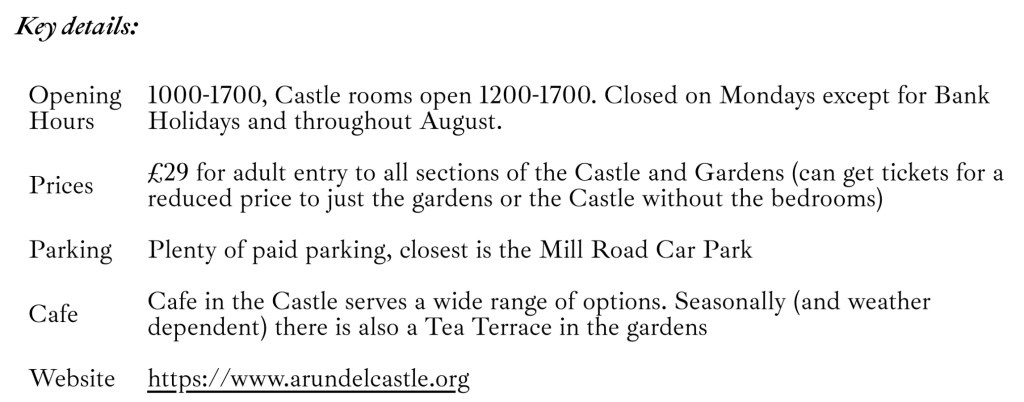
Catching the 0935 Southern train from London Victoria, I arrived in Arundel station at 1100 and headed straight for the Castle and Gardens, an easy 15 minute walk. Despite being a Friday, it was very busy due to being in the midst of the Tulip Festival, but being such a large garden with many areas within the castle to explore as well, it did not ever feel crowded.
Arundel Castle and Gardens
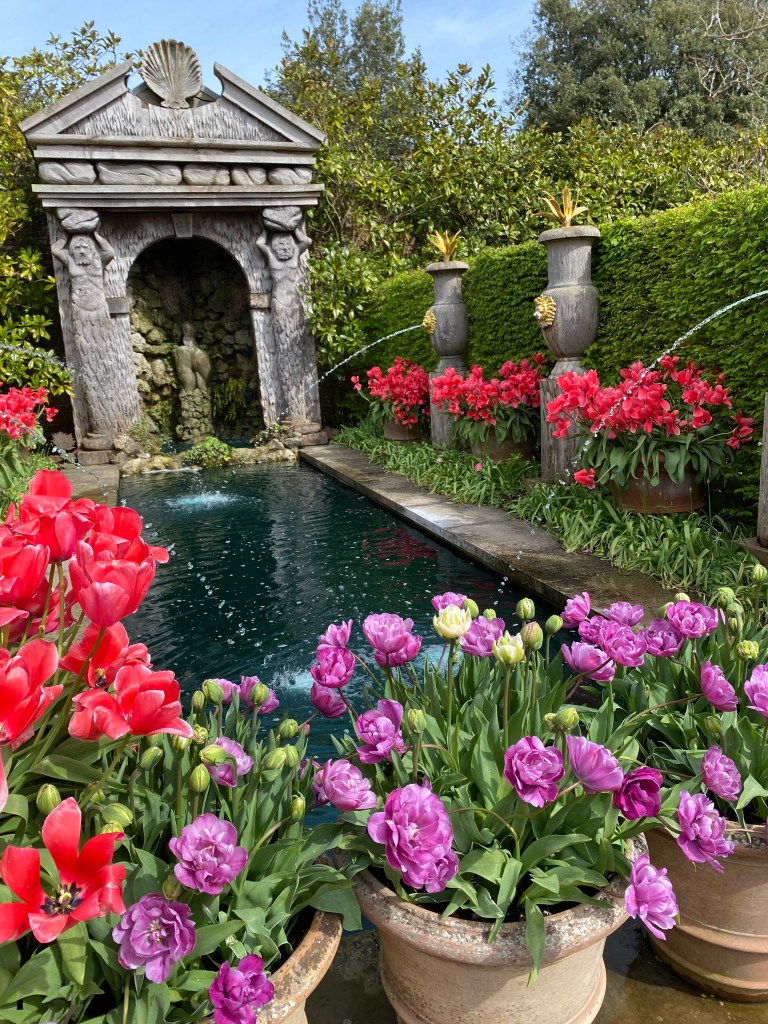
As the castle rooms were not yet open, I enjoyed a walk through the gardens, admiring the blossoms and bright tulips dotted across the lawns, like bright multi-coloured lanterns. The gardens are a highlight of any trip to Arundel Castle, with many seasonal highlights including a vast collection of roses in summer and an incredible display of tulips throughout April. Most striking were the red tulips at the base of the Gothic section of the Castle when you first enter, creating a sea of red depending on which angle it is viewed from.

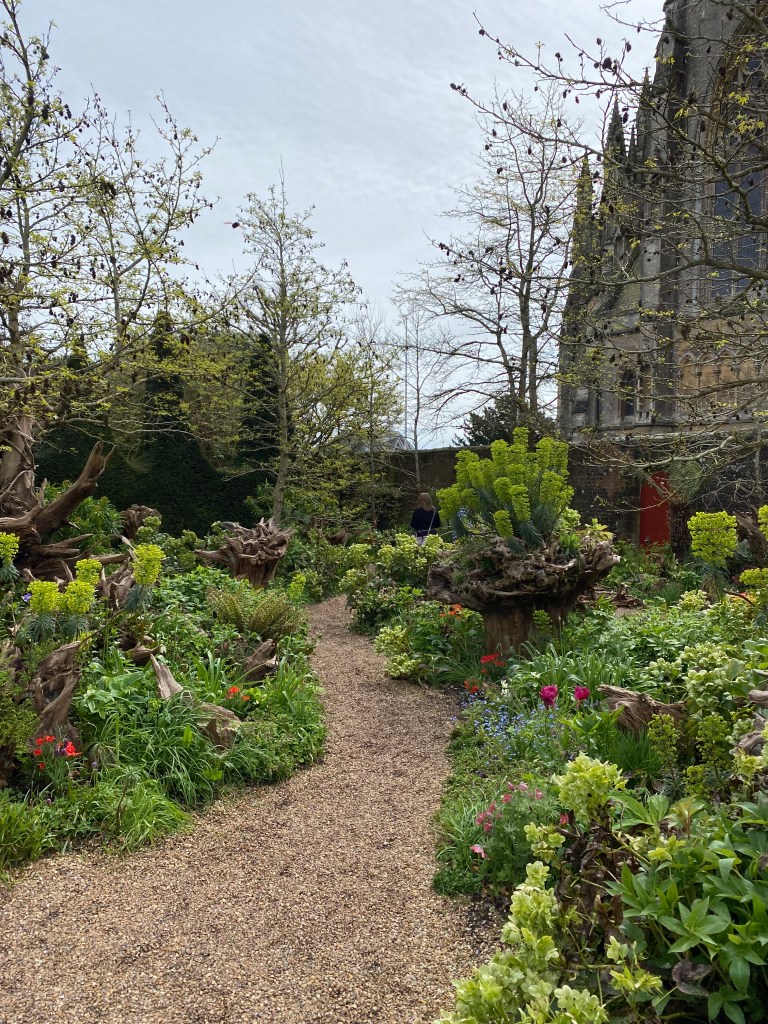
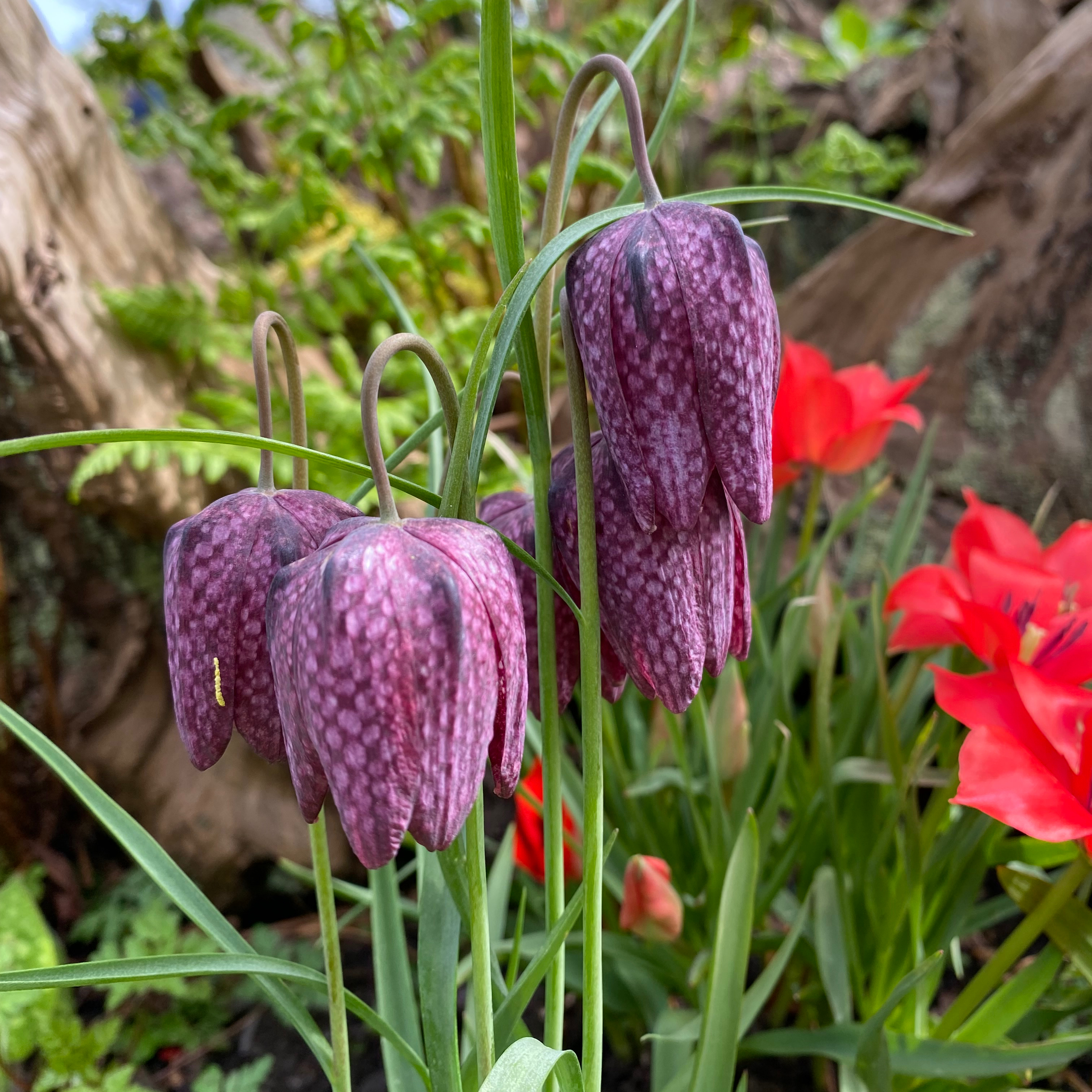
I eventually reached the walled garden which contained the most impressive tulip displays, along with the stumpery, kitchen gardens and greenhouses with the cathedral providing a striking backdrop. The tulips were truly very impressive, of all colours and sizes, but I also enjoyed the range of other spring flowers including Snake’s Head Fritillary, bluebells and snowdrops being an Aussie from a humid, sub-tropical climate where none of these gorgeous flowers can survive. I particularly enjoyed the stumpery, a Victorian garden style that uses the upended stumps of fallen ancient trees in place of rocks in a rockery in which to plant ferns. However in this garden, the decaying timber is juxtaposed with the vibrant, delicate spring flowers making for a very interesting and unusual garden.
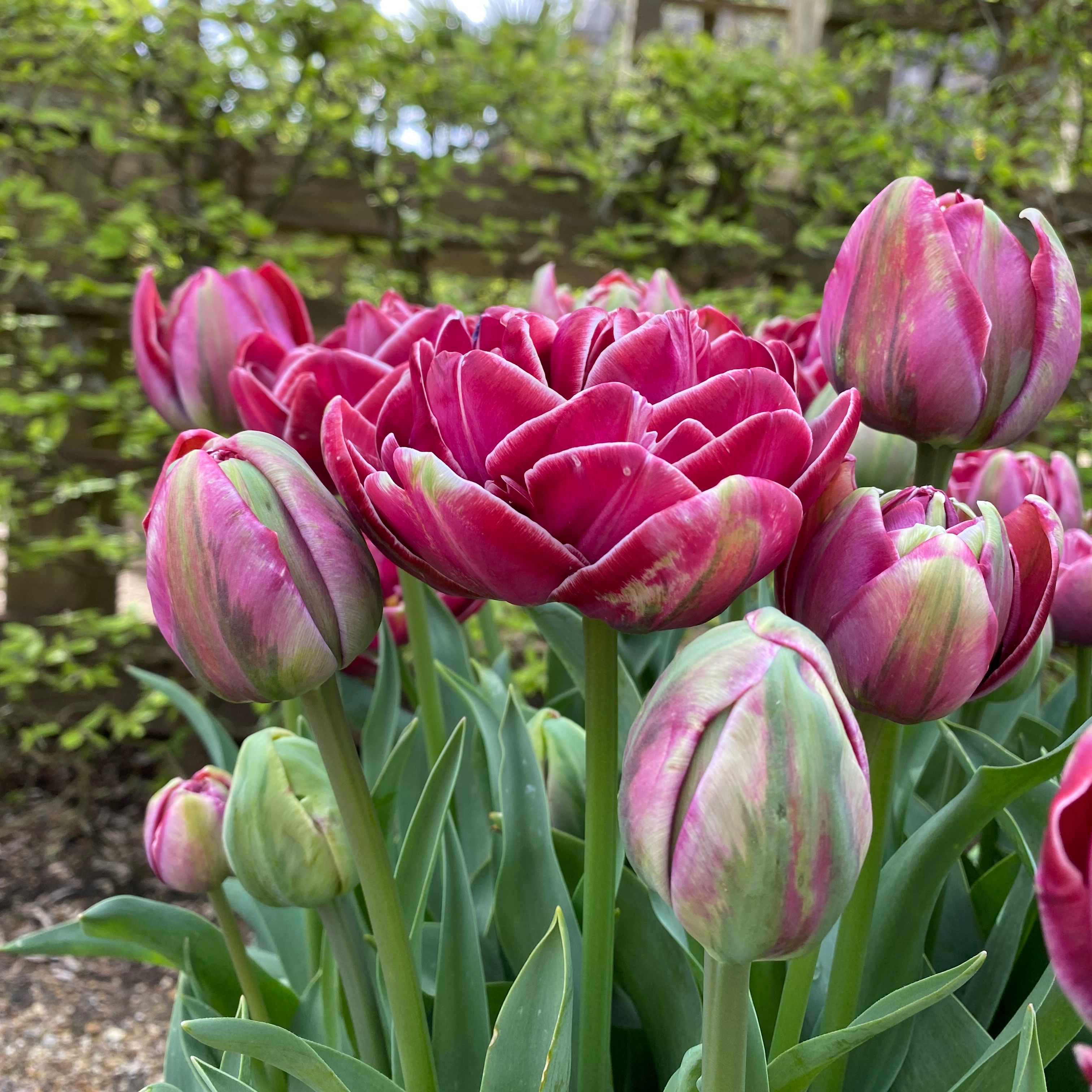
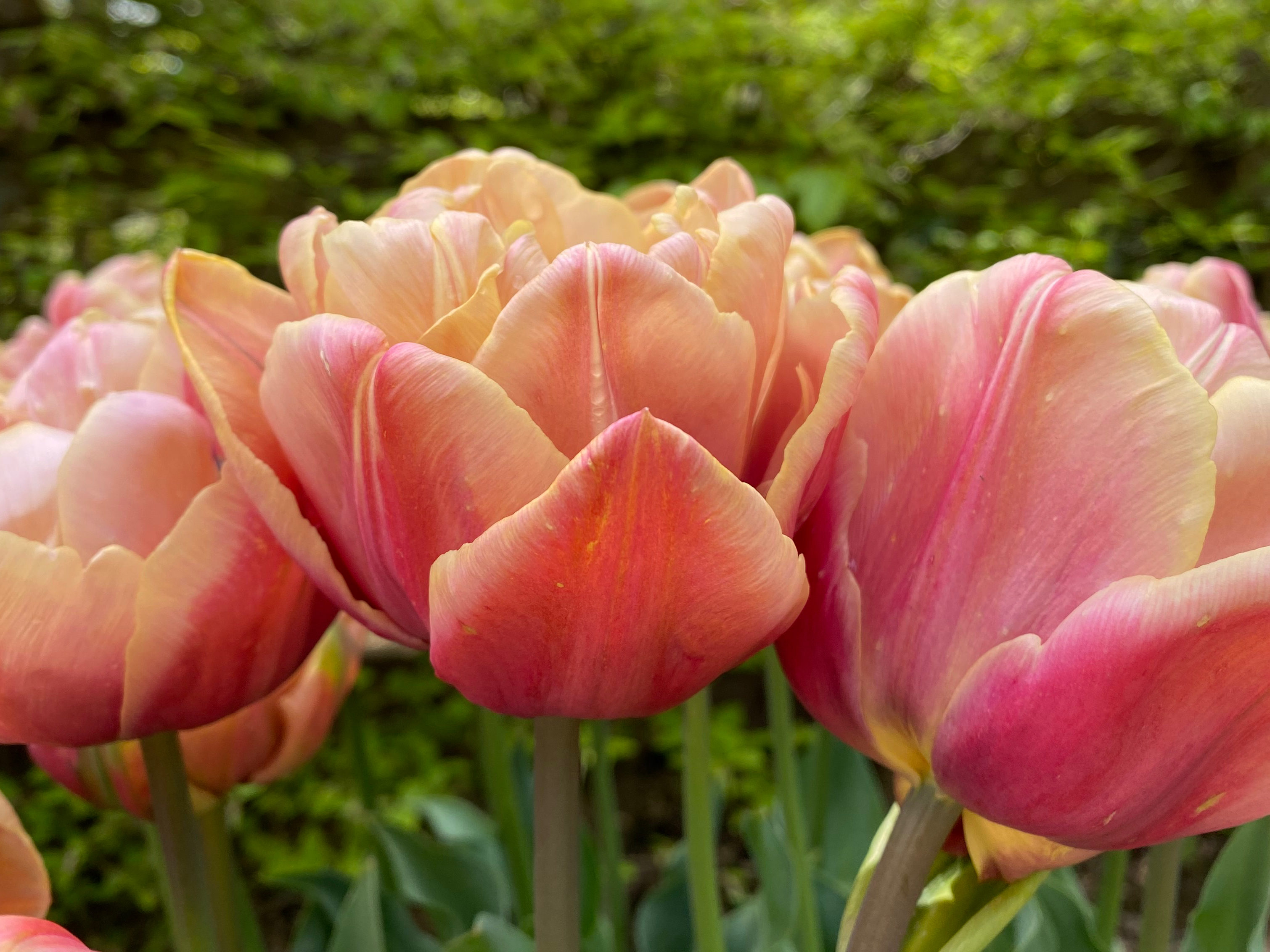


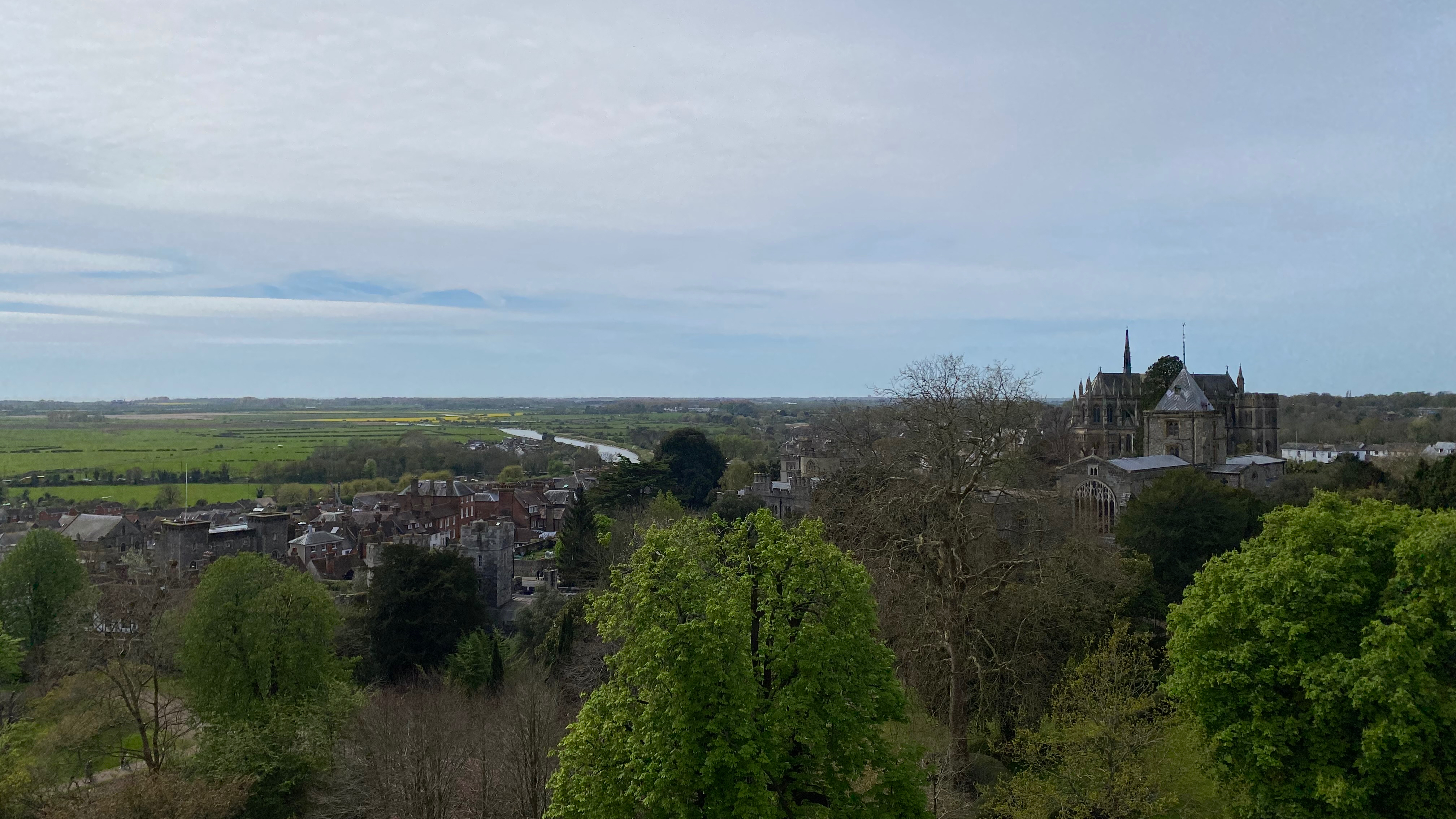
Once I’d had my fill, I headed for the Castle, starting with the Norman castle keep which provides fantastic views of the South Downs and as far as the coast to the south on a clear day, and provides an interesting visual to imagine the stories told throughout this section of the castle of sieges throughout the castle’s history.
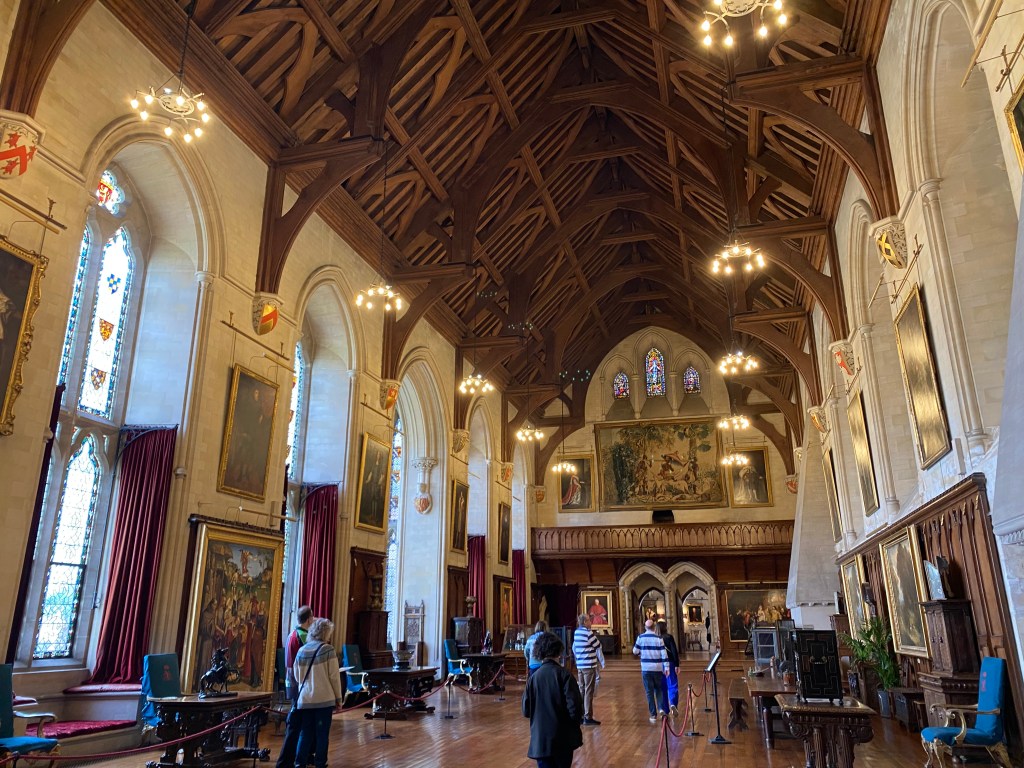
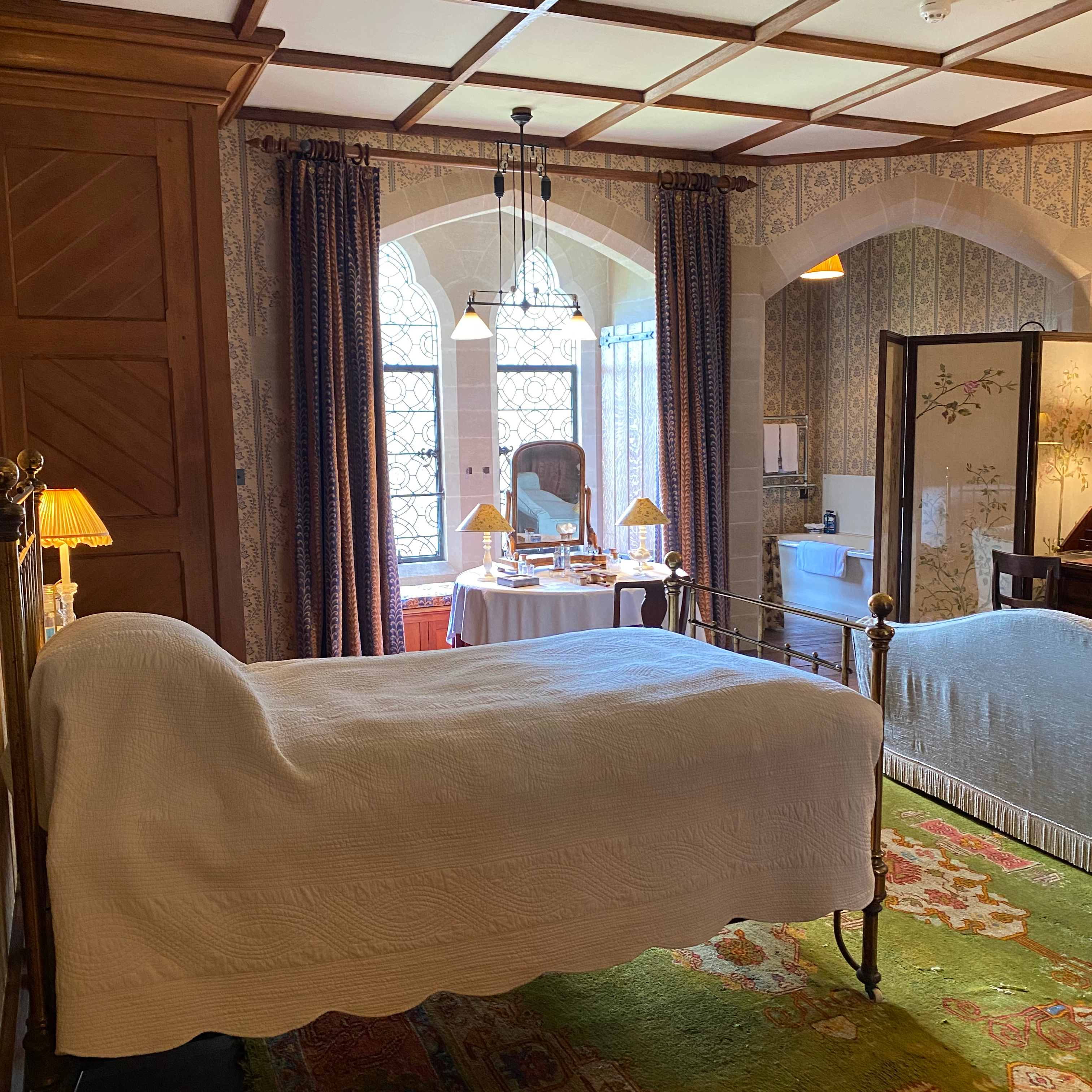
Next up were the State Rooms which were transformed during the 18-19th centuries into a stately home for the Dukes of Norfolk as there was no need for the defensive structure it had been previously. These rooms are very grand, with impressive artworks, furniture and vast ceilings. While rooms such as the Baron’s Hall, dining room and the staircase were incredibly grand, others such as the drawing room and library managed to feel incredibly cosy and homely despite their expansive size and richness of the furnishings. The highlight, apart from the gardens, were the bedrooms. While it’s always fun to nosy around the bedrooms of others, these were truly the bedrooms of your dreams, being paradoxically incredibly huge and cosy. I had a hard time choosing which one I would sleep in!


After enjoying my lunch in the gardens having grabbed something from the Castle cafe, I wandered around the ponds which were partially closed off due to nesting swans which I could just spot in amongst the green banks.

Arundel Hike

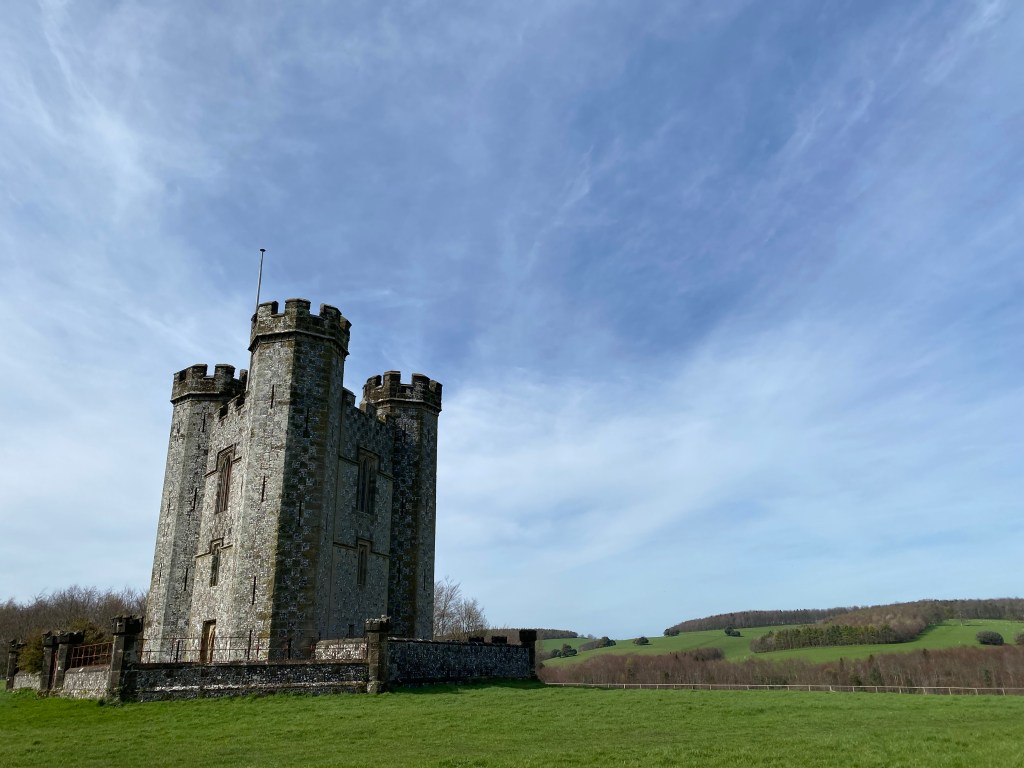
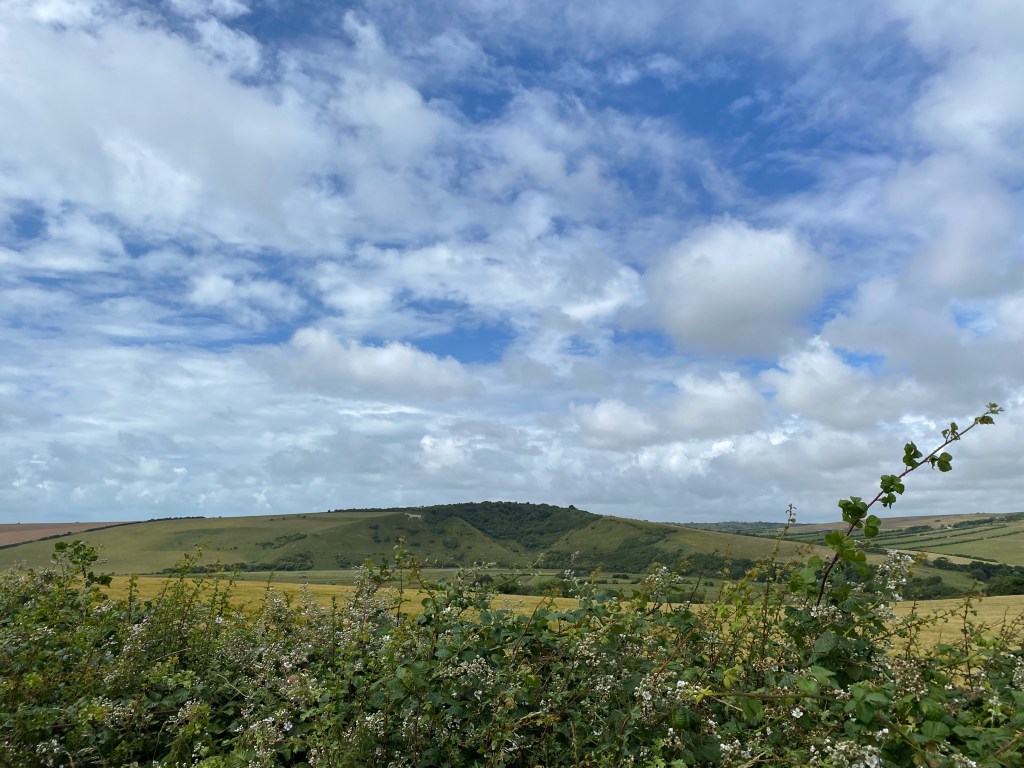
Ready to stretch my legs, I headed off on an easy 6km hike from the car park at the bottom of the Castle, taking you in an anticlockwise loop. Starting off along the banks of the River Arun, the views of the river and the Downs beyond are gorgeous in nice weather, with little modern development to spoil the view. After a short section on the road, you reach Swanbourne Lake where there was an outdoor cafe and Tea Rooms, as well as boats to hire. Heading up the slope around the lake, you are soon away from the crowds and feel like you have escaped to the middle of the countryside, not just outside of the bustling Arundel. Looping around and continuing uphill, you reach the Hiorne Tower, located high up above the rest of Arundel Park. This folly was built in the late 18th century by architect Francis Hiorne in the Gothic Revival style as a sample of the design plans for the rest of the Castle. The Duke of Norfolk decided against employing Hiorne and instead ran with his own designs for the Castle.


Carrying on across the park, it is then downhill and back into town. Here I wandered along the High Street and Tarrant Street which had lots of independent shops and cafes before heading back to the station and London beyond.
Sources:
https://www.visitarundel.co.uk
https://www.arundelcastle.org




 Xanthe Explores
Leave a comment